President Volodymyr Zelenskyy has outlined a structured three-step strategy which, he believes, could allow former US president Donald Trump to bring Russia’s aggression to a halt and create the foundations for a sustainable peace in Ukraine. In an interview with POLITICO, Zelensky said that only firm and coordinated pressure on Moscow — anchored in binding security guarantees for Ukraine, a comprehensive reconstruction programme and the credible threat of far-reaching sanctions — can compel the Kremlin to stop the war. The WP Times reports, citing the interview.
Step one: US security guarantees without dialogue with the Kremlin
According to Zelensky, the first and most decisive step is for the United States to provide Ukraine with clear, binding security guarantees. He emphasised that such commitments must be issued directly by Washington and should not be subject to negotiation with, or mediation by, the Kremlin.
“I see it this way: the President of the United States should provide us with security guarantees — strong security guarantees — without any dialogue with Putin,” Zelensky said. “These must be guarantees from the President of the United States, not the result of talks with the Kremlin.”
The Ukrainian leader cautioned that any attempt to involve Moscow in shaping those guarantees would inevitably undermine their credibility, creating space for future pressure, reinterpretation or reversal by Russia.
Step two: a reconstruction package as a foundation for peace
The second step, Zelensky said, should be the immediate launch of a comprehensive, internationally backed reconstruction programme for Ukraine. In his view, economic recovery is inseparable from security and represents a core precondition for any genuine transition from war to peace.
“Give us a reconstruction package for Ukraine — that will be the second step,” he said. “It will mean that we recover, and that recovery itself will mean peace.”
Zelensky has consistently argued that rebuilding critical infrastructure, housing and industrial capacity is not merely about restoring daily life after years of war. Instead, he frames reconstruction as a strategic stabiliser — one that reduces the risk of renewed instability by strengthening Ukraine’s economic resilience and limiting Russia’s ability to use destruction as a tool of long-term pressure.
Step three: a direct ceasefire demand to Moscow
Zelensky said that direct engagement with Moscow should come only after firm security guarantees and concrete reconstruction commitments are secured. In his view, this sequencing is critical to prevent negotiations from taking place under pressure or from a position of vulnerability. He outlined a deliberately blunt approach: a direct call to Vladimir Putin with a demand for an immediate halt to hostilities at current positions, followed by talks at the highest political level.
“The next step is to call Putin and say: look, you must stop where you are now,” Zelensky said. “We freeze the conflict at this stage, and then we meet in a trilateral format at the level of leaders to decide how to end this war.” Zelensky argued that such an approach would fundamentally change the balance of any future talks, ensuring that negotiations are conducted from a position of strength, with Ukraine’s security and recovery already anchored, rather than being shaped by urgency, coercion or premature concessions.
Ultimatum and “total sanctions” if Russia refuses
Zelensky warned that if Vladimir Putin rejects these conditions, the United States should move immediately to a strategy of maximum pressure. This, he said, must include a sharp expansion of military support for Ukraine alongside unprecedented sanctions designed to undermine the Kremlin’s ability to finance the war.
“If Putin says ‘no’, then yes — President Donald Trump should give us everything we need to protect ourselves and remain strong,” Zelensky said. “He can impose sanctions on their entire energy sector, including nuclear energy.”
Zelensky also called for targeted personal pressure on Russia’s political and economic elites. This would include measures affecting family members of senior officials and business figures who live, study or hold assets in democratic countries, arguing that the cost of the war must be felt not only by the Russian state, but by those closest to power in Moscow.
Europe’s position and Ukraine’s red lines
Zelensky further stressed that the absence of a unified European position only strengthens Russia’s negotiating leverage. He reiterated that Ukraine will not accept territorial concessions, arguing that Kyiv’s willingness to engage in diplomacy already represents its greatest compromise — and is possible only if backed by credible, long-term security guarantees. Poland has publicly stated that the European Union must participate directly in any future negotiations with Russia to prevent decisions being taken without Ukraine’s involvement. Similar positions have been voiced by Estonia and Latvia, which have urged Europe to reclaim a leading role in regional security and intensify pressure on the Kremlin.
Read about the life of Westminster and Pimlico district, London and the world. 24/7 news with fresh and useful updates on culture, business, technology and city life:Russia says it could ensure “silence” if Ukraine holds elections despite ongoing war
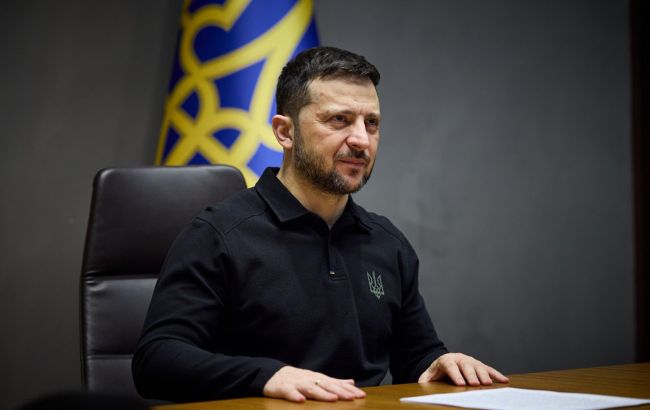
Photo: President of Ukraine Volodymyr Zelenskyy (president.gov.ua)