The annual pink transformation of the British capital is no longer just a seasonal change; it is a high-stakes cultural event for photographers, tourists, and locals alike. In March and April 2026, London’s landscape undergoes a fleeting metamorphosis as thousands of Prunus trees burst into bloom, attracting a record-breaking influx of visitors to specific botanical hotspots. For the reader, understanding the precise timing of the "peak bloom"—which typically lasts only 10 to 14 days—is the difference between capturing a world-class photograph and missing the season entirely. This guide provides the tactical data needed to navigate the city's most iconic floral corridors, ensuring you maximize your visual output while avoiding the logistical headaches of London’s spring crowds. According to The WP Times.
Strategic Timing: Understanding the 2026 Peak Bloom Window
Predicting the exact dates for cherry blossoms in London requires a mix of historical analysis and real-time temperature tracking. In 2026, experts from the Royal Horticultural Society (RHS) suggest that the Yoshino varieties will reach their peak between March 28 and April 10, while the deeper pink Kanzan trees will follow in mid-April. Since a heavy rainstorm or sudden frost can strip the petals in a single night, photographers must remain agile, monitoring local "bloom trackers" on social media daily. For the best practical results, aim for the "Golden Hour"—the first hour after sunrise—to capture the softest light and avoid the thousands of pedestrians who descend on these parks by mid-morning.
- Watch the weather: If temperatures stay above 10°C in early March, expect an early bloom.
- Monitor specific hashtags: Search #CherryBlossomLondon2026 on Instagram for live visual updates.
- Book transport early: High-demand areas like Greenwich see a 30% increase in DLR and ferry traffic during peak weekends.
- Plan for mid-week: Visitor density is approximately 60% lower on Tuesday and Wednesday mornings compared to Saturdays.
- Check the species: Yoshino trees (white/pale pink) bloom first; Kanzan (bright pink) bloom two weeks later.
- Use a polarizing filter: This helps manage the contrast between the pink petals and the often-bright London sky.
- Follow the Royal Parks rules: Commercial photography often requires a permit, though personal Instagramming is free.
- Dress for the wind: Even in spring, London’s open parks can be significantly colder than the street level.
Top Photographic Locations: From Iconic Landmarks to Hidden Alleys
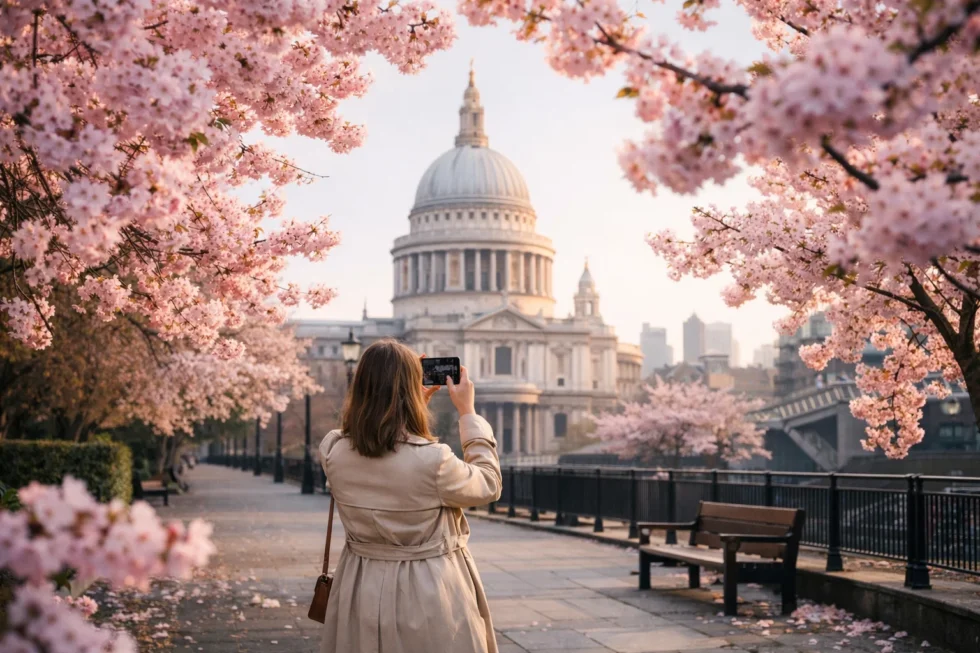
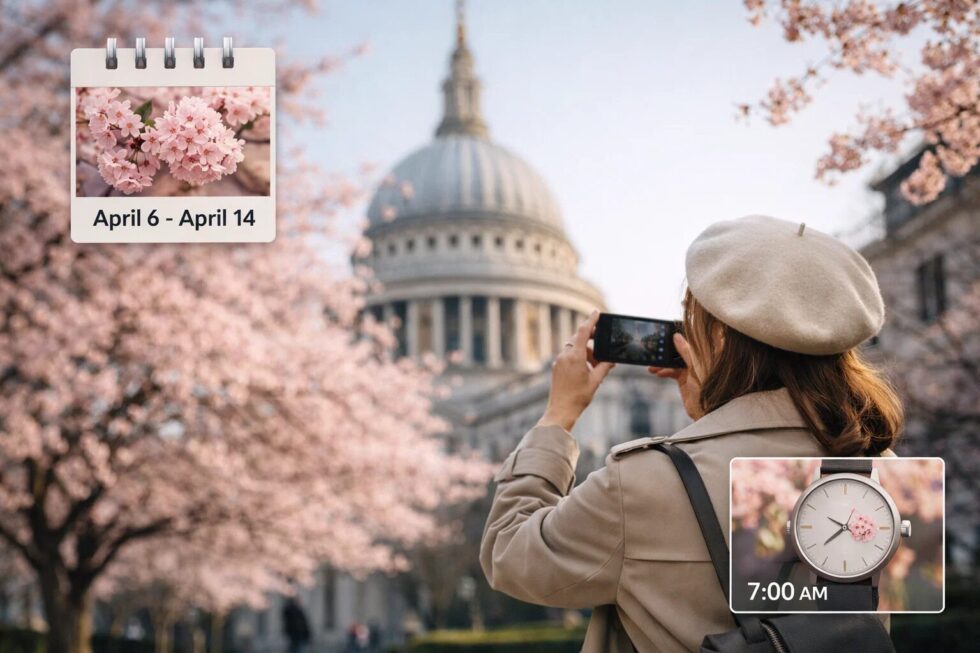
St. Paul’s Cathedral offers perhaps the most prestigious backdrop for spring photography, where the cherry trees frame the massive dome in a way that feels quintessentially London. However, for those seeking the "Instagrammable" pink tunnel effect, the cherry walk in Greenwich Park remains unrivaled, stretching toward the Ranger’s House with a density of petals that creates a natural canopy. Beyond these famous sites, the residential streets of Notting Hill—specifically Stanley Crescent and Lansdowne Crescent—provide a pastel-colored architectural contrast that elevates the floral aesthetic. To secure a shot without strangers in the background, you must arrive at these residential spots before 7:30 AM, as local residents and other influencers arrive early.
| Location | Tree Variety | Best Time to Visit | Nearest Station | 2026 Estimated Peak |
| St. Paul’s Cathedral | Yoshino | 7:00 AM | St. Paul's | March 25 - April 5 |
| Greenwich Park | Kanzan | 8:30 AM | Cutty Sark DLR | April 10 - April 22 |
| Regent’s Park | Mixed | 10:00 AM | Regent's Park | April 5 - April 15 |
| Stanley Crescent | Yoshino | 7:30 AM | Notting Hill Gate | March 28 - April 8 |
| Kew Gardens | Multiple | 11:00 AM | Kew Gardens | March 20 - April 25 |
Technical Tips for Professional Grade Blossom Photography
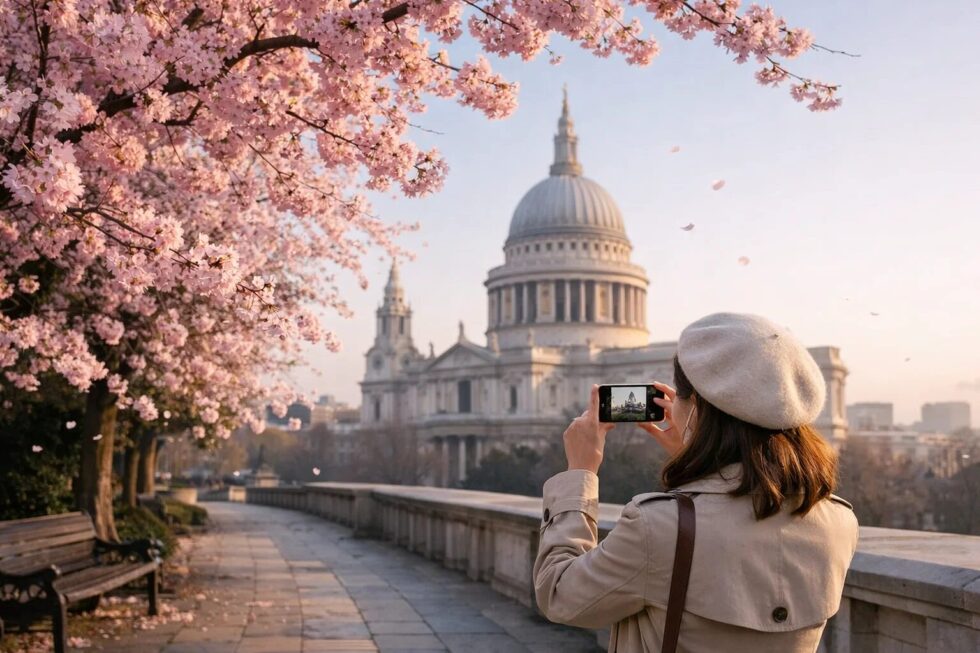
Capturing the delicate texture of a cherry blossom requires more than just a high-end smartphone; it requires an understanding of depth and exposure. The pale pink of the blossoms can often "fool" a camera's light meter into underexposing the image, leaving the flowers looking grey or dull against the sky. To prevent this, increase your exposure compensation by +0.3 or +0.7 to keep the whites bright and the pinks vibrant. Furthermore, using a wide aperture (f/1.8 to f/2.8) will create a "bokeh" effect, blurring the background and making the individual clusters of blossoms pop. In crowded areas like Notting Hill, shooting "up" towards the sky through the branches is a pro-tip to eliminate the crowds and cars from your composition.
- Avoid the "flat" look: Don't shoot in direct, harsh midday sun; the shadows will be too strong.
- Focus on the stamen: If doing a close-up, ensure the center of the flower is sharp.
- Use leading lines: In Greenwich, use the path to lead the viewer’s eye toward the Ranger’s House.
- Check your white balance: Blossoms can look too yellow under certain lighting; adjust to "cloudy" or "daylight" presets.
- Bring a portable reflector: A small silver reflector can bounce light back into shaded petals for more detail.
- Shoot in RAW: This allows for better color recovery of the pink hues during the editing process.
- Watch for movement: Even a light breeze moves branches; keep your shutter speed at 1/250 or higher.
- Compose with architecture: Use London’s red buses or black cabs as a color contrast to the soft pink.
Logistics and Etiquette for the 2026 Season
As cherry blossom tourism reaches its peak in 2026, the City of London and local councils have implemented stricter guidelines to protect the trees and resident privacy. In Notting Hill, it is strictly forbidden to climb the trees or shake the branches to create a "petal fall" effect, as this damages the delicate ecosystem of the Prunus family. Furthermore, many residents in Kensington and Chelsea have requested that visitors remain on the public pavement and avoid blocking doorways for extended periods. By following these basic rules of etiquette, you ensure that these locations remain open and accessible for future seasons while maintaining the dignity of the local neighborhoods.
- Do not touch the branches: The buds for next year are already forming and are very fragile.
- Keep noise levels down: Especially in residential areas like Lansdowne Crescent early in the morning.
- Use public bins: The influx of tourists often leads to littering; take your trash with you.
- Support local businesses: If you spend two hours taking photos in a neighborhood, buy a coffee from a local cafe.
- Be mindful of other photographers: Don't "hog" a specific tree for 30 minutes; take your shot and move on.
- Follow path markings: In Kew Gardens and Greenwich, stay on designated paths to avoid compacting the soil around roots.
- Check for event closures: Occasionally, sections of parks are closed for maintenance or private filming.
- Tag accurately: Help the community by tagging the specific tree type so others know what to expect.
Frequently Asked Questions
When is the best time to see cherry blossoms in London 2026?
The peak window for 2026 is projected to be from late March to mid-April, depending on the specific species and local microclimates.
Do I need a ticket to see the blossoms in Greenwich Park?
No, access to Greenwich Park is free to the public, though you should arrive early to avoid the heavy crowds on the main avenue.
Where is the best place to see blossoms without crowds?
Hidden spots like Battersea Park or the quiet residential streets near Ravenscourt Park offer a more peaceful experience than central London locations.
What happens if it rains during the bloom?
Heavy rain can significantly shorten the bloom period. If rain is forecast, try to visit the locations 24 hours prior to the storm.
Are there cherry blossoms at Kew Gardens?
Yes, Kew Gardens has a dedicated "Cherry Walk" featuring many rare varieties that bloom at slightly different times throughout the spring.
Can I take commercial photos in the Royal Parks?
Commercial photography usually requires a pre-arranged permit and fee; however, casual social media photography is generally permitted.
Which tube station is best for Notting Hill blossoms?
Notting Hill Gate (Central, District, and Circle lines) is the most convenient station for reaching the Lansdowne and Stanley Crescent areas.
Read about the life of Westminster and Pimlico district, London and the world. 24/7 news with fresh and useful updates on culture, business, technology and city life: Top fetish events in London 2026: dates, clubs and what to expect from the scene