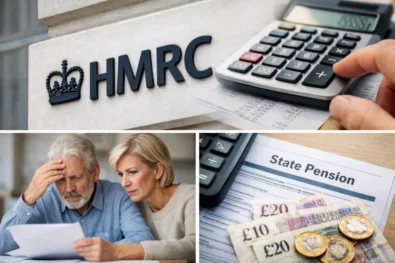
HMRC pensioners income tax overcharge has become a fresh political and financial headache after it emerged that some state pension income was calculated using 52 weeks at the new uprated rate, rather than the correct mix of one week at the old rate and 51 weeks at the new rate. The difference is small per person — around £5 in most cases — but when applied across a large group of older taxpayers it becomes a serious administrative failure, especially for pensioners who may not know how their taxable state pension figure is built into PAYE codes, P800 calculations or self-assessment returns, The WP Times reports.
The issue matters because the state pension is taxable income, even though it is paid gross and no tax is deducted before it reaches a pensioner’s bank account. For many people, HMRC collects tax due on the state pension indirectly by adjusting a tax code attached to a workplace pension, private pension or employment income. That makes the calculation difficult to see, difficult to challenge and easy to miss. The problem has landed just as MPs prepare to debate whether state pensioners should have a higher personal allowance, with public frustration rising over frozen tax thresholds, the triple lock and the growing number of older people being pulled into the tax system.
HMRC pensioners income tax overcharge: what went wrong with the state pension calculation
The error centres on the way HMRC records the taxable value of the state pension after the annual April uprating. State pension rates usually rise at the start of the new tax year under the triple lock, but the taxable amount for a year is not always a simple 52-week multiplication of the new weekly rate. For many pensioners, the correct calculation should reflect one week at the previous year’s rate and 51 weeks at the new rate. That small technical detail matters because using 52 weeks at the higher rate inflates the taxable pension figure.
In a written answer to Parliament, Treasury minister Dan Tomlinson said HMRC calculates state pension income for most PAYE pensioners by using one week at the old rate and 51 weeks at the new rate. He also acknowledged that for a “sub-set” of people receiving the state pension, a calculation error meant tax had been calculated on 52 weeks at the new rate. The stated difference in tax owed was approximately £5, and affected individuals were told they could call HMRC to amend incorrect state pension figures.
The issue is not about the state pension suddenly becoming non-taxable. It is about the figure HMRC uses when working out how much taxable income a pensioner has. A pensioner with only the full new state pension may still sit below the personal allowance in 2026/27, but someone with a workplace pension, private pension, earnings or savings income can be taxed through PAYE or asked to settle a bill. If the state pension figure is overstated, the pensioner can pay too much.
Why the £5 error can still become a major national issue
The average loss may sound modest, but the scale changes the story. Reports suggest the total overcharge could reach tens of millions of pounds if applied across millions of pensioners. The problem is also reputational: pensioners are being asked to trust a tax calculation they often cannot easily verify. Unlike employees, state pension recipients do not receive a P60 for their state pension, so they must rely on DWP letters, HMRC figures and their own records.
There is a second problem: many affected people may never realise the error exists. A PAYE taxpayer may see a changed tax code but not understand that it includes a state pension figure. A self-assessment taxpayer may accept a pre-filled state pension amount without checking whether it has been calculated correctly. That is why campaigners argue HMRC should not simply wait for pensioners to call but should correct the affected records proactively.
Who may be affected by the HMRC pensioners income tax overcharge?
The overcharge is most relevant to state pensioners who also pay income tax. This usually means people with income above the personal allowance because they have a private pension, workplace pension, earnings, savings interest, rental income or other taxable income. It can also include pensioners who complete self-assessment returns and rely on pre-populated HMRC figures. Those whose only income is the basic or full new state pension are less likely to have an immediate income tax bill in 2026/27, but they should still understand the rules because the policy position is changing from 2027/28.
The groups most likely to need to check are:
| Group | Why they should check |
|---|---|
| Pensioners in PAYE with a workplace or private pension | HMRC may collect state pension tax by reducing the PAYE tax code on another pension |
| Pensioners still working | State pension tax can be collected through their employment tax code |
| Self-assessment taxpayers | The state pension figure may be pre-filled and should be checked before submission |
| Pensioners who received a P800 or Simple Assessment bill | The calculation may include an incorrect state pension amount |
| Pensioners with small additional income | Even small private pensions or interest can push total income above the personal allowance |
For 2026/27, the full new state pension is £241.30 a week and the full basic state pension is £184.90 a week. The standard personal allowance remains £12,570. On a simple 52-week basis, the full new state pension is £12,547.60 a year, just below the personal allowance. That narrow gap explains why pension tax has become such a sensitive issue: one more uprating can push the full new state pension above the frozen allowance.
How pensioners can check whether their state pension tax figure is wrong
The first step is to find the DWP letter showing the weekly state pension amount for the relevant tax year. The second step is to check whether the HMRC figure in a tax code notice, P800, Simple Assessment or self-assessment return matches the correct entitlement-based calculation. For a full tax year after an April uprating, the figure may need to reflect one week at the previous rate and 51 weeks at the new rate, not 52 weeks at the new rate.
Pensioners who use self-assessment should not blindly accept a pre-filled figure if it appears too high. They can replace it with the correct calculation before filing. Those already filed may need to amend the return or contact HMRC. PAYE pensioners who believe their P800 or tax code includes the wrong state pension amount should contact HMRC and ask for the figure to be corrected.
A practical checklist:
- Find your DWP state pension uprating letter.
- Check the weekly rate for the old and new tax year.
- Compare the taxable state pension figure used by HMRC.
- Look at your tax code notice, P800, Simple Assessment or self-assessment return.
- Contact HMRC if the figure appears to use 52 weeks at the higher rate.
- Keep records of the calculation and any HMRC response.
State pension tax rules: why the personal allowance debate is now unavoidable
The overcharge story sits inside a much larger tax debate. The state pension is taxable, but it is paid gross. If a pensioner has no other taxable income and remains below the personal allowance, no income tax is due. If total taxable income rises above the allowance, tax can be collected through PAYE, self-assessment or Simple Assessment. This system becomes harder to defend when the full new state pension is close to the frozen personal allowance.
MPs are due to debate a petition calling for a new tax code for state pensioners with double the personal allowance. The petition received more than 119,000 signatures and argues that pensioners with small private or workplace pensions are being taxed unfairly. The Government rejected the idea in its response, saying that doubling the personal allowance for pensioners would be “untargeted and costly”. It also said it would ease the administrative burden from 2027/28 for pensioners whose sole income is the basic or new state pension without increments, if the state pension exceeds the personal allowance. That promise is important, but it does not solve every case. Pensioners with small extra income may still be taxed. People on the old state pension with additional state pension elements may fall into a more complicated category. Pensioners with £1 of savings interest or a small occupational pension could face different treatment from someone whose only income is the full new state pension. These are not abstract points; they decide whether older people receive a bill, ignore a bill by mistake or have to contact HMRC to correct one.
What the Government still needs to explain before 2027/28
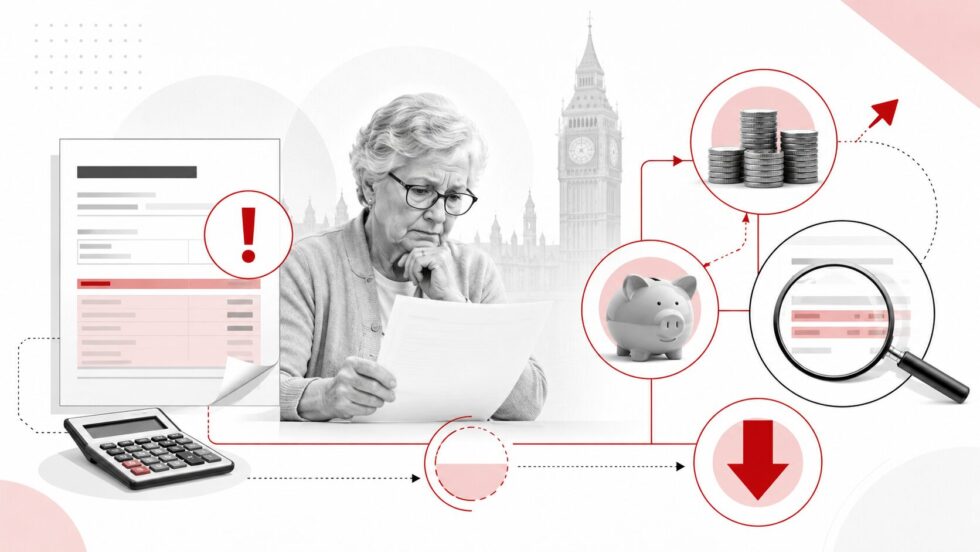
The Government has said more detail will come, but several questions remain open. How will HMRC identify pensioners whose only income is the basic or new state pension? Will the measure be written into law or handled as an administrative easement? What happens to pensioners with very small amounts of savings interest? How will old state pension cases with additional pension be treated? And will HMRC automatically correct small errors, or will pensioners still have to challenge their records themselves?These questions matter because a tax system that depends on pensioners spotting a technical calculation error is not a strong system. Many older taxpayers are careful, but they are not tax technicians. The state pension is already confusing because the amount received in a bank account does not always match the taxable amount for the year. When HMRC itself applies the wrong formula, the burden should not fall entirely on the pensioner.
What pensioners should do now if they think HMRC has overcharged income tax
Pensioners should not ignore HMRC letters, but they should also not assume every calculation is correct. Anyone who receives a P800, Simple Assessment notice or self-assessment figure involving state pension income should check the amount against DWP records. If the number appears to be based on 52 weeks at the new rate, the pensioner should ask HMRC to amend the state pension figure and refund any overpaid tax. The same applies where a tax code has been reduced because of an inflated state pension estimate.
The most useful documents are the DWP annual uprating letter, HMRC tax code notice, P800 calculation, Simple Assessment bill, self-assessment return and any private pension payslips showing tax deducted. Pensioners should keep copies and write down the date of any call to HMRC. Where possible, a written message through a personal tax account can create a clearer record than a phone call alone. If the amount is small, it may feel irritating to pursue, but the principle is important: tax should be collected on the correct figure, not on a convenient estimate. The HMRC pensioners income tax overcharge is therefore not just a £5 story. It is a test of whether the tax system can handle an ageing population, frozen allowances and an uprated state pension without pushing errors back onto people who may be least equipped to challenge them. The immediate advice is simple: check the state pension figure, compare it with the DWP rate, and ask HMRC to correct it if it is wrong. The political question is larger: whether ministers can design a pension tax system before 2027/28 that is transparent enough for pensioners to trust.
Read about the life of Westminster and Pimlico district, London and the world. 24/7 news with fresh and useful updates on culture, business, technology and city life: Father's Day UK 2026: Best Gifts, Top Messages and Where to Order Before Sunday 21 June