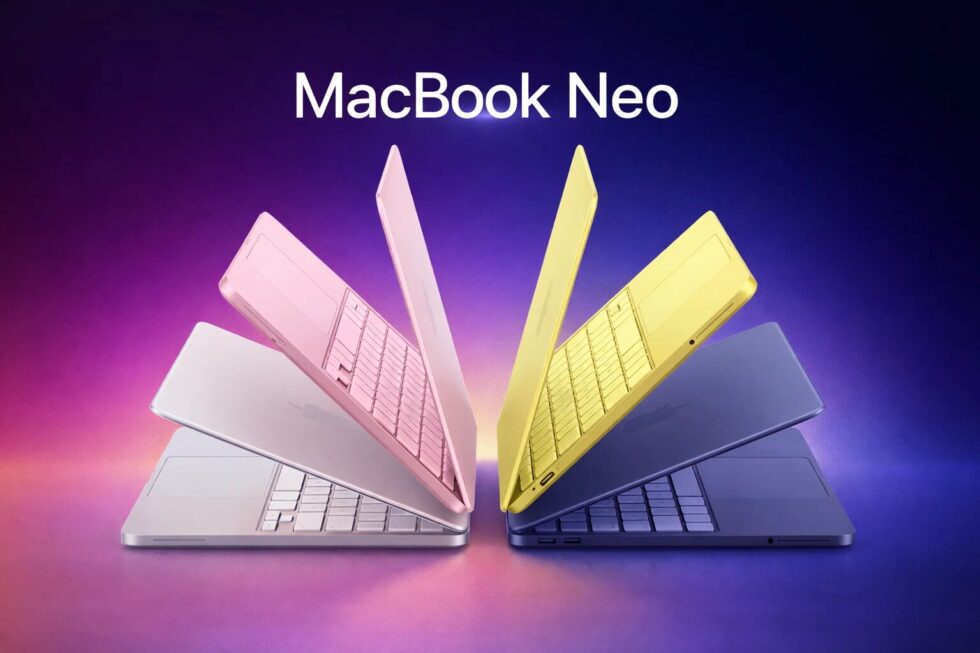
The global laptop market is currently undergoing a seismic shift as Apple officially enters the budget-friendly segment with the release of the MacBook Neo. Starting at an unprecedented €699, this device represents the most aggressive pricing strategy in the history of the Mac, aimed directly at the heart of the Windows mid-range market. For the average consumer, this means the prestigious macOS ecosystem is no longer locked behind a four-figure paywall, offering a high-performance alternative to plastic-bodied PC laptops. The implications are significant: a potential mass migration of users from Windows to Apple Silicon, which could redefine brand loyalty and hardware standards for the next decade. Early data suggests a record-breaking launch week, signaling that price was the final barrier preventing millions from making the switch. As reported by The WP Times.
The Mid-Range Disruption: Apple’s Strategic Assault on Windows
Apple has historically positioned the Mac as a premium product, but the MacBook Neo changes the rules of engagement by targeting the €600–€800 price bracket. By utilizing the A18 Pro chip—originally designed for high-end iPhones—and a 13-inch Liquid Retina display, Apple is providing industrial-grade hardware in a segment typically dominated by thermal-throttled processors and inferior build quality. This move has reportedly "shocked" the industry, with Asus CFO Nick Wu noting that the competition must now reconsider their entire mid-range strategy to keep up with Apple’s aluminum-chassis standard. The Neo isn't just a cheaper computer; it is a Trojan horse designed to bring users into the Apple services ecosystem, including iCloud, Apple Music, and the App Store.
While the MacBook Neo lacks the ProMotion displays and extensive port selection of the MacBook Pro series, its "fresh" appeal is successfully capturing students and office workers who prioritize battery life and portability. Initial reports from 2026 indicate that the demand has already pushed shipping dates into mid-April, a clear sign that Apple’s supply chain is struggling to keep pace with the influx of switchers. Furthermore, trade-in data from retailers suggests the highest volume of PC-to-Mac transitions since the original M1 transition in 2020. The Neo’s existence effectively eliminates the "Apple Tax" argument, forcing PC vendors to compete on merit rather than just price.
| Feature | MacBook Neo (Entry) | Typical Mid-Range PC (2026) |
| Starting Price | €699 | €649 - €799 |
| Chassis Material | Recycled Aluminum | Polycarbonate (Plastic) |
| Processor | Apple A18 Pro (3nm) | Intel Core Ultra 5 / AMD Ryzen 5 |
| Display | 13" Liquid Retina (500 nits) | Standard FHD IPS (300 nits) |
| Battery Life | Up to 18 Hours | 8 - 12 Hours |
Technical Compromises: What You Give Up for the €699 Price Tag
Despite the glowing sales figures, the MacBook Neo is not without its technical caveats, which potential switchers must understand before abandoning their Windows setups. To achieve this price point, Apple has implemented several hardware limitations, most notably in the storage architecture. Early benchmarks confirm that the SSD speeds in the Neo are significantly slower than those found in the M5-powered MacBook Air and Pro models. This results in slightly longer load times for large files and 4K video editing, though it remains imperceptible for daily tasks like web browsing or document processing. Additionally, the device features a limited port array, relying on just two USB-C ports, which necessitates the use of dongles for users with multiple peripherals.
Another critical consideration is the fixed hardware configuration; the €699 model comes with 256GB of storage and 8GB of unified memory. In 2026, while macOS remains highly efficient, professional users may find these specs restrictive for heavy multitasking or creative suites. Unlike many PC laptops in this price range, the MacBook Neo is entirely non-upgradable. Therefore, the "cheapest Mac ever" is a brilliant machine for the 80% of users who perform general tasks, but it may prove a bottleneck for power users. Prospective buyers should weigh the benefit of the premium build against the reality of fixed storage and mid-tier data transfer speeds.
Expert Advice for Potential Switchers:
- Assess Your Storage Needs: Since the SSD is not upgradable, if you plan to store high-res photos or videos, opt for the 512GB model (€799) at the time of purchase.
- Check Software Compatibility: While most apps are now native to Apple Silicon, ensure your specific Windows-only legacy software has a Mac equivalent or works via "Crossover."
- Invest in a Hub: With only two ports, a high-quality USB-C hub is a mandatory accessory for any desktop-style setup.
- Consider the Educational Discount: Students and educators can often reduce the price further, potentially bringing the Neo down to nearly €600.
- Monitor the SSD Wear: Because the system uses "Swap Memory" with 8GB RAM, avoid filling your SSD to its absolute limit to maintain long-term health.
Market Impact: Why the PC Industry is Forced to Evolve
The arrival of the MacBook Neo has sent ripples through the boardrooms of Dell, HP, and Lenovo, who have traditionally owned the sub-€800 laptop market. By offering a 3nm processor (A18 Pro) in a budget machine, Apple has effectively leapfrogged the performance-per-watt metrics of its competitors. This forced evolution is beneficial for consumers across the board; we are already seeing Windows manufacturers accelerating the adoption of ARM-based chips and premium materials in their cheaper lines to avoid losing market share. The "Neo Effect" is essentially a race to the top, where the baseline for what constitutes a "cheap laptop" is being elevated to include better screens and all-day battery life.
According to market analysts, the high trade-in rate reported by MacRumors suggests that Windows users are not just looking for a new computer, but for a different user experience. The seamless integration between iPhone and Mac—further enhanced by 2026’s AI-driven "Apple Intelligence" updates—is a major draw for the younger demographic. However, the PC market still holds an advantage in gaming and specialized enterprise software. For the first time, however, the decision between a PC and a Mac is no longer a financial one, but a functional one. The competition in 2026 is no longer about who can make the cheapest laptop, but who can offer the best value proposition.
What to do if you are considering the switch:
- Test the Keyboard: The Neo uses the latest Magic Keyboard, which has a different travel distance than many PC laptops; try it in-store first.
- Evaluate the Ecosystem: If you already own an iPhone or iPad, the Neo offers "Universal Control," allowing you to use one mouse across all devices.
- Check the Display: The 13-inch Liquid Retina is excellent, but if you require a larger screen for split-screen multitasking, a 15-inch MacBook Air might be worth the extra investment.
- Look at Resale Value: Macs traditionally hold 50-60% of their value after three years, whereas budget PCs often drop to 20%; factor this into your total cost of ownership.
- Wait for April: If you need the device immediately, check local retailers, as Apple’s official site currently has a 3-4 week backlog.
Frequently Asked Questions
Is the MacBook Neo powerful enough for video editing?
Yes, for basic 1080p and light 4K editing in iMovie or Final Cut Pro, the A18 Pro chip is more than capable. However, for professional-grade 8K color grading, the slower SSD speeds may cause some friction compared to the Pro models.
Does the MacBook Neo support two external monitors?
By default, the A18 Pro chip supports one external display up to 6K resolution. To use two external monitors, you would typically need a DisplayLink certified docking station.
Why is it called "Neo" instead of "Air Lite"?
Apple’s marketing director recently stated that "Neo" represents a fresh start and a new entry point into the ecosystem, aiming to distinguish it from the "Air" which remains the world’s most popular premium thin-and-light.
Can I run Windows apps on the MacBook Neo?
Directly, no. However, using tools like Parallels Desktop or the built-in "Game Porting Toolkit," many Windows applications can run with impressive performance on Apple Silicon.
Is 8GB of RAM enough in 2026?
For students, writers, and general web usage, yes. For developers or professional creators, 8GB is the bare minimum and may result in the system using the SSD for "virtual memory."
Read about the life of Westminster and Pimlico district, London and the world. 24/7 news with fresh and useful updates on culture, business, technology and city life: Apple Unveils AirPods Max 2: The New Benchmark for High-Fidelity Audio in 2026