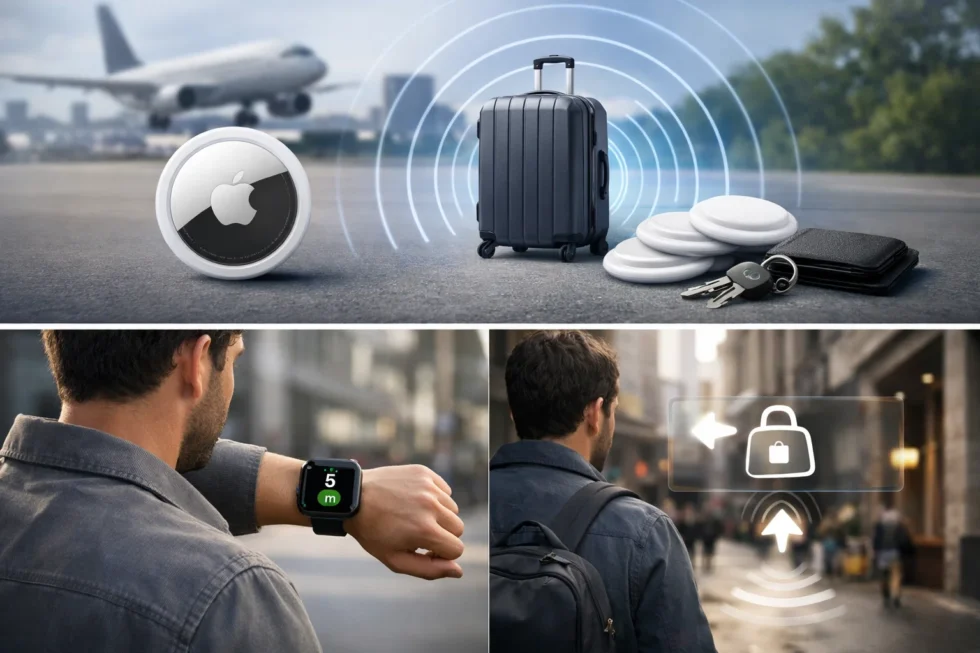
Apple has released a new AirTag, upgrading its most widely used item-tracking accessory with a longer detection range, a significantly louder built-in speaker and expanded Precision Finding support across iPhone and Apple Watch. The update, announced on 26 January 2026, marks Apple’s first major AirTag hardware refresh since the tracker’s debut in 2021, and is aimed at users who rely on Bluetooth trackers and location devices to recover lost luggage, keys, wallets, backpacks and other personal belongings in everyday and travel scenarios.
Apple says the improvements are focused on real-world recovery scenarios — including airports, airline baggage systems, public transport networks, busy urban streets and crowded homes — rather than cosmetic redesigns. With stronger Ultra Wideband technology, improved Bluetooth tracking performance and deeper integration with the Find My network, the new AirTag is designed to help users locate misplaced items faster, from farther away and with greater accuracy. The WP Times reports this update citing Apple’s official press release.
Why Apple updated AirTag now
Since AirTag’s launch in 2021, Apple says millions of users worldwide have relied on the tracker to recover lost luggage, keys, bicycles, backpacks and personal items, turning it into one of the most widely used Bluetooth tracking devices on the market. As global travel rebounded and airports became more congested, AirTag has increasingly been used in airline baggage tracking, commuting and everyday urban life.
Apple has repeatedly pointed to real-life recovery stories to explain the timing of the update. In one case cited by the company, a musician was able to locate a missing instrument just hours before a live performance after placing an AirTag inside the case. In another, a traveller recovered misrouted luggage containing essential medication during a flight connection — a scenario where speed and accuracy were critical rather than optional.
Behind these examples is a clear usage pattern: AirTag is most valuable when something goes wrong — during missed connections, busy transfers, crowded homes or chaotic travel days. Apple’s internal takeaway is that recovery moments demand greater tracking range, a louder and more recognisable alert, and faster, more precise guidance via Precision Finding. The 2026 AirTag update directly targets those pressure points, focusing on reliability in high-stress situations rather than aesthetic redesigns.
What’s actually new in the 2026 AirTag
The headline upgrades are practical rather than cosmetic:
- Up to 50% longer Precision Finding range
Powered by Apple’s second-generation Ultra Wideband chip, the new AirTag can guide users from much farther away than before. - Much louder speaker
Apple says the internal speaker is around 50% louder, audible from up to twice the distance, making it easier to hear through bags, furniture or noisy environments. - Precision Finding on Apple Watch
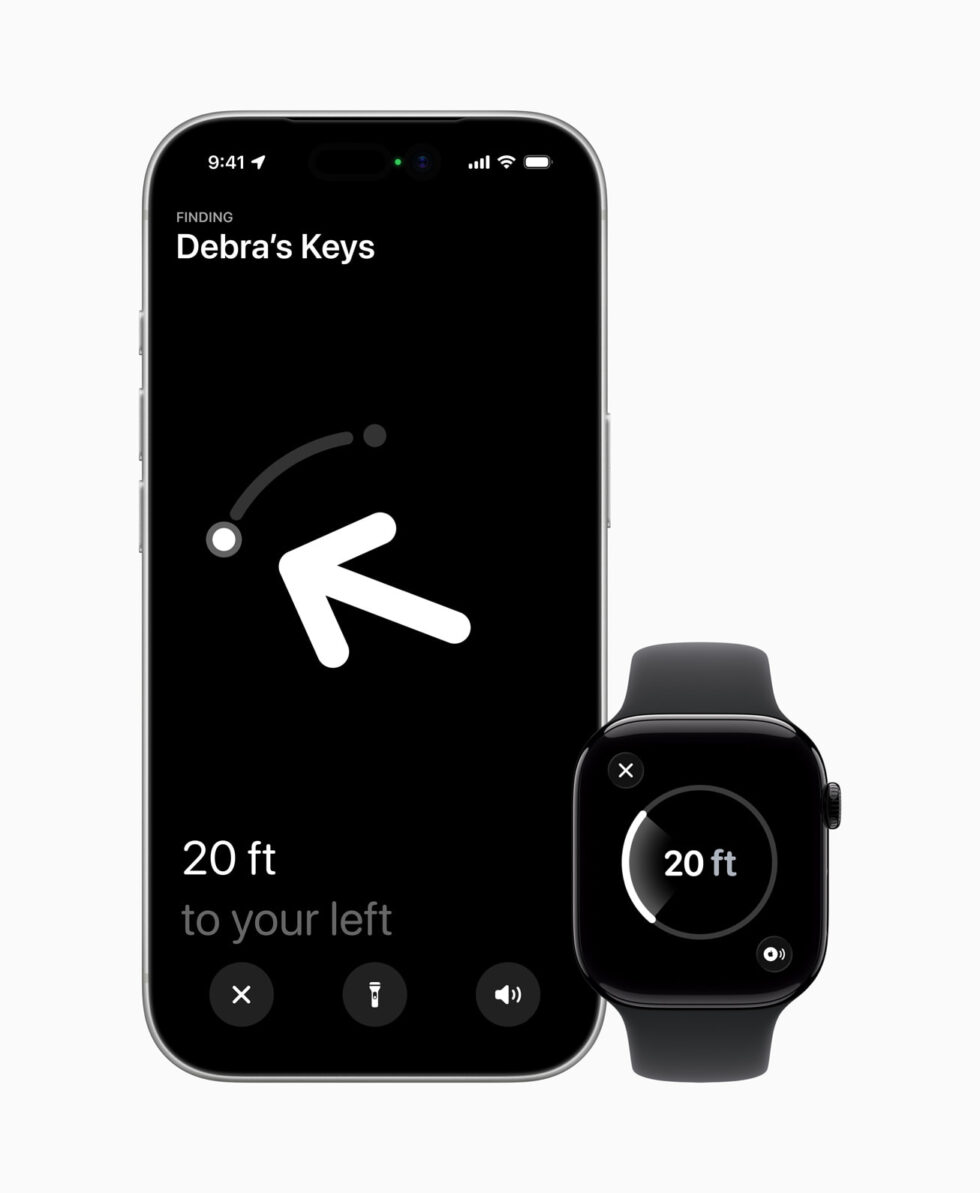
For the first time, users can locate AirTags directly from Apple Watch Series 9+ or Apple Watch Ultra 2, using haptic taps and on-screen distance cues. - Better Bluetooth detection
An upgraded Bluetooth chip improves how quickly nearby devices in the Find My network can detect a lost AirTag. - Seamless airline recovery support
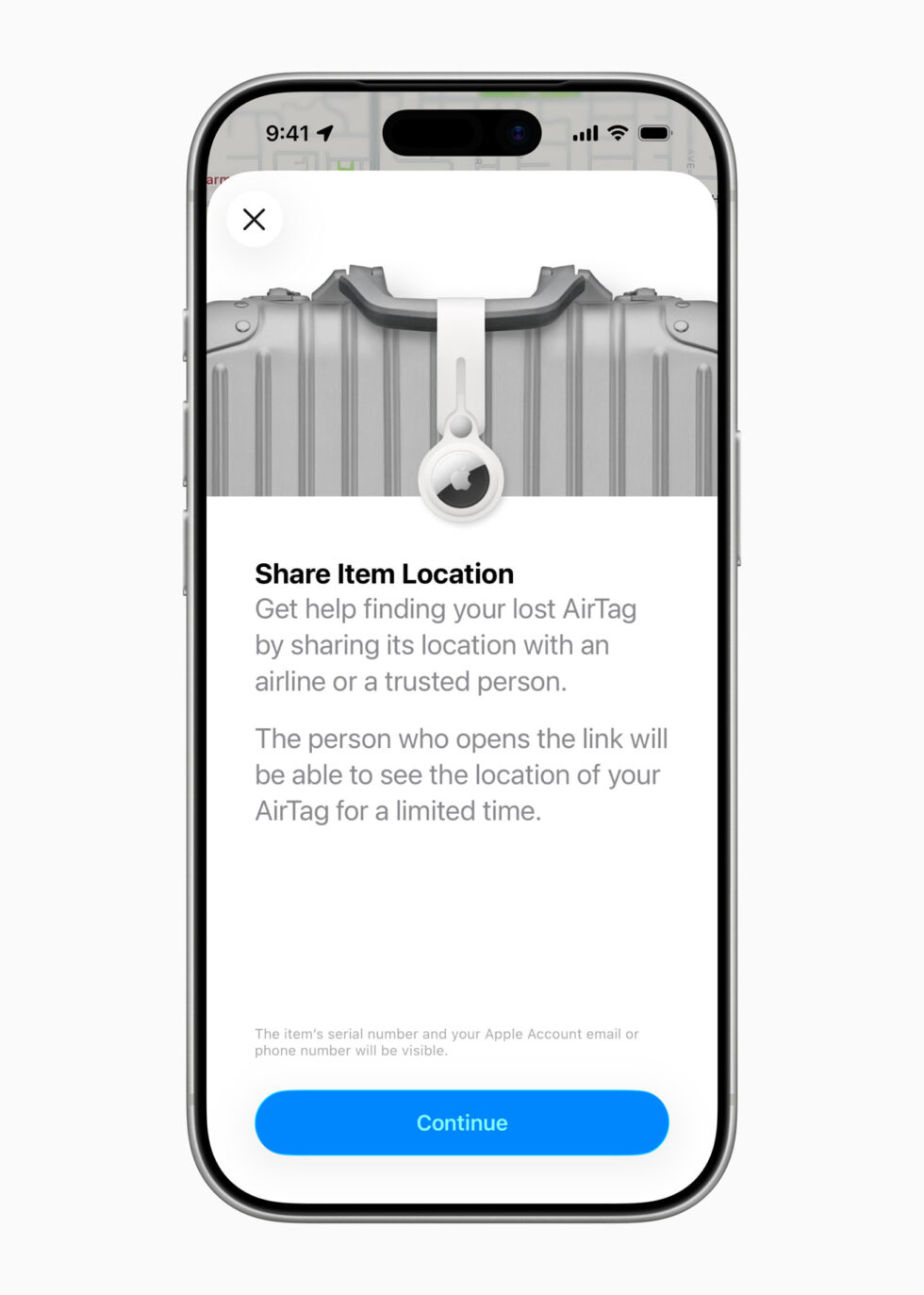
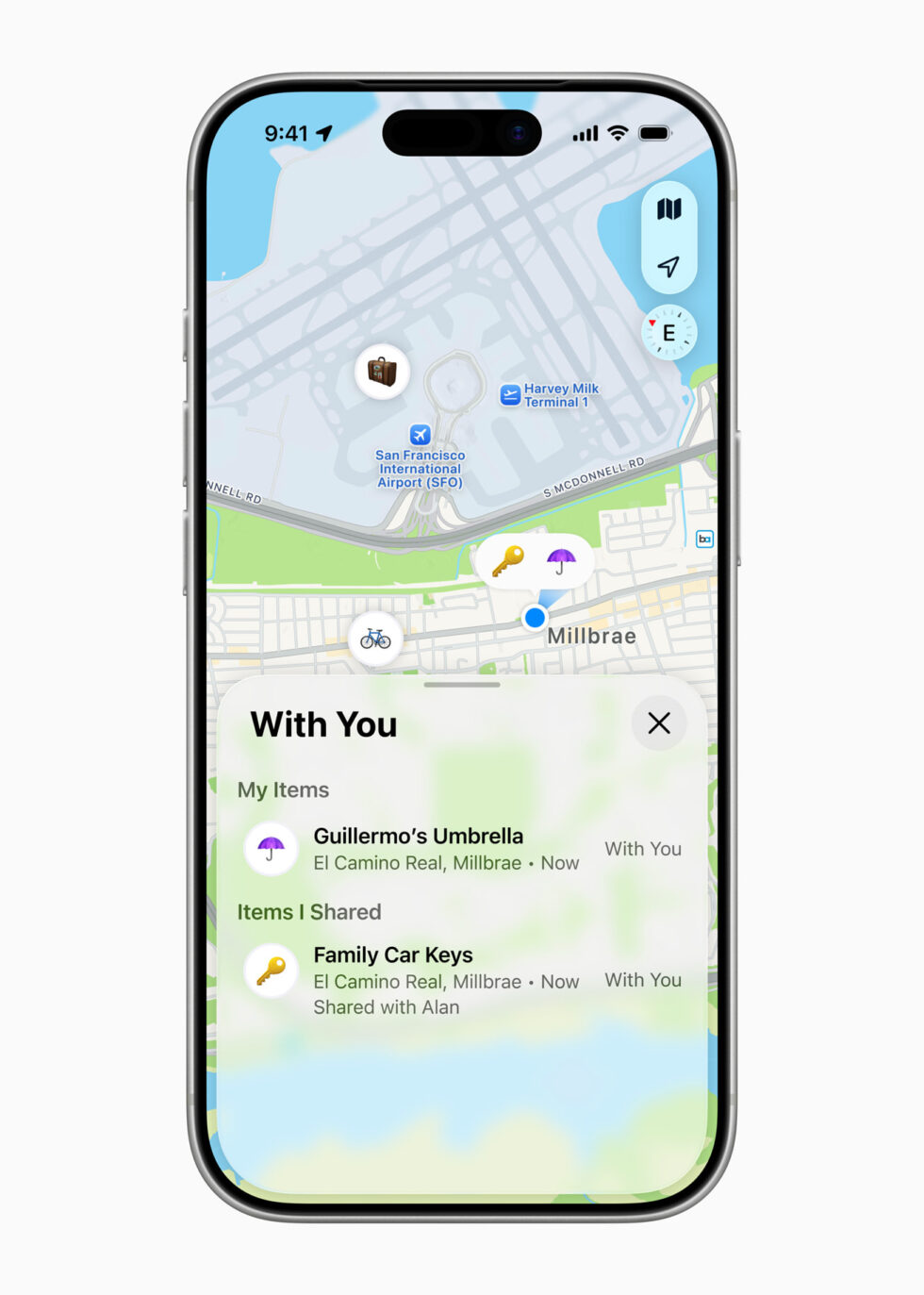
AirTag now integrates with Share Item Location, allowing users to securely share an item’s location with participating airlines when luggage goes missing.
Real-life use: why this matters
Airports are one of the biggest stress tests for tracking technology. According to airline IT provider SITA, airlines using Apple’s Share Item Location feature report:
- 26% fewer baggage delays
- 90% fewer cases of permanently lost luggage
Instead of waiting days for updates, passengers can now share a live, time-limited location link directly with airline staff — and revoke access automatically once the bag is returned. At home, the louder speaker targets a simpler frustration: keys lost between sofa cushions, wallets buried in gym bags or backpacks left in offices.
Privacy and safety remain central
Apple again emphasises that AirTag is designed strictly for tracking objects, not people or pets, positioning privacy protections as a core part of the product rather than an add-on. The company says concerns around unwanted tracking and location misuse have directly shaped how AirTag works at both hardware and software level. Apple highlights several safeguards built into the AirTag and the Find My network:
- End-to-end encrypted location data, ensuring only the owner can access an AirTag’s location
- No location history stored on the AirTag itself, reducing the risk of misuse if a device is accessed
- Rotating Bluetooth identifiers that change frequently, making long-term tracking by third parties more difficult
- Cross-platform safety alerts, which notify iPhone and Android users if an unknown AirTag is detected moving with them
According to Apple, location signals used by the Find My network are anonymous and encrypted, meaning no participating device — and not even Apple — can see the identity or location of other devices involved in helping find a lost item. The company says these measures are intended to balance the growing popularity of Bluetooth trackers with rising expectations around digital privacy, personal safety and anti-stalking protections, particularly in crowded public spaces and during travel.
Price comparison: new vs previous AirTag models
Apple has not increased prices, keeping the cost identical to the original 2021 model.
| Model | Release year | Single price | 4-pack price | Major features |
|---|---|---|---|---|
| AirTag (1st gen) | 2021 | $29 | $99 | UWB (1st gen), basic Precision Finding, standard speaker |
| AirTag (2026) | 2026 | $29 | $99 | UWB (2nd gen), +50% range, louder speaker, Apple Watch support |
Free personalised engraving remains available when ordering directly from Apple.
Technical comparison: old vs new AirTag
| Feature | AirTag (2021) | AirTag (2026) |
|---|---|---|
| Ultra Wideband chip | 1st generation | 2nd generation |
| Precision Finding range | Standard | Up to 50% farther |
| Speaker volume | Standard | ~50% louder |
| Apple Watch Precision Finding | No | Yes |
| Bluetooth range | Standard | Expanded |
| Share Item Location (airlines) | Limited | Integrated |
| Form factor | Original | Unchanged |
| Accessory compatibility | Original accessories | Fully compatible |
Environmental upgrades and sustainability design
Apple says the new AirTag has been redesigned to align more closely with its Apple 2030 climate commitment, which aims to make the company carbon neutral across its entire footprint by the end of the decade. Rather than changing the external form factor, Apple focused on reducing the product’s material and packaging footprint while maintaining full compatibility with existing accessories. According to Apple, the updated AirTag now incorporates:
- 85% recycled plastic in the outer enclosure
- 100% recycled rare earth elements used in all internal magnets
- 100% recycled gold plating across Apple-designed printed circuit boards
- Fully fibre-based, recyclable packaging, eliminating plastic wrapping
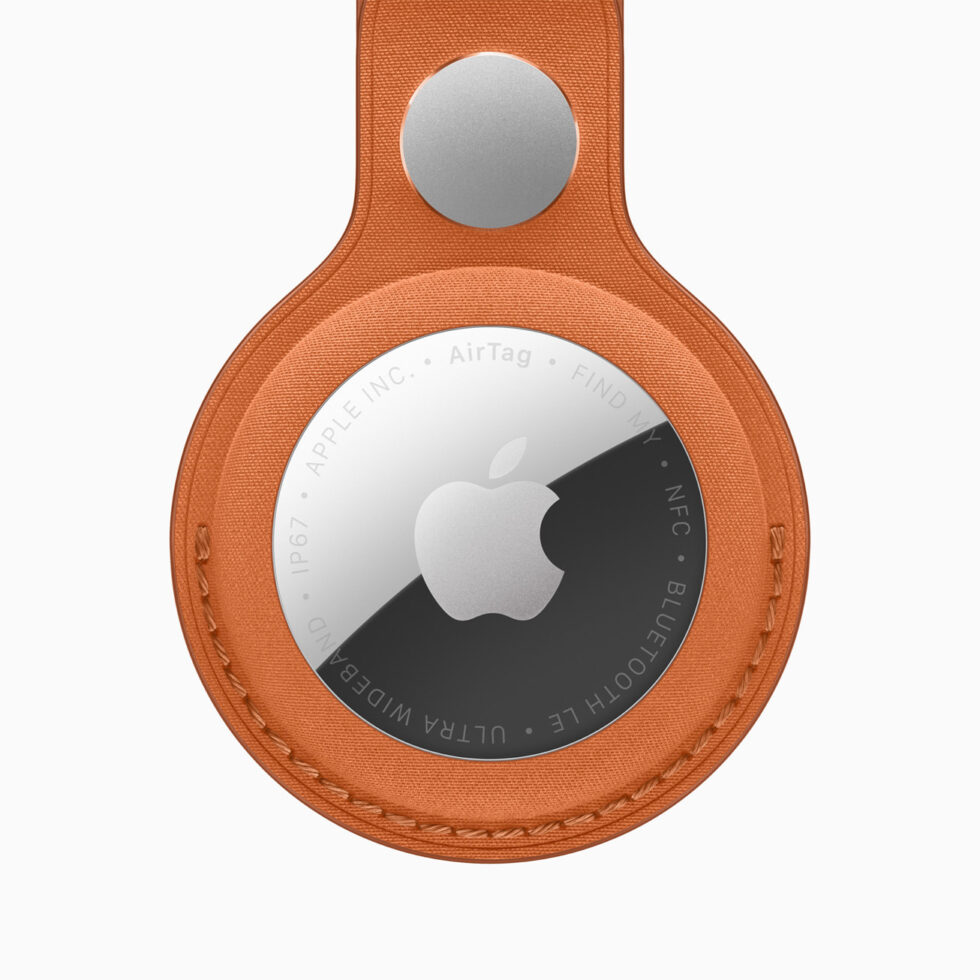
By keeping the same physical design, Apple says all existing AirTag accessories remain compatible, reducing unnecessary waste from replacement cases and holders. This includes the FineWoven Key Ring, which is made from 68% recycled materials and continues to be sold separately. Apple positions this approach as a balance between sustainability and longevity, allowing users to upgrade the tracker itself without discarding accessories already in use.
Availability, release timeline and system requirements
Apple confirmed that the new AirTag was officially announced on 26 January 2026, with sales opening immediately through Apple’s online channels. The company says physical availability will follow shortly, as stock reaches Apple Stores and authorised resellers.
Availability
- Announced: 26 January 2026
- Available to order: Now via Apple’s website and the Apple Store app
- In-store availability: Rolling out later this week at Apple Store locations and authorised retailers
System requirements
To use the new AirTag and its enhanced tracking features, Apple says customers will need:
- An iPhone running iOS 26 or later
- An iPad running iPadOS 26 or later
- An Apple Watch with watchOS 26.2.1 or later to access on-wrist Precision Finding
- Find My enabled in iCloud, with the user signed in to an Apple Account
Apple notes that some features, including Ultra Wideband-based Precision Finding, may vary by country depending on regional regulations, but the core tracking and recovery functions are available globally.
Read about the life of Westminster and Pimlico district, London and the world. 24/7 news with fresh and useful updates on culture, business, technology and city life: Xiaomi finally adds native Apple AirPods support with HyperOS 3.1 — what it is and how it works
Photo: Apple