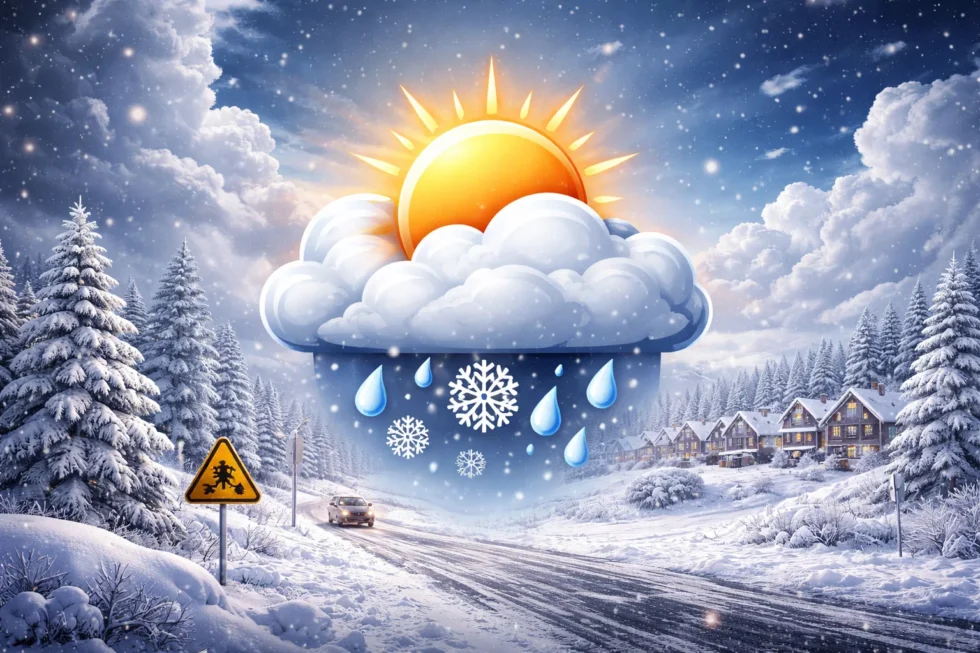
Weather across Britain on Friday 2 January remains firmly locked in a deep Arctic pattern, with icy pavements, freezing winds and wintry showers affecting daily life from London to the Scottish Highlands. The Met Office says the cold spell is now fully established, with snow, sleet and sub-zero nights creating hazardous conditions for travel and health, The WP Times editorial team reports, citing the Met Office.
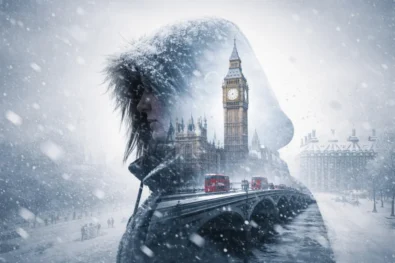
In London and the South East, the morning begins cold and damp, with temperatures around 1–3°C and a northerly breeze increasing the wind-chill on exposed streets, bridges and platforms. Cloud cover dominates early, with a risk of patchy sleet or light snow before brighter spells develop later in the day. Even where snowfall is minimal, overnight frost and residual moisture mean pavements and minor roads remain icy through the afternoon.
Daytime highs in London are expected to reach around 4–5°C, before temperatures fall sharply again after sunset, raising the risk of refreezing and renewed black ice during the evening commute.
Across Scotland, conditions are far more severe. The Met Office has issued amber snow warnings for northern and eastern regions, where 10–20 cm of snow is expected at lower levels and up to 40 cm on high ground. Strong winds will lead to drifting snow and near-whiteout conditions on exposed routes, increasing the risk of stranded vehicles, blocked roads and disruption to rail and air services.
Elsewhere in the UK, yellow warnings for snow and ice remain in force across Wales, Northern Ireland and northern England. Even small accumulations combined with frozen ground are enough to cause widespread travel disruption, particularly during peak commuting hours.
Over the past three days, temperatures across England, Wales and Scotland have stayed well below seasonal averages, allowing ice to form each night and snow to settle more easily when showers pass through. The biggest hazards for people heading out today are black ice, freezing fog and wind-chill, which can make conditions feel several degrees colder than the thermometer suggests.
How to stay safe in freezing UK weather
Public health agencies warn that prolonged cold increases the risk of heart strain, respiratory illness and falls. With Arctic air expected to persist, readers are advised to take simple but effective precautions.
1. Dress for wind-chill
Cold northerly winds can strip heat from the body quickly. Wear layered clothing, a hat and gloves to protect exposed skin.
2. Keep warm indoors
Rooms should be kept at 18°C or higher, especially for older people and those with health conditions.
3. Eat and drink for warmth
Hot meals and warm drinks help maintain circulation and core body temperature during cold spells.
Why this cold snap is disrupting the UK
This is not a brief winter chill but a sustained Arctic air mass sitting over Britain. With cold air locked in place, frost forms every night and snow melts slowly, increasing the likelihood of ice, travel disruption and health impacts until the weather pattern shifts. The Met Office advises people to check forecasts regularly, allow extra time for journeys and avoid unnecessary travel in areas under snow and ice warnings.
Read about the life of Westminster and Pimlico district, London and the world. 24/7 news with fresh and useful updates on culture, business, technology and city life: Black Moon 2026 UK: When is it and how will it affect your health