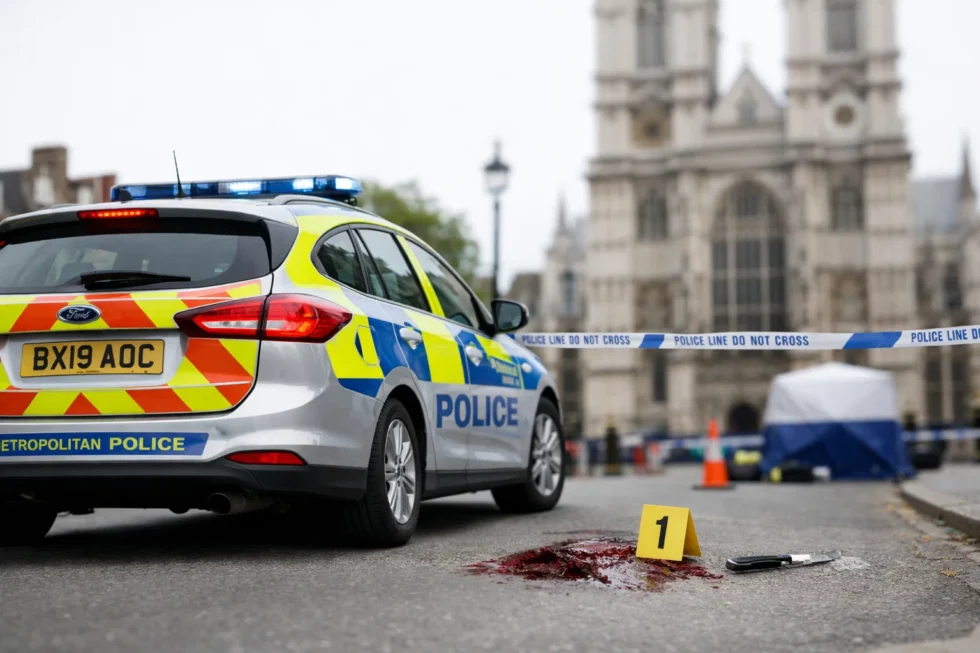
A high-profile murder investigation is currently underway in the heart of London following a fatal stabbing on Friday night, March 27, 2026, in the immediate vicinity of Westminster Abbey and Parliament Square. The victim, a 26-year-old male, was attacked in one of the capital's most heavily surveilled districts, raising immediate concerns regarding public safety and the efficacy of current knife-crime prevention strategies in high-security zones. For residents, tourists, and commuters, this incident signifies a localized spike in violent crime within the Westminster borough, necessitating an increased police presence and potential logistical disruptions as forensic teams continue their sweep of Abbey Orchard Street. This is reported by The WP Times, citing TheGuardian.
Forensic Protocols and the Crime Scene at Abbey Orchard Street
Metropolitan Police officers were dispatched to Abbey Orchard Street at 10:17 PM following emergency calls reporting a stabbing in progress. Despite immediate first aid administered by first responders and subsequent treatment by London Ambulance Service (LAS) paramedics, the victim succumbed to his injuries at the scene. Under the Police and Criminal Evidence Act 1984 (PACE), a "Inner Core" forensic cordon has been established, which typically remains in place for 48 to 72 hours during a Category A murder investigation. This area, situated between the Department for Education headquarters and the historic grounds of the Abbey, is currently undergoing a "Level 1" fingertip search to recover the weapon and any DNA evidence that could lead to a suspect.
- Location: Abbey Orchard Street, SW1P.
- Time of Incident: 10:17 PM, Friday, March 27, 2026.
- Victim Profile: Male, 26 years old (Next of kin notified).
- Current Status: No arrests have been made as of Saturday afternoon.
- Evidentiary Focus: CCTV recovery from surrounding government buildings and residential blocks (e.g., St Margaret’s House).
- Police Authority: Led by Detective Superintendent Dean Lanfear of the Specialist Crime Command.
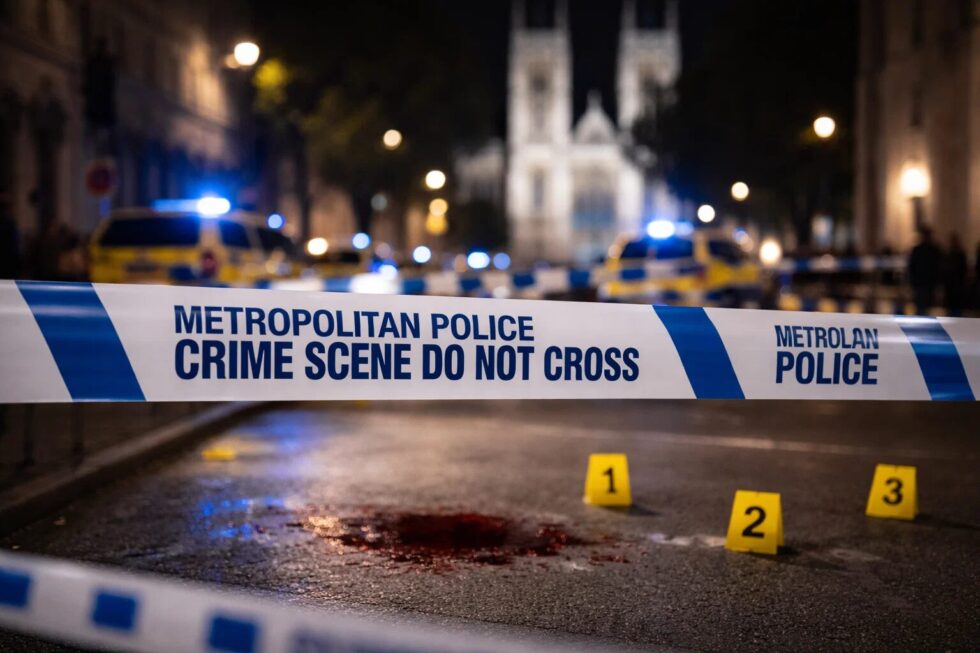
Knife Crime Statistics and Legislative Context in 2026
The incident occurs against a backdrop of evolving legislation aimed at curbing violent crime in the United Kingdom. According to the Office for National Statistics (ONS) data for the first quarter of 2026, knife-enabled crime in London has seen a marginal 3% decrease year-on-year, yet high-visibility "hotspot" incidents in Zone 1 remain a priority for the Home Office. The "Criminal Justice Act 2025," which came into full effect in January 2026, introduced mandatory minimum sentences for the possession of "zombie-style" knives and enhanced stop-and-search powers in designated "Serious Violence Reduction Orders" (SVRO) areas. This Westminster stabbing is likely to trigger a Section 60 order, granting police temporary powers to stop and search individuals without reasonable suspicion within a defined perimeter.
- Legislation: Criminal Justice Act 2025 (Section 4: Offensive Weapons).
- Police Powers: Potential Section 60 (Criminal Justice and Public Order Act 1994) authorization for the SW1 postcode.
- Trend Analysis: Shift from gang-affiliated violence to "spontaneous" street confrontations in tourist-heavy districts.
- Funding: The "Violence Reduction Unit" (VRU) has allocated £15m for 2026 to increase patrols in the Westminster-Victoria corridor.
- Public Safety: Westminster remains one of the safest boroughs statistically, but high-profile incidents significantly impact the "Fear of Crime" index.
Logistical Impact and Public Safety Advisory for Westminster
The Metropolitan Police have deployed additional "Visual Deterrent" patrols across the Westminster and St James’s Park areas to provide reassurance to the public. For those planning to visit Westminster Abbey or Parliament Square this weekend, significant pedestrian diversions are in place around Abbey Orchard Street and Old Pye Street. The Met’s "Project Servator" teams—specially trained units designed to identify individuals with criminal intent—are operating in plain clothes and high-visibility uniforms throughout the district. Tourists are advised to follow official signage and avoid the immediate vicinity of the forensic tents to allow the Specialist Crime Command to complete their work without contamination risk.
| Service / Area | Status | Recommendation |
| Abbey Orchard Street | Closed to all traffic/pedestrians | Avoid; use Victoria Street instead. |
| Westminster Abbey | Open (Standard hours) | Expect heightened security at entrances. |
| Parliament Square | Partially restricted | Potential delays for tour buses. |
| St. James's Park Station | Open | Normal service; increased police presence. |
| Victoria Street | Open | Primary bypass route for pedestrians. |
Practical Recommendations for Residents and Witnesses
Detective Superintendent Dean Lanfear has issued a direct appeal for any witnesses who were in the vicinity of the Abbey at approximately 10:00 PM on Friday. Under the "Witness Charter 2026" guidelines, individuals providing information are entitled to anonymity and protection if the case proceeds to the Central Criminal Court (Old Bailey). Specifically, drivers with dashcam footage and residents with "Ring" doorbell cameras in the SW1P area are urged to upload their data to the Met’s "Public Portal" (MIPP). Even seemingly minor details, such as the direction of flight of a suspicious individual or a discarded item of clothing, are critical in the first 24 hours—often referred to as the "Golden Hour" of a murder inquiry.
- Check Digital Footage: Review all recordings between 9:45 PM and 10:45 PM on March 27.
- Contact Authorities: Call 101 or use the "Met Police" official app, quoting reference CAD 8213/27MAR26.
- Anonymous Reporting: Contact Crimestoppers at 0800 555 111 for 100% anonymity.
- Avoid Speculation: Do not share unverified descriptions of suspects on social media, as this can prejudice future legal proceedings.
- Stay Informed: Follow the @MetPoliceUK X (formerly Twitter) account for official updates on road reopenings.
Analysis of Security Protocols in the "High-Security Zone"
The fact that a fatal stabbing occurred within a few hundred meters of the Palace of Westminster—one of the most protected sites in Europe—indicates a potential "blind spot" in urban security architecture. Despite the presence of thousands of CCTV cameras and Permanent Armed Response Vehicles (ARVs), the perpetrator managed to carry out the attack and evade immediate capture. This incident will likely lead to a review of "Integrated Security 2026" protocols, possibly resulting in more frequent "knife arches" at transit hubs and the expansion of facial recognition technology in public spaces. The Metropolitan Police must balance the need for intrusive security with the civil liberties of the millions who traverse this historic area daily.
- Security Review: Potential "Borough-Wide" risk assessment by the Mayor’s Office for Policing and Crime (MOPAC).
- Technology: Enhanced use of "Live Facial Recognition" (LFR) to scan for known violent offenders in the SW1 area.
- Tactics: Increased use of "Stop and Account" procedures for individuals loitering near government buildings after dark.
- Risk Mitigation: Installation of "Emergency Bleed Kits" in public kiosks and government lobbies, a 2026 mandate for high-traffic zones.
- Conclusion: The investigation remains fluid; forensic evidence is currently the primary driver for identifying the suspect.
Read about the life of Westminster and Pimlico district, London and the world. 24/7 news with fresh and useful updates on culture, business, technology and city life: Protests in London: Together Alliance & Palestine Rally Routes, Road Closures, and Safety Info