Opening a bank account in London as a foreigner in 2026 has become a digital-first endeavor, yet the "Proof of Address" hurdle remains the most significant barrier to entry. As the UK financial sector undergoes a 2026 regulatory shift prioritizing "AI-Verification" over physical branch visits, the speed of your application now depends entirely on your residency status and the specific digital paper trail you can provide. For professionals, students, and digital nomads, securing a local account is no longer just a convenience—it is a functional necessity to avoid the 3% to 5% foreign transaction surcharges that now plague non-UK cards in London’s almost entirely cashless economy. Success in 2026 requires a tiered strategy: starting with a high-speed digital "challenger" bank to establish local history before transitioning to a "Big Four" institution for long-term credit and mortgage benefits. According to reports from The WP Times.
The 2026 London Banking Landscape: Fintech vs. Traditional Giants
In 2026, the distinction between "fintech" and "traditional" banks in London has blurred, but their onboarding philosophies remain distinct. Digital-native banks like Monzo, Revolut, and Starling have optimized their 2026 apps to verify international passports and Biometric Residence Permits (BRPs) in under 10 minutes, making them the primary entry point for new arrivals. Conversely, high-street stalwarts such as HSBC, Barclays, and Lloyds offer more robust "International Accounts" that can technically be opened from abroad but often require a minimum deposit of £5,000 to £25,000 or a high-tier relationship status. For most foreigners, the most efficient path is to utilize a digital bank for daily spending while using a traditional bank's international arm for larger assets and currency hedging.
| Bank Type | Top Providers (2026) | Onboarding Time | Minimum Deposit | Best For |
| Digital Challenger | Monzo, Revolut, Starling | 10–30 Minutes | £0 | Daily spending & Salary |
| High-Street (Trad) | HSBC, Barclays, Lloyds | 3–10 Days | £0 (Resident) / £5k+ (Global) | Credit history & Mortgages |
| Specialized/Expats | Monese, Wise | 15 Minutes | £0 | No UK address yet |
| Premium/Wealth | Coutts, HSBC Expat | 2–4 Weeks | £50,000+ | High-net-worth individuals |
Step-by-Step Guide to Opening Your First Account in London
The 2026 process is strictly divided into two paths: the "Remote Digital Path" for those still abroad or newly arrived, and the "Full Residency Path" for those with a UK rental agreement. The "Remote Path" utilizes Electronic Money Institutions (EMIs) which provide a UK Sort Code and Account Number without requiring a local utility bill—essential for paying your first month’s rent or receiving a UK salary. Under 2026 UK Finance laws, these accounts are fully protected by the FSCS up to £85,000, provided they hold a full banking license (like Starling or Monzo).
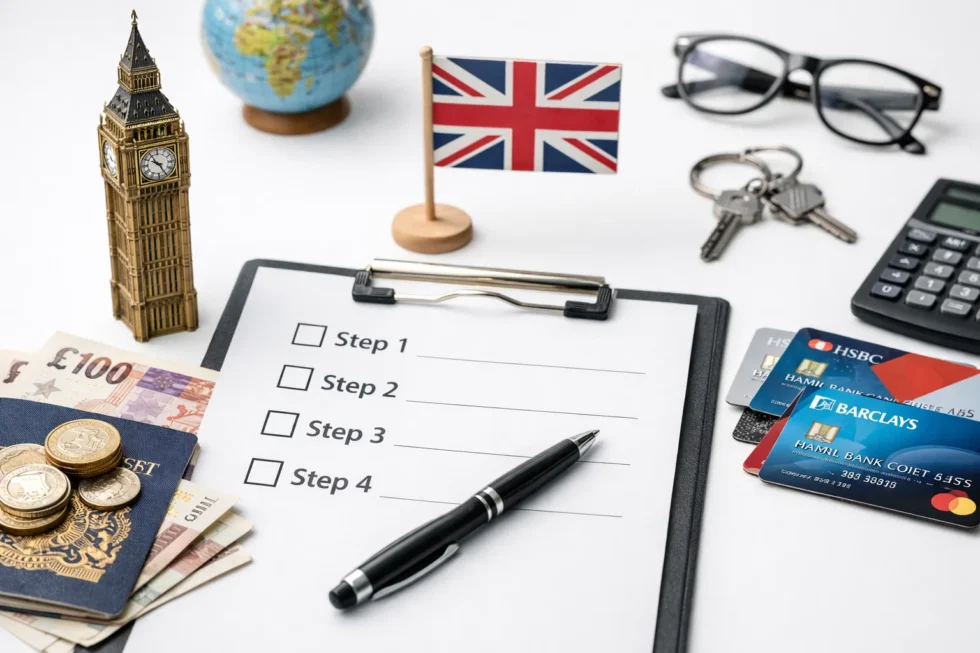
The 2026 Onboarding Checklist:
- Download the App: Ensure you are using the 2026 updated version of the bank’s app to access the latest AI-verification tools.
- Verify Identity: You will need a valid international passport. In 2026, standard ID cards from most non-EU countries are only accepted if they contain a biometric chip.
- The "Selfie-Video": Most London banks now require a 5-second video clip where you recite a unique code to prove you are a live applicant.
- Submit BRP/Visa: Upload a high-resolution scan of your Biometric Residence Permit or your digital "Share Code" from the UK Home Office.
- Proof of Address (The 2026 Workaround): If you lack a utility bill, use a "Letter of Introduction" from a UK University or a verified "Proof of Residency" certificate from a co-living provider.
Overcoming the "Proof of Address" Trap in 2026
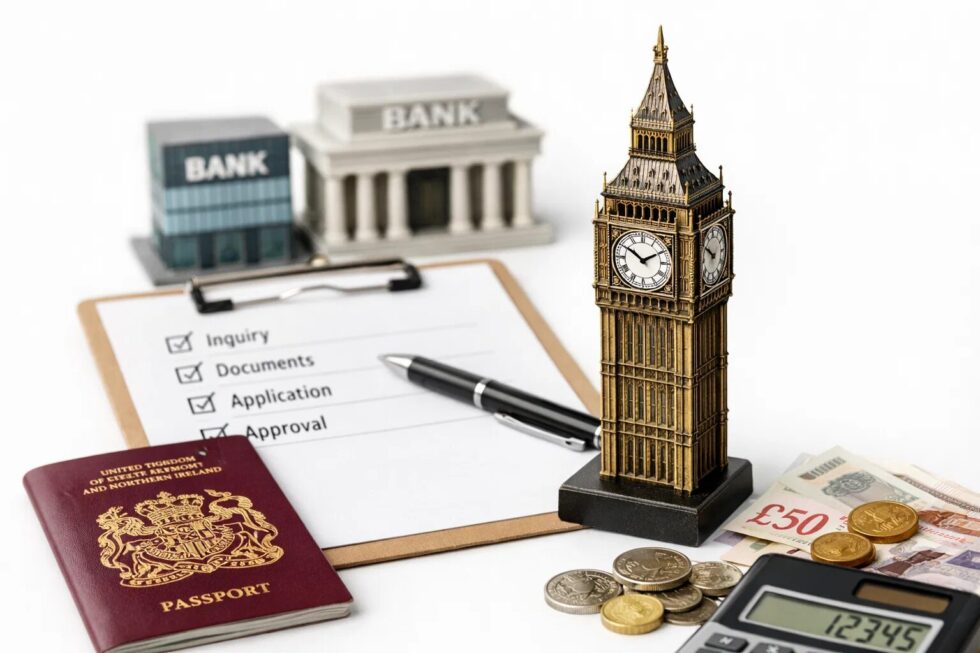
The "Catch-22" of London life—needing a bank account to rent a flat, but needing a flat to open a bank account—has been partially mitigated by the 2026 "Portability Regulations." Many digital banks now accept "Correspondence Addresses" (such as a friend’s home or a verified workspace) for the initial card delivery, provided your primary tax residency is disclosed. High-street banks, however, still adhere to the "Trilateral Check," requiring an official document from the local council (Council Tax), a major utility provider (Electricity/Water), or another UK financial institution. If you are struggling, the most practical solution in 2026 is to use Monese, which specializes in "borderless" accounts and allows for address verification via GPS geolocation within the UK.
Expert Advice for Address Documentation:
- Council Tax is King: As soon as you move in, register for Council Tax; it is the most universally accepted proof of address in the UK.
- The GP Registration Trick: Registering with a local NHS doctor (GP) often results in an official letter sent to your home, which some banks accept as secondary proof.
- Digital Utility Bills: Ensure your utility bill is a "True PDF" download; 2026 AI-screeners often reject screenshots or photos of paper bills due to fraud risks.
- Update Your Phone Contract: A monthly (not pay-as-you-go) mobile contract with a provider like EE or O2 can serve as a valid "Tier-2" proof of address.
- The "Wise" Bridge: Open a Wise account in your home country, change the address to your UK one once you arrive, and use the Wise statement as proof for a high-street bank.
Financial Regulations and Compliance for 2026 Expats
As of 2026, the UK’s Financial Conduct Authority (FCA) has tightened "Source of Wealth" (SoW) requirements for all foreign-born account holders. If you intend to transfer more than £10,000 into your new London account from abroad, you will likely trigger an automated "Compliance Hold." To navigate this, you must keep digital copies of your employment contracts, tax returns from your home country, or sales of assets (like property) ready for upload. Furthermore, 2026 tax laws require banks to automatically share your UK account balance with your home country’s tax authorities via the Common Reporting Standard (CRS). It is vital to consult with a tax professional to ensure you are not double-taxed on global income while residing in London.
How to maintain a "Healthy" UK Bank Account:
- Regular Activity: Avoid "dormancy" by making at least three transactions a month; 2026 AI-security frequently freezes inactive foreign accounts.
- Report Changes Immediately: If your visa status changes (e.g., from Student to Skilled Worker), you must update the bank within 30 days to avoid account closure.
- Monitor Your Credit Score: Use apps like Experian or ClearScore from month one; a strong UK credit score is essential for moving from a "Basic" to a "Premium" account.
- Avoid Large Cash Deposits: In 2026, depositing more than £1,000 in cash at a "Post Office" or branch will almost certainly trigger a manual audit of your account.
- Enable Two-Factor Authentication (2FA): London is a global hub for "Authorised Push Payment" (APP) fraud; always use biometric 2FA for any transfer over £50.
Frequent Questions
Which London bank is easiest for a foreigner to open in 2026?
Monzo and Revolut remain the easiest due to their "mobile-only" onboarding and acceptance of many international IDs without a local utility bill.
Can I open a UK bank account before I arrive in London?
Yes, via "International" or "Expat" accounts from HSBC or Barclays, or through digital platforms like Wise. However, these often require high minimum balances.
Is my money safe in a digital UK bank?
Yes, provided the institution has a "Full UK Banking License," your deposits are protected by the FSCS up to £85,000. Always check for the FSCS logo in the app.
What is a "Share Code" and why does the bank want it?
A Share Code is a 9-character code generated by the Home Office that allows banks to digitally verify your right to live and work in the UK.
Do London banks charge monthly fees?
Most standard current accounts are free. However, "Premium" accounts (£10-£20/month) offer benefits like travel insurance, higher interest rates, and concierge services.
Can I open an account with just a tourist visa?
No. To open a standard UK bank account, you must have a valid residency or work/study visa. Tourists should use "Travel Cards" from their home country or Wise.
Read about the life of Westminster and Pimlico district, London and the world. 24/7 news with fresh and useful updates on culture, business, technology and city life: How much does a flat cost in Barcelona city centre compared with coastal areas of Catalonia