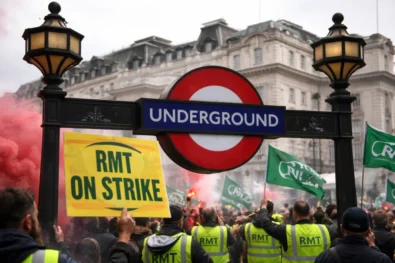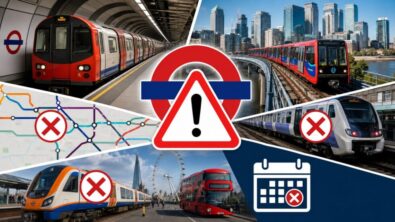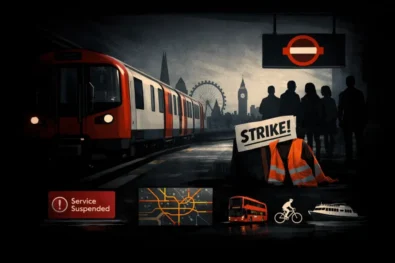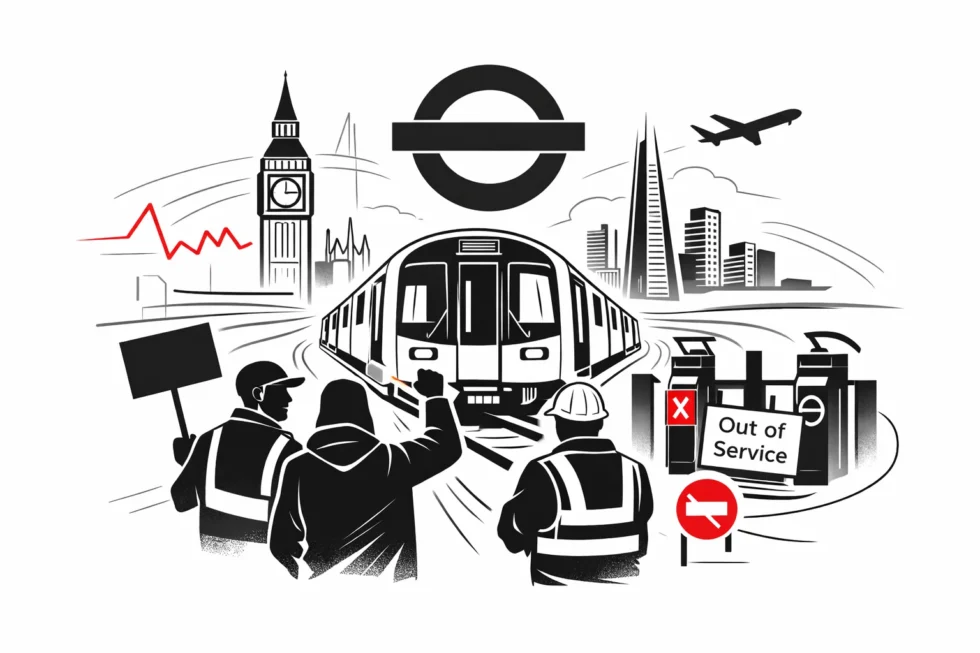
London Tube strikes 2026 will disrupt the capital next week after members of the RMT confirmed two 24-hour walkouts across the London Underground network, with services expected to be severely reduced from midday on 21 April and again on 23 April. The industrial action follows an escalation in a dispute over working conditions and proposed staffing arrangements between unions and Transport for London, raising the risk of widespread disruption across central and outer London.
The strikes will run from 12:00 to 12:00 the following day, but operational recovery constraints mean disruption is expected to extend well beyond those windows, particularly during evening peaks and the following mornings. Even limited participation is forecast to have a disproportionate impact on network capacity due to the Underground’s reliance on coordinated staffing across signalling, control and station operations, The WP Times reports.
TfL strikes April 2026: confirmed dates and escalation pattern
The current phase of tube strikes 2026 forms part of a structured and sustained programme of industrial action, with fixed strike windows confirmed and additional dates already scheduled into early summer.
Confirmed April strike periods
| Strike date | Time window | Expected impact |
|---|---|---|
| 21–22 April | 12:00–12:00 | Network-wide disruption |
| 23–24 April | 12:00–12:00 | Continued reduced service |
Further planned action:
- 19–20 May
- 21–22 May
- 16–17 June
- 18–19 June
This rolling schedule reflects a multi-phase strategy rather than isolated stoppages, increasing cumulative pressure on TfL operations and limiting recovery between strike periods. TfL has indicated that some services will operate on most lines, but with significant gaps, reduced frequencies and early closures, particularly during peak demand.
London Underground strike impact: lines affected and service pattern
Disruption is expected across the entire London Underground network, with severity varying by line depending on staff availability across signalling, control and station operations. Even partial walkout participation is likely to trigger disproportionate service reductions due to the system’s interdependent operating model.
Expected conditions:
- No service on the Piccadilly line
- No service on the Circle line
- No service on the Metropolitan line (Baker Street–Aldgate section)
- No service on the Central line (White City–Liverpool Street section)
- Reduced service across all remaining lines
All Underground lines are formally affected:
Bakerloo, Central, Circle, District, Hammersmith & City, Jubilee, Metropolitan, Northern, Piccadilly, Victoria and Waterloo & City.
Service patterns are expected to shift dynamically throughout the day, with the most acute disruption during morning and evening peaks when staffing levels are critical for safe operation.
Alternative transport during tube strikes 2026
With Underground capacity significantly constrained, pressure will shift to parallel transport systems across London, many of which are expected to operate at or beyond peak capacity.
Available alternatives:
- Elizabeth line (scheduled to operate normally)
- London Overground
- Docklands Light Railway (DLR)
- Bus network (subject to congestion and separate industrial risks)
- National Rail services, including Thameslink
Transport for London warns that:
- Elizabeth line and Overground services are likely to experience severe overcrowding
- Temporary station entry controls may be introduced for safety reasons
- Journey times across central London will increase significantly
Additional pressure is expected from a separate Stagecoach bus strike affecting selected routes on 24 April, further constraining surface transport capacity.
Airport and key route disruption across London
Access to major airports and rail hubs will be significantly affected due to reliance on Underground connections, particularly for central London interchanges.
Airport impact:
- Heathrow — Piccadilly line suspended
- Gatwick — disruption affecting Victoria interchange routes
- Stansted — Central line disruption impacting Liverpool Street access
Alternative routes:
| Destination | Alternative route |
|---|---|
| Heathrow | Elizabeth line |
| Gatwick | Thameslink |
| Stansted | National Rail |
Key station access:
- King’s Cross / St Pancras — Thameslink connections
- Paddington — Elizabeth line access
- Euston — surface routes and walking connections
- Victoria — primarily accessible via bus and National Rail
These adjustments reflect a temporary shift away from Underground reliance, with increased dependency on cross-London rail corridors.
Dispute at the core: staffing model and four-day week proposal
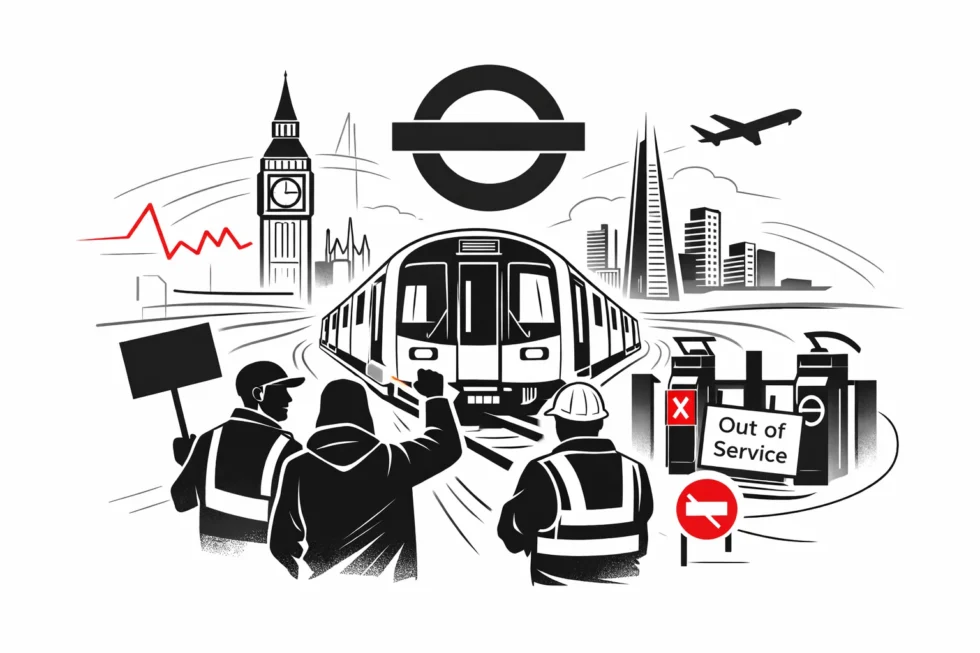
The conflict between the RMT and Transport for London centres on how the Underground will be staffed and scheduled in the coming years, rather than a short-term disagreement. TfL is proposing a voluntary four-day working week, maintaining full pay and contractual hours while increasing flexibility in rostering. The union argues this could disrupt established shift patterns and reduce predictability for operational staff critical to running services. Eddie Dempsey said negotiations had taken place “in good faith” but failed to reach agreement, while Claire Mann maintains the proposal is optional and designed to improve efficiency without forcing change. In operational terms, the disagreement directly affects staffing coverage—determining how many trains can run and how reliably the network functions.
What it means in practice: real impact on passengers
For passengers, the dispute translates into immediate and practical disruption. Reduced staffing leads to fewer train services, longer waiting times and intermittent station closures, particularly at key interchanges. The impact extends beyond strike hours, as restarting the network requires time to reposition trains, assign crews and reopen stations safely. Travellers should expect disruption from early afternoon on strike days through to late evening, with residual delays into the following morning. The most effective strategy is to avoid peak travel, leave additional time for essential journeys and prioritise alternative rail routes such as the Elizabeth line or Thameslink. Avoiding central London interchanges where possible can significantly reduce delays.
The April walkouts are part of a broader escalation rather than a standalone event, with further strike dates already outlined into May and June. This indicates a sustained negotiation cycle with the potential for repeated disruption across multiple weeks. Possible next steps include additional confirmed strike periods, temporary pauses if talks progress, or continued rolling action affecting network stability. Without a shift in positions on staffing models, the likelihood of ongoing disruption remains high. For commuters and businesses, this means planning for repeated service interruptions and increased pressure across buses, roads and national rail as demand shifts away from the Underground.
Read about the life of Westminster and Pimlico district, London and the world. 24/7 news with fresh and useful updates on culture, business, technology and city life: Tube strikes 2026: London Underground disruption dates, TfL impact and alternative routes explained