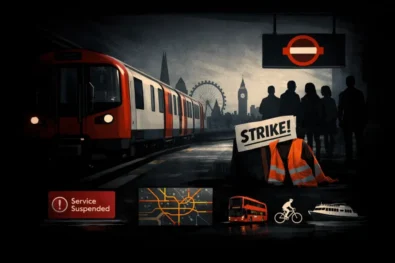
LONDON, 1 June 2026 — London Tube strike action will go ahead on Tuesday 2 June and Thursday 4 June 2026after intensive last-minute negotiations between Transport for London (TfL), the Rail, Maritime and Transport union (RMT) and conciliation service Acas failed to produce a breakthrough. The dispute centres on proposed voluntary four-day working arrangements for Tube drivers, with union representatives arguing that the plans could affect fatigue management, shift patterns, long-term working conditions and safety across one of the world's busiest metro systems. The WP Times reports that despite more than five hours of talks on Monday afternoon, both sides remained divided, clearing the way for one of the most disruptive transport events London has faced this summer.
London Tube strike 2026 is expected to affect hundreds of thousands of commuters, airport passengers, tourists, hospitality workers and businesses across the British capital. TfL estimates that approximately half of Tube drivers represented by the RMT could participate in the industrial action, forcing complete closures on some lines and significant reductions elsewhere. Major transport hubs, central London tourist districts, financial centres including the City and Canary Wharf, and Heathrow Airport connections are all expected to experience disruption. With London entering one of its busiest summer travel periods, transport planners are warning passengers to prepare for longer journey times, overcrowding and significant pressure across alternative transport networks.
When the London Tube strike starts and how long disruption will last
The industrial action officially begins at 00:01 BST on Tuesday 2 June 2026 and resumes again at 00:01 BST on Thursday 4 June 2026. While the strike itself lasts for a single day on each occasion, disruption is expected to extend well beyond the official start and finish times because trains, drivers and operational staff require time to return to their normal positions across the network. Transport planners warn that passengers may experience reduced service levels before dawn and during early morning recovery periods after each strike day.
TfL has advised passengers that very few Underground services are likely to operate before approximately 06:30 BST on strike days. The transport authority is also urging customers to complete journeys before 21:00 BST, as evening services are expected to reduce significantly. Late-night travellers could face additional waiting times and reduced route availability.
Although Wednesday 3 June and Friday 5 June are officially expected to operate normally, transport experts note that previous strike action has frequently resulted in residual disruption during the following morning. Rolling stock repositioning, driver scheduling and station staffing adjustments can all contribute to delays even after industrial action officially ends. For passengers travelling to airports, business meetings or major events, allowing additional travel time remains strongly recommended.
Key strike dates
| Date | Status |
|---|---|
| Tuesday 2 June | Major strike action |
| Wednesday 3 June | Recovery and normal service expected |
| Thursday 4 June | Major strike action |
| Friday 5 June | Recovery and normal service expected |
Which London Underground lines are affected
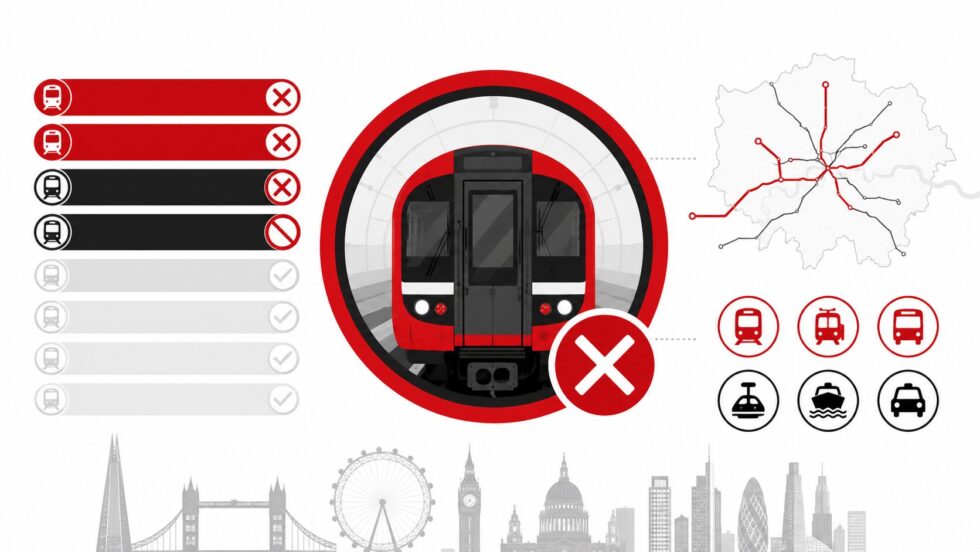
The most severe disruption is expected on several strategically important Underground routes that connect central London, Heathrow Airport, business districts and major tourist attractions. TfL has already confirmed that some lines will be completely suspended while others will operate only partially.
The Circle Line will have no service throughout the strike periods. This closure affects one of London's most important central routes, linking major destinations including Westminster, Victoria, Embankment, Monument, Liverpool Street and King's Cross St Pancras. Because the Circle Line intersects with multiple Underground routes, its closure is expected to increase pressure across the wider network.
The Piccadilly Line will also have no service. This is likely to become one of the most disruptive aspects of the strike because the route serves Heathrow Airport, South Kensington, Leicester Square, Covent Garden, Piccadilly Circus, Green Park and King's Cross. The line normally carries a large mixture of commuters, tourists and international travellers.
Meanwhile, parts of the Metropolitan Line and Central Line will operate with significant restrictions. Large sections serving commuters entering the City of London are expected to experience substantial disruption, creating pressure on alternative rail and bus services throughout Greater London.
Confirmed Underground disruptions
| Line | Impact |
|---|---|
| Circle Line | No service |
| Piccadilly Line | No service |
| Metropolitan Line | Suspended between Baker Street and Aldgate |
| Central Line | Suspended between White City and Liverpool Street |
Heathrow Airport passengers face major travel challenges
Among all groups affected by the strike, Heathrow Airport passengers may experience some of the most significant disruption. The complete suspension of the Piccadilly Line removes one of the airport's most popular and affordable public transport connections to central London.
Every day, thousands of passengers rely on direct Piccadilly Line services to travel between Heathrow terminals and key destinations including Leicester Square, Green Park, South Kensington and King's Cross. During the strike, these passengers will be forced to seek alternative routes, creating additional demand across other transport systems. Heathrow Airport and transport authorities are encouraging passengers to use alternative services including the Elizabeth Line, Heathrow Express, National Rail services, local bus routes, taxis and private hire vehicles. However, all of these alternatives are expected to experience higher-than-normal demand, especially during peak morning departure periods and evening arrival waves.
Travellers with international flights are being advised to leave substantially earlier than normal. Families travelling with luggage, passengers requiring transfers between transport modes and visitors unfamiliar with London's transport system may experience particularly long journey times. Airport operators warn that congestion could occur not only on rail services but also on roads serving Heathrow.
Alternative Heathrow routes
- Elizabeth Line
- Heathrow Express
- National Rail services
- Local London buses
- Licensed taxis
- Private hire services
- Airport replacement bus services
The dispute centres around Transport for London's proposal to introduce a voluntary four-day working arrangement for Tube drivers. TfL argues that the plan would provide greater flexibility while allowing employees to work fewer overall hours and potentially improve work-life balance.
However, the RMT union argues that the issue extends far beyond the number of days worked. Union representatives have repeatedly stated that concerns remain regarding fatigue, longer shifts, scheduling flexibility, future rostering arrangements and operational safety. According to the union, any changes affecting working patterns in a safety-critical role require extensive safeguards and guarantees.
Tube drivers operate within one of the world's busiest metropolitan transport systems, transporting millions of passengers through complex tunnels and heavily congested routes. The RMT argues that concentration, alertness and fatigue management remain fundamental safety considerations and should not be compromised by operational changes designed to improve efficiency.
The disagreement has therefore developed into a wider debate regarding workforce organisation, employee wellbeing and the future structure of London's Underground operations. Industrial relations specialists note that disputes involving working patterns often take longer to resolve than pay disputes because they affect broader questions concerning how work itself is organised.
Key union concerns
- Driver fatigue
- Longer shifts
- Operational safety
- Reduced flexibility
- Future rostering arrangements
- Long-term working conditions
- Workforce wellbeing
Monday's negotiations represented the final opportunity to avoid industrial action before the strike dates arrived. Representatives from TfL, the RMT and conciliation service Acas spent approximately five hours attempting to bridge the gap between both positions.
Discussions reportedly focused on assurances regarding the proposed four-day working arrangements and the practical implications for drivers. TfL sought to emphasise that participation would remain voluntary, while union representatives continued to raise concerns regarding fatigue and future scheduling impacts.
Despite the lengthy discussions, no breakthrough emerged. Following the talks, the RMT maintained that its concerns had not been adequately addressed. TfL, meanwhile, expressed disappointment that strike action would proceed despite what it described as significant efforts to reassure employees.
The collapse of negotiations means that meaningful progress may now depend on the impact of the strikes themselves. In many industrial disputes, public disruption often increases pressure on both sides to return to negotiations and seek compromise solutions.
What transport services will continue operating
Despite widespread disruption, London will not come to a complete standstill. Significant parts of the capital's wider transport network are expected to remain operational throughout the strike period. The Elizabeth Line is expected to become one of the busiest alternative routes because it serves many destinations normally connected by the Underground while also providing airport access. Passenger volumes on the line are expected to rise substantially. The London Overground, Docklands Light Railway (DLR), tram services, National Rail routes and the extensive London bus network will also continue operating. However, increased passenger numbers are expected across virtually all alternative transport systems.
Transport experts warn that the challenge is not simply the number of services available but the concentration of demand. Even if alternative services continue operating normally, they may struggle to absorb the large numbers of displaced Underground passengers.
Economic impact on London businesses
London's Underground network remains the backbone of the capital's economy. Millions of journeys are made every week, connecting workers, tourists, students, shoppers and businesses across Greater London.
Previous strike action has demonstrated that transport disruption can have significant economic consequences. Retailers often experience reduced customer numbers, hospitality venues face staffing difficulties and businesses encounter delays as employees struggle to reach workplaces.
Tourism operators may also experience disruption as visitors encounter difficulties reaching attractions, hotels and transport hubs. Heathrow Airport congestion could create additional knock-on effects for airlines, travel companies and airport service providers. Many organisations have already encouraged remote working during strike days. Flexible working arrangements are expected to reduce some pressure on transport networks while allowing businesses to maintain operations despite disruption.
Sectors likely to be affected
| Sector | Expected Impact |
|---|---|
| Retail | Lower customer footfall |
| Hospitality | Staff travel difficulties |
| Tourism | Visitor disruption |
| Financial Services | Longer commute times |
| Airports | Passenger congestion |
| Education | Delayed arrivals |
How severe could disruption become
Although TfL hopes to operate approximately half of normal services, transport analysts caution that passenger experience may feel considerably worse than those figures suggest.
The closure of key routes often creates disproportionate pressure elsewhere. When strategically important lines such as the Piccadilly and Circle Lines stop operating, passenger flows shift rapidly toward remaining routes. This frequently leads to overcrowding, longer waiting times and slower journeys. Central London stations are expected to experience particularly heavy congestion during the morning and evening peak periods. Areas around major rail termini, business districts and tourist attractions may experience the greatest pressure.
Road traffic is also expected to increase significantly as more passengers switch to taxis, ride-hailing services and private vehicles. This can further slow buses and create a broader transport slowdown across the city.
Frequently asked questions
When does the London Tube strike begin?
The strike begins at 00:01 BST on Tuesday 2 June 2026 and resumes at 00:01 BST on Thursday 4 June 2026. Disruption may continue before and after official strike periods as services recover.
Which Underground lines are completely closed?
The Circle Line and Piccadilly Line are expected to have no service throughout the strike periods. Parts of the Metropolitan and Central lines will also face major restrictions.
Can passengers still reach Heathrow Airport?
Yes. Heathrow remains accessible through Heathrow Express, the Elizabeth Line, National Rail services, buses and taxi services. However, all alternative routes are expected to be significantly busier than normal.
Will buses continue operating?
Yes. London's bus network will remain operational but passengers should expect crowding and longer journey times due to increased demand.
Why are Tube drivers taking industrial action?
The dispute concerns TfL proposals for a voluntary four-day working week and union concerns regarding fatigue, shift lengths, flexibility, scheduling and operational safety.
Could additional strikes happen later in 2026?
Yes. If negotiations fail to produce a compromise, further industrial action remains possible during the summer and beyond.
Attention now shifts toward the practical impact of the strikes and whether disruption encourages both sides to return to negotiations. TfL remains committed to operating as much of the network as possible, while the RMT continues to insist that stronger guarantees are required before any new working arrangements are introduced. The outcome of this dispute could influence not only Tube drivers but also broader discussions about workforce organisation, flexible scheduling and employee wellbeing across Britain's transport sector.
For London commuters, businesses and international visitors, the immediate priority remains navigating one of the capital's busiest travel weeks. Whether the dispute ends after the June strikes or develops into a longer summer confrontation may depend on what happens once both sides return to the negotiating table. For now, passengers are being urged to plan carefully, leave extra time for every journey and monitor transport updates throughout the strike period.
Read about the life of Westminster and Pimlico district, London and the world. 24/7 news with fresh and useful updates on culture, business, technology and city life: What’s on in London this weekend as free events, festivals and outdoor shows fill 6 June 2026