US Republican Senator Lindsey Graham has said the United States should sharply escalate pressure on Moscow — including supplying Ukraine with long-range Tomahawk missiles — if the Kremlin refuses to agree to a peace deal.
Speaking in an interview with NBC News, Graham argued that Washington’s attempts to engage Russia diplomatically were aimed at drawing President Vladimir Putin to the negotiating table, but that these efforts had so far been rejected. If Moscow continues to refuse talks, he said, the US should fundamentally change its approach. The WP Times reports, citing the NBC News interview.
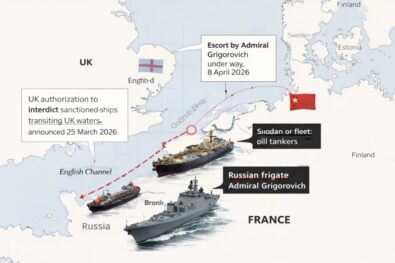
Among the measures Graham outlined were the introduction of new tariffs on countries purchasing Russian oil, formally designating Russia as a state sponsor of terrorism over the deportation of Ukrainian children, and detaining vessels transporting sanctioned Russian oil. He added that these steps should be combined with stronger military support for Kyiv.
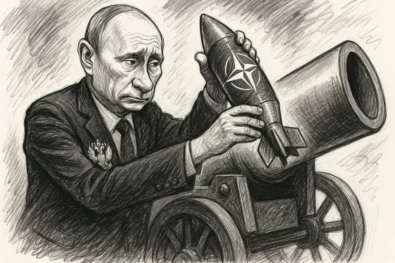
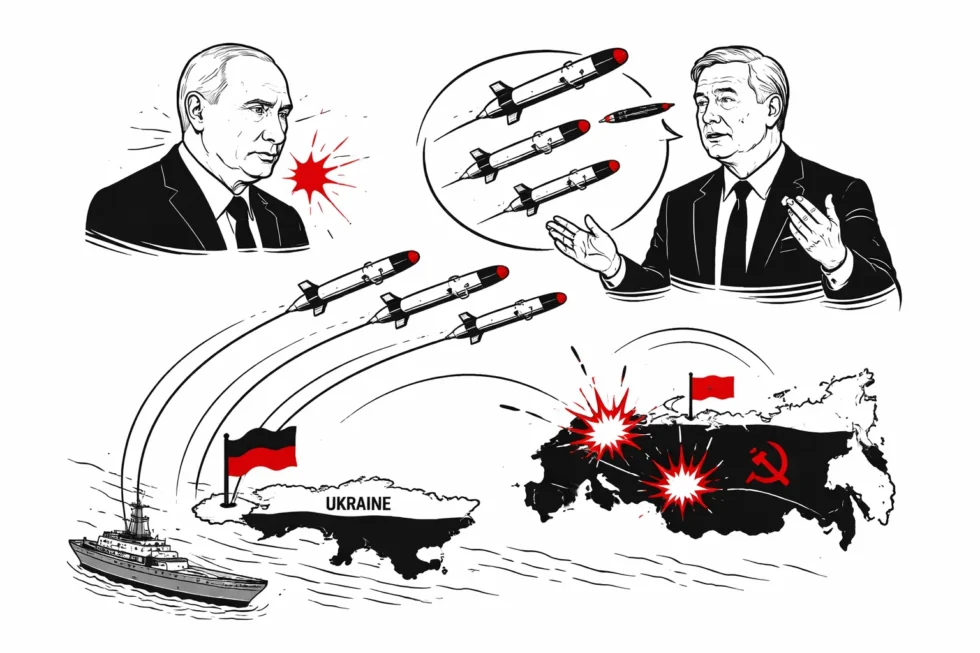
Graham specifically backed the transfer of Tomahawk cruise missiles to Ukraine, arguing they could be used to strike Russian facilities involved in the production of missiles and drones. “If Putin says ‘no’, we need to radically change the game plan, including giving Ukraine Tomahawks,” he said. “I would go all in if Putin says ‘no’ again.”
The senator stressed that any eventual settlement should prevent a third Russian invasion of Ukraine and provide long-term security guarantees.
Tomahawk missiles and US debate

The Tomahawk cruise missile has a range of up to 1,000 miles (around 1,600 kilometres), far exceeding the capabilities of US-supplied ATACMS, which have an approximate range of 190 miles. ATACMS were approved for delivery to Ukraine in 2023 under then-president Joe Biden.
According to Axios, Ukrainian President Volodymyr Zelensky raised the issue of Tomahawk missiles during a phone call with the US president on 11 October. US Vice President JD Vance later confirmed that Washington had discussed supplying Tomahawks to NATO allies, who could then potentially transfer them to Ukraine, although the final decision rests with President Donald Trump.
Trump has previously said he had “more or less” made a decision on the matter but wanted clarity from Kyiv on potential targets. Following those remarks, Russian President Vladimir Putin warned that supplying Tomahawks to Ukraine would severely damage relations between Washington and Moscow.
In November, Trump stated that he was not currently considering the delivery of the long-range missiles, adding that “sometimes you have to let a battle run its course.”
Tomahawk: background and key technical capabilities
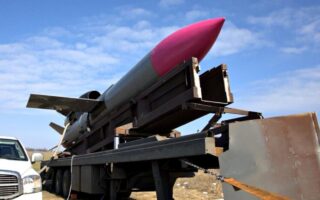
The Tomahawk cruise missile is a US-made long-range, subsonic cruise missile designed for precision strikes against high-value targets. Depending on the variant, it has an operational range of up to 1,000 miles (around 1,600 km), allowing launches from well outside hostile air-defence zones. Tomahawks are typically launched from naval platforms — destroyers and submarines — and use a combination of inertial navigation, GPS guidance and terrain contour matching to achieve high accuracy. The missile carries a conventional warhead capable of destroying hardened infrastructure such as command centres, weapons factories and logistics hubs. Since the 1990s, Tomahawks have been used by the US in conflicts from the Gulf War to operations in Iraq and Syria, making them one of the most combat-tested long-range strike systems in the American arsenal.
Read about the life of Westminster and Pimlico district, London and the world. 24/7 news with fresh and useful updates on culture, business, technology and city life: France issues statement on peace talks ahead of meeting between Zelenskyy and Macron