London Underground (LU) upgrades 2026, TfL transport projects, Piccadilly Line (PL) new trains, Tube 5G (4G/5G), Superloop buses (SL), step-free stations (SFS) — London Underground (LU) is entering its biggest modernisation phase since the 1960s as Transport for London (TfL) prepares to deploy new Piccadilly Line trains (PL), full-network Tube 5G (4G/5G), expanded step-free stations (SFS) and Superloop express buses (SL) across Greater London in 2026.
The programme is funded in the multi-billion-pound range and is designed to stabilise a system that carries more than four billion passenger journeys a year, while supporting housing growth and outer-London mobility. With population and demand rising, TfL must deliver capacity, reliability and accessibility simultaneously — and The WP Times reports that the UK government’s new multi-year capital settlement has removed the political uncertainty that had frozen major London Underground (LU) investment after Covid.
New Piccadilly Line trains finally enter service
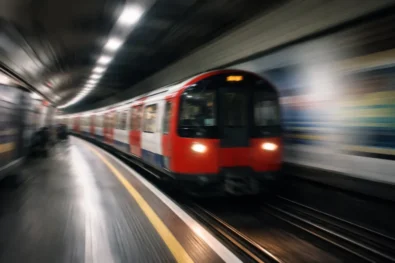
The most visible change for millions of passengers will be on the Piccadilly Line, which connects Heathrow to central London and serves some of the city’s busiest commuter corridors. TfL has ordered 94 brand-new walk-through trains at a cost of £2.9 billion. They replace the current fleet dating back to 1973, making them among the oldest trains still in regular service anywhere in Europe.
The new trains will offer:
- Full walk-through carriages (no internal doors)
- Air-conditioning for the first time on the Piccadilly Line
- Modern CCTV and passenger information systems
- Wider doorways for faster boarding
After several years of delays, TfL now says the first trains will enter passenger service in the second half of 2026, following test runs between Northfields and Hyde Park Corner. For Heathrow travellers, this matters: the Piccadilly Line is still the cheapest rail link to the airport, but reliability and comfort have lagged far behind the Elizabeth Line.
Step-free access: slow but expanding
Accessibility remains one of the network’s weakest points.
At present:
- 94 Tube stations (just over one third) are step-free
- Over 60 London Overground stations
- All 41 Elizabeth Line stations
- All DLR stations and tram stops
TfL published a shortlist of 17 additional stations in October that will undergo detailed feasibility studies for future lifts and ramps. However, funding is tight and not all will go ahead.
What is certain for 2026:
- Northolt station will become step-free
- Colindale was upgraded in December 2025
Campaigners continue to warn that London lags far behind cities like Berlin or Paris when it comes to barrier-free public transport.
District Line and Four Lines signalling upgrade
A less visible but more powerful change is taking place behind the scenes. The Four Lines Modernisation (4LM) project is replacing Victorian-era signalling on:
- Circle Line
- District Line
- Hammersmith & City Line
- Metropolitan Line
This allows:
- Trains to run closer together
- Fewer signal failures
- Faster recovery from disruptions
The District Line section is scheduled to be completed during 2026, while the rest of the programme will continue into the late 2020s. For west and south-west London commuters, this should mean fewer bottlenecks at Earl’s Court and Victoria.
4G and 5G across the Underground
One of the most practical upgrades for modern life is mobile connectivity underground. TfL and telecoms partners are rolling out full 4G and 5G coverage to:
- All Tube platforms and tunnels
- DLR
- Elizabeth Line
- Windrush Line between Highbury & Islington and New Cross Gate
At present, coverage is limited to parts of the central network. 2026 is the year when it is expected to expand across most of the system. This matters not just for convenience, but for safety and operations: real-time data allows faster incident response and more accurate passenger information.
Superloop: express buses for outer London
While the Tube dominates headlines, TfL’s fastest-growing success is on the surface. The Superloop is a network of limited-stop express bus routes designed to link outer London without forcing passengers to travel via Zone 1.
Two new routes launch in 2026:
- SL11 – Abbey Wood to North Greenwich
- SL12 – Gants Hill to Rainham
Three more are being consulted on:
- SL13 – Ealing Broadway to Hendon
- SL14 – Stratford to Chingford Hatch
- SL15 – Clapham Junction to Eltham
These routes are crucial for boroughs like Barking, Redbridge and Bexley, where rail coverage is sparse but population growth is high.
DLR extension to Thamesmead moves closer
One of London’s largest unconnected communities is finally getting rail access. The government confirmed funding support in the autumn budget for the Docklands Light Railway extension to Thamesmead via Beckton Riverside. In 2026 TfL will apply for the legal powers to build it. If approved:
- Construction could start in 2027
- Opening would be in the early 2030s
This would unlock tens of thousands of new homes in south-east London — one of City Hall’s long-term growth zones.
Bakerloo Line extension (BLE), West London Orbital (WLO), TfL funding gap, Treasury approval, London rail projects — two of the most politically sensitive London rail projects remain unfunded going into 2026. The Bakerloo Line extension (BLE), which would push the Tube deeper into south-east London, and the West London Orbital (WLO) rail link, designed to connect Brent, Ealing and Hounslow without travelling through Zone 1, have not received financial backing from the UK Treasury. Transport for London (TfL) will continue lobbying ministers throughout 2026, but without central government approval neither the Bakerloo Line extension (BLE) nor the West London Orbital (WLO) can move from planning into construction.
Transport for London (TfL) 2026 investment programme, Piccadilly Line (PL), Docklands Light Railway (DLR), Bakerloo Line (BL), London Underground (LU) upgrades — a Transport for London (TfL) spokesperson told the Local Democracy Reporting Service (LDRS) that the 2026 funding settlement allows the authority to move beyond crisis management and into long-term infrastructure delivery. According to TfL, the programme includes completing the rollout of new Piccadilly Line (PL) trains and new DLR rolling stock, upgrading digital signalling on 40% of the London Underground (LU) network, procuring a new London Tramlink fleet and progressing procurement of future Bakerloo Line (BL) trains. TfL also confirmed that around two-thirds of its suppliers are based outside London, meaning the economic impact of the LU and TfL upgrade programme is felt across manufacturing, engineering and logistics hubs throughout the UK.
London transport 2026, daily commuting, Tube reliability, airport links, accessibility, digital connectivity — for Londoners, 2026 is not about futuristic visions but about whether everyday travel becomes more predictable, more accessible and less stressful. New Piccadilly Line (PL) trains mean fewer breakdowns and more reliable journeys to Heathrow and west London. Full Tube 5G (4G/5G) coverage changes how people work, communicate and access real-time service updates underground. Superloop (SL) express buses give outer-London commuters faster, cheaper orbital connections, while expanding step-free stations (SFS) gives disabled passengers, parents and older Londoners greater independence. After more than a decade of stop-start funding and pandemic-era damage, Transport for London (TfL)has finally returned to long-term planning — but how far London’s transport recovery goes will ultimately depend on whether political and Treasury support remains in place beyond 2026.
Read about the life of Westminster and Pimlico district, London and the world. 24/7 news with fresh and useful updates on culture, business, technology and city life: Stratford station safety: how a 72-year-old was struck 7 times by 4 Jubilee line trains on the London Underground