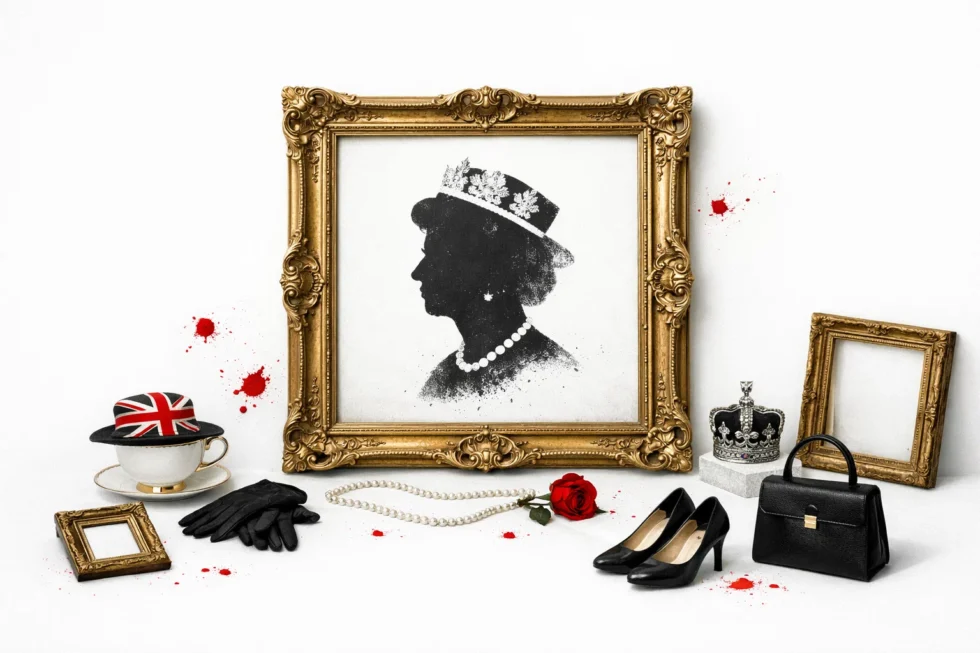
Queen Elizabeth II iconic outfits in London in 2026 will take centre stage this spring as a major new exhibition opens at The King’s Gallery, Buckingham Palace, revealing how royal fashion became one of Britain’s most powerful tools of soft power, diplomacy and national branding. The exhibition, titled “Queen Elizabeth II: Her Life in Style”, brings together more than 200 original garments, hats, shoes, jewellery and accessories, covering ten decades of the late Queen’s life, from her teenage years in the 1940s to her final public appearances.
The exhibition opens on 10 April 2026, marking the 100th anniversary of Queen Elizabeth II’s birth, and runs through summer and early autumn at Buckingham Palace, London SW1A 1AA. Entry is by timed ticket, normally priced between £18 and £22 for adults, with The King’s Gallery typically open Thursday to Monday from 10:00 to 17:30.As The WP Times reports, citing BBC News, curators say the display is designed not simply to show beautiful clothes, but to demonstrate how the Queen used fashion as a language of authority, stability and international influence.
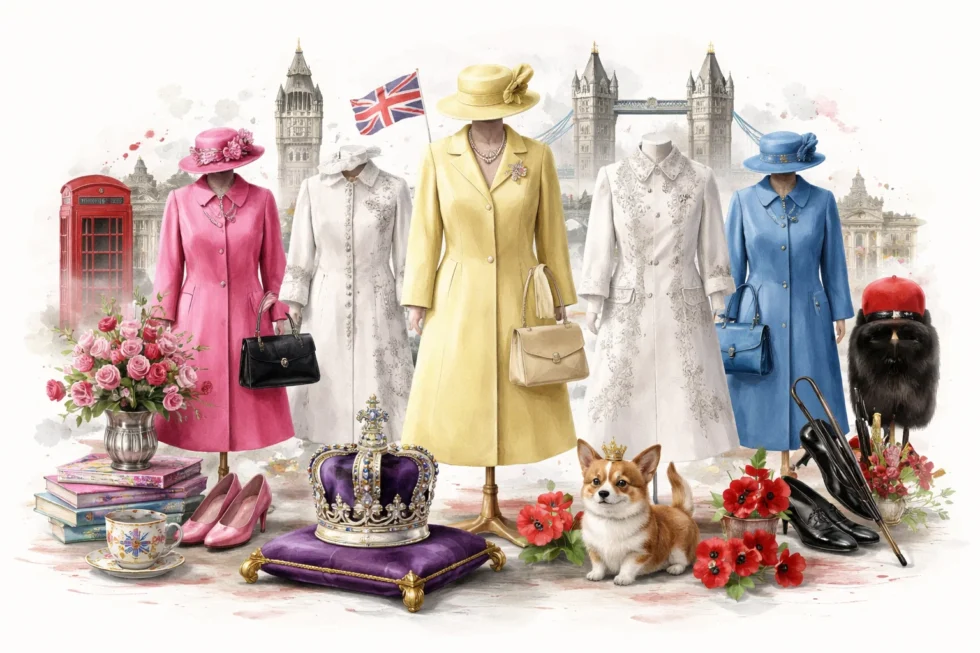
How Queen Elizabeth II turned fashion into a tool of state
Elizabeth II’s wardrobe was one of the most carefully managed visual systems in modern political history. Every colour, fabric and silhouette was chosen to communicate something about Britain’s role in the world. Bright coats ensured she could be seen in large crowds, reinforcing public connection. Traditional cuts projected continuity in times of crisis. British-made textiles promoted national industry, while symbolic embroidery turned gowns into political statements.
Royal fashion commentators quoted by the BBC describe the Queen’s look as a form of quiet power. She avoided fast-changing trends because monarchy depends on permanence. Her instantly recognisable style became a global icon, making her one of the most visually identifiable leaders in history. Over time, her clothes helped stabilise the image of Britain through war, decolonisation, social revolution and technological change.
In the decades before Instagram, television and digital branding, Queen Elizabeth II’s wardrobe functioned as one of the most sophisticated visual communication systems in global politics. Every public appearance was calibrated to project continuity, dignity and national confidence, turning clothing into a form of statecraft. Long before leaders spoke directly to mass audiences, the Queen’s colours, fabrics and silhouettes were already speaking for her — reassuring the public at home and signalling stability to the wider world.
What made her approach so powerful was its consistency. The Queen never dressed to chase trends, because trends suggest uncertainty. Instead, her wardrobe was built around visual reliability — the idea that Britain itself was steady, predictable and enduring, even as governments changed and crises unfolded.
The architecture of her fashion diplomacy was based on five core principles:
- British textiles and craftsmanship, used to promote domestic industry and national excellence
- National and Commonwealth symbolism, embroidered into formal garments to reinforce political unity
- High-visibility colours, ensuring that the monarch could always be seen and recognised in public
- Classic, conservative silhouettes, projecting stability rather than fashion volatility
- Subtle cultural references to host nations during foreign visits, turning clothing into quiet diplomacy
Together, these elements transformed Elizabeth II’s wardrobe into a visual constitution of modern Britain — one that communicated authority, continuity and soft power to the world without ever needing to raise its voice.
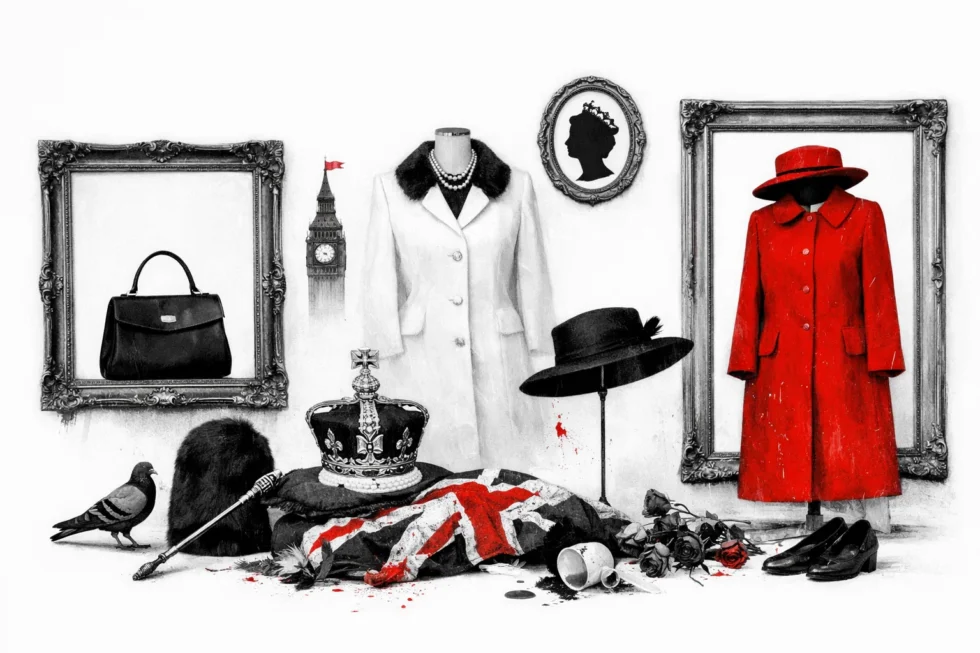
The five iconic outfits that define the exhibition
At the centre of the Buckingham Palace exhibition are five garments that illustrate how Elizabeth II used fashion to define her reign. The most famous is the 1953 Coronation gown, embroidered with floral emblems of the United Kingdom and the Commonwealth, turning the dress into a symbol of her global authority.
Her Harris tweed jacket and Balmoral tartan skirt, first worn in the 1950s, became her off-duty uniform, projecting British heritage and quiet leadership. The green Eisenhower gown, worn at a state banquet in Washington during the Cold War, was designed to strengthen transatlantic ties while maintaining British elegance.
The kingfisher blue gown and bolero jacket worn at Princess Margaret’s wedding in 1960 captured a nation on the brink of cultural change, while the transparent raincoat of the 1960s showed how even practical clothing was adapted to maintain the Queen’s visibility in public.
Each piece reflects a moment when fashion and politics were inseparable.
Among the headline garments on display are some of the most visually and politically significant pieces of Elizabeth II’s reign, including the 1953 Coronation dress, the instantly recognisable Balmoral tweed and tartan ensemble, the Eisenhower state banquet gown worn at the height of the Cold War, the blue wedding outfit from 1960, and the striking transparent raincoat of the 1960s that allowed the Queen’s colours to remain visible even in rain — a practical yet powerful symbol of her public presence.
Why the exhibition matters for Britain in 2026
More than three years after her death, Elizabeth II remains the most recognisable visual symbol of Britain worldwide, with her image still used in diplomacy, tourism, currency, branding and state ceremony. The Buckingham Palace exhibition explains why that image was so powerful: it was built not only through speeches and institutions, but through a carefully controlled visual identity created by her wardrobe. Her clothes projected reliability, continuity and national confidence at moments when Britain was facing post-war recovery, decolonisation, industrial decline, political unrest and rapid cultural change.
In 2026, the UK is once again repositioning itself on the world stage — outside the EU, competing for tourism, investment and global relevance. The exhibition demonstrates how soft power works in practice: how colours, symbols, fabrics and public presentation can shape how a country is perceived internationally. Elizabeth II’s wardrobe functioned as a form of non-verbal diplomacy, communicating stability to allies, reassurance to the public and cultural authority to the world without a single policy statement.
For London in 2026, this is not just a fashion show but a strategic cultural event. It links monarchy, British design, history and tourism into a single global narrative, reinforcing Buckingham Palace as one of the country’s most important soft-power institutions. For visitors, it offers a rare opportunity to understand how Britain built its image — and how it still uses it today.
Background and royal context
Elizabeth II ruled for 70 years, longer than any other British monarch, and her wardrobe evolved alongside one of the most transformative periods in modern British history. From the rationing and austerity of the post-war years to the globalised digital age, her clothing became a visual record of how Britain changed — socially, economically and politically — while the monarchy projected continuity. Each decade of her reign left its imprint on her style, whether through the structured elegance of the 1950s, the cultural shifts of the 1960s or the brighter, more symbolic colours that came to define her later public image.
By staging “Queen Elizabeth II: Her Life in Style” inside Buckingham Palace itself in London, the Royal Collection Trust is deliberately framing royal fashion not as a nostalgic sideshow, but as part of Britain’s national story and global identity. As reported by BBC News, curators argue that the Queen’s wardrobe functioned as a form of visual statecraft, used to communicate stability, diplomacy and authority to millions at home and abroad. For Elizabeth II, clothing was never simply about personal taste — it was about how Britain presented itself to the world at moments of war, peace, transition and uncertainty.
Read about the life of Westminster and Pimlico district, London and the world. 24/7 news with fresh and useful updates on culture, business, technology and city life: Why black tea became a symbol of comfort and stability in London and Britain