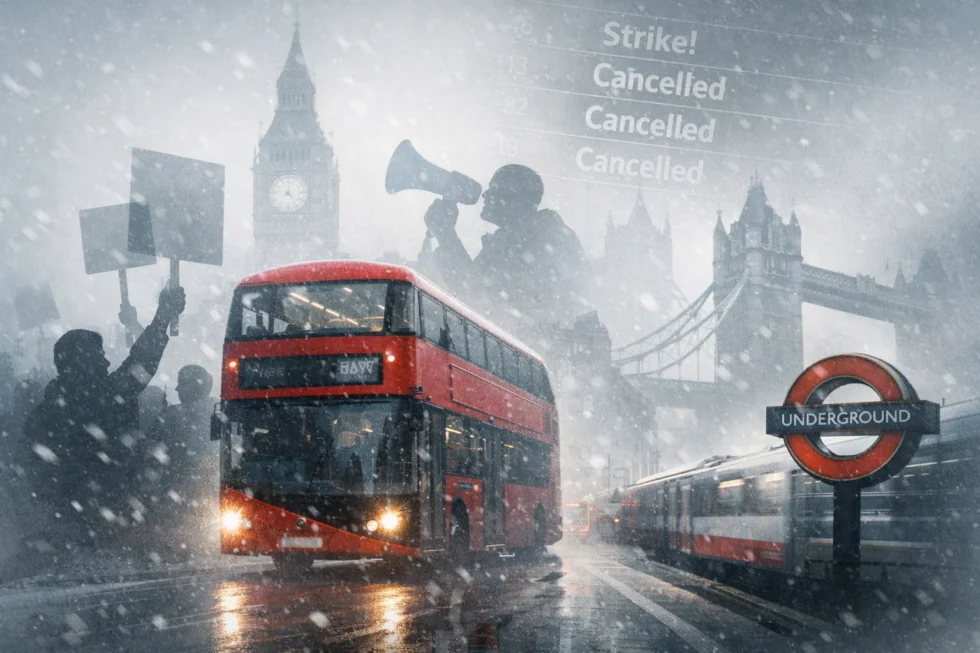
London bus strikes are set to cause major disruption across east London in February 2026, with 13 key routes facing cancellations and severe delays. Around 350 drivers from Lea Interchange Bus Company, part of Stagecoach London, will take part in two separate 48-hour walkouts on Friday 6 – Saturday 7 February and Friday 20 – Saturday 21 February 2026. The industrial action, confirmed by the Unite union, is expected to affect busy travel corridors around Stratford, Canary Wharf, Hackney and Leyton, putting significant additional pressure on Underground and rail networks.
This passenger guide explains everything you need to know: confirmed strike dates, the full list of affected routes, the reasons behind the dispute, official statements from both sides and the best alternative travel options. The WP Times reports that the planned action is likely to create one of the most serious periods of disruption for east London bus passengers in recent years.
Strike dates confirmed
Two separate 48-hour strike periods have now been formally announced, meaning passengers should prepare for significant disruption on the following dates:
| Strike period | Dates | Duration |
|---|---|---|
| First strike | Friday 6 – Saturday 7 February 2026 | 48 hours |
| Second strike | Friday 20 – Saturday 21 February 2026 | 48 hours |
During these periods, buses on the 13 affected routes are expected to be cancelled entirely or operate only at a very reduced level. Passengers should assume that normal services will not be available and plan alternative journeys in advance. The disruption is likely to begin with the first scheduled services on each Friday morning and continue until the end of service on Saturday night.
Full list of affected London bus routes
A total of 13 London bus routes operated by Lea Interchange Bus Company will be directly impacted by the planned strike action. These services cover some of the busiest travel corridors in east London, connecting major hubs such as Stratford, Canary Wharf, Hackney, Leyton and Walthamstow. Passengers who rely on any of the routes listed below should expect cancellations, long delays or a heavily reduced timetable on strike days:
| Route | Main corridor |
|---|---|
| 58 | Walthamstow Central – East Ham |
| 86 | Stratford – Romford |
| 97 | Stratford – Chingford |
| 135 | Old Street – Crossharbour (Canary Wharf) |
| 236 | Hackney Wick – Finsbury Park |
| 276 | Stoke Newington – Newham Hospital |
| 308 | Wanstead – Clapton |
| 339 | Shadwell – Leytonstone |
| 488 | Dalston Junction – Bromley-by-Bow |
| D8 | Stratford – Crossharbour |
| W13 | Leytonstone – Woodford Wells |
| W14 | Leyton – Woodford Bridge |
| 678 | Goodmayes – Debden |
These routes serve some of the most populated and commuter-heavy areas of east London.
Areas that will suffer the most
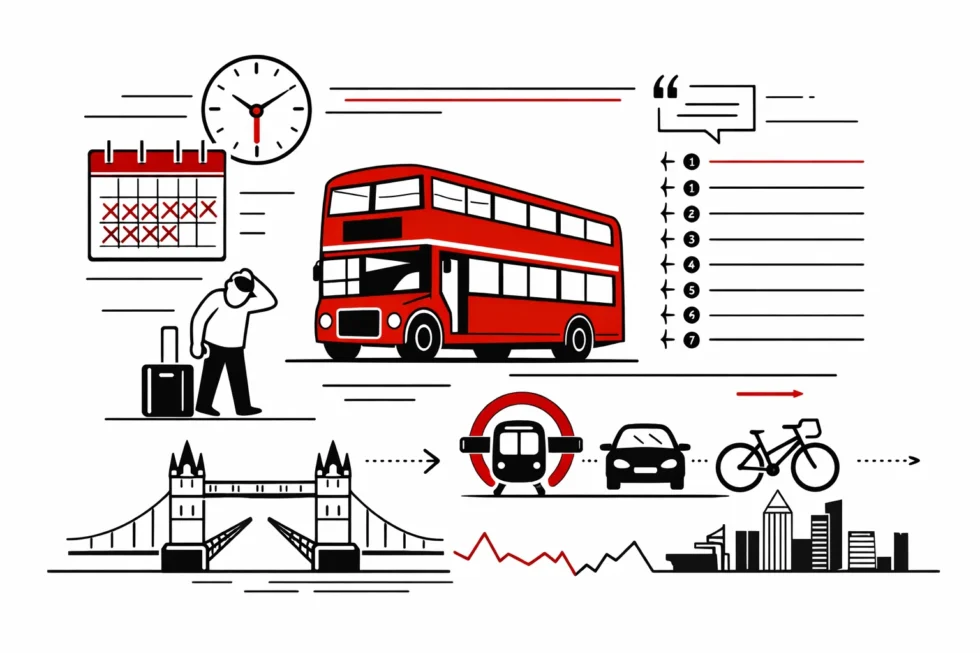
The impact of the strikes will be most heavily felt in several key parts of east London where the affected routes play a vital role in daily travel. Disruption is expected to be concentrated in the following areas:
- Stratford – major transport hub
- Canary Wharf and Docklands – office districts
- Hackney
- Leyton and Leytonstone
- Walthamstow
- Bow and Mile End
- Barking and Ilford
- Canning Town
Passengers travelling to workplaces, schools and hospitals in these zones will face the biggest problems.
Route-by-route impact details
Below is a detailed breakdown of how each of the 13 affected bus routes will be impacted by the February strike action. This section explains the main corridors served by every route, the areas most likely to face disruption and the passenger groups that will feel the greatest inconvenience. If you normally rely on any of these services, use this guide to understand what to expect and which alternatives to consider.
Route 58 – Walthamstow Central to East Ham
- Connects residential areas with Stratford
- Used heavily by shift workers
- Loss of this route removes a key east–west link
Route 86 – Stratford to Romford
- One of the busiest east London routes
- Serves major shopping centres
- Expect severe crowding on Elizabeth Line as alternative
Route 97 – Stratford to Chingford
- Main connection to north-east suburbs
- Disruption will isolate parts of Waltham Forest
Route 135 & D8 – links to Canary Wharf
- Essential for Docklands commuters
- Cancellation will push thousands onto Jubilee Line and DLR
Route 276 – Stoke Newington to Newham Hospital
- Critical for medical access
- NHS staff and patients likely to be hit hardest
(Other local routes W13, W14 and 678 mainly affect school and neighbourhood travel.)
Why are the drivers striking
The dispute centres on allegations made by the Unite union against Lea Interchange Bus Company.
Union claims include:
- bullying of union representatives
- “aggressive behaviour” by management
- unfair targeting of drivers involved in union activity
- potential breaches of UK employment law
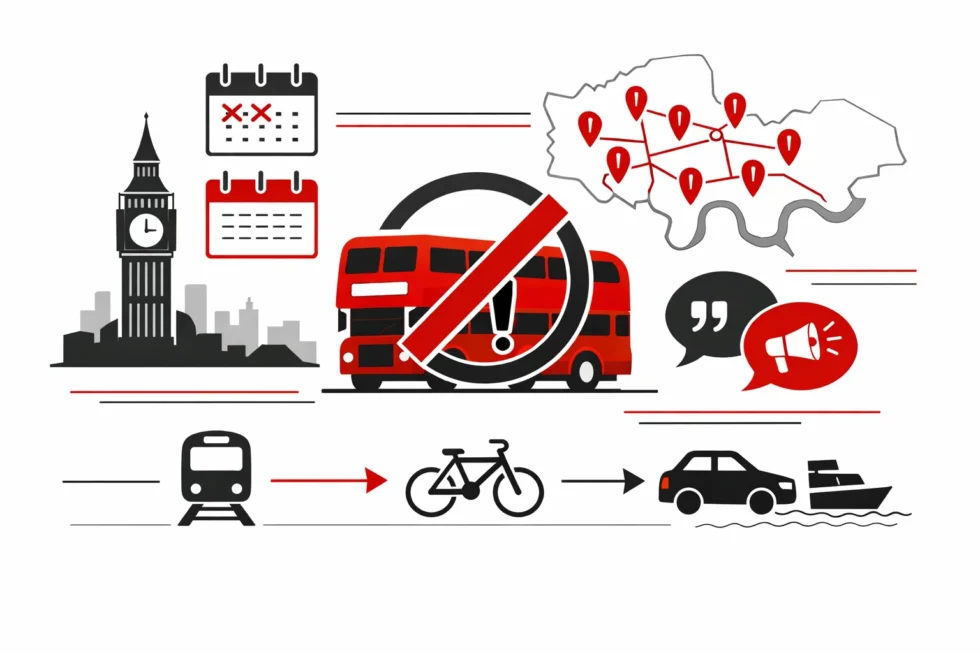
Strong quotes from both sides
Both the Unite union and Stagecoach London have issued firm statements setting out their positions on the dispute. Below are the key quotes from each side, explaining why the drivers are taking strike action and how the company is responding to the allegations. These comments provide important context for passengers seeking to understand the background to the disruption.
Unite union position
Sharon Graham, Unite General Secretary:
“These strikes could be avoided, but it relies on management changing tack. Unite will never stand by and allow reps to be bullied, and workers at the Lea Interchange Bus Company have our full support throughout this dispute.”
John Murphy, Unite Regional Officer:
“We appreciate it is frustrating for passengers to hear of more strikes, but this dispute is completely the fault of the employer who has failed to come forward with a plan to resolve this problem.”
“Previous strikes showed a lot of unity between drivers, and they will continue to show solidarity towards colleagues who have been unfairly targeted.”
Stagecoach London response
Stagecoach London has firmly rejected the union’s claims, insisting that the company follows fair and established procedures in all employee matters.
A spokesperson for Stagecoach London said:
“We strongly refute Unite’s allegations of union victimisation or bullying and recognise the important role of our recognised trade union.”
“We would not tolerate victimisation of union representatives for carrying out their duties.”
“Any disciplinary matters are handled through long-established, trade union-agreed procedures that apply equally to all employees.”
The company added that it remains committed to dialogue and has made “extensive efforts” to resolve the dispute, including agreeing to independent mediation. Stagecoach said its priority is to minimise disruption and continue providing a safe and reliable service for passengers during the period of industrial action.
Who will be most affected
While the strikes will cause disruption across large parts of east London, certain passenger groups and travel patterns are likely to feel the impact more than others. The cancellation of 13 key bus routes will particularly affect commuters, hospital visitors, students and weekend travellers who depend on these services for essential journeys. Below is a closer look at the groups and areas expected to face the greatest difficulties.
Highest-risk passenger groups:
| Group | Reason |
|---|---|
| Canary Wharf workers | Routes 135 and D8 cancelled |
| Stratford commuters | Multiple routes converge here |
| Hospital patients | Route 276 disruption |
| School pupils | W13, W14 and 678 routes |
| Weekend shoppers | Loss of Route 86 to Romford |
Best travel alternatives
With 13 bus routes facing cancellations and reduced services, passengers will need to plan ahead and consider other ways of getting around east London. The good news is that several reliable alternatives remain available, including the Underground, Overground, DLR and Elizabeth Line. The following options offer the most practical ways to avoid disruption and reach key destinations during the strike periods.
Recommended alternatives
| Destination | Best option |
|---|---|
| Canary Wharf | Jubilee Line or DLR |
| Stratford | Central Line, Elizabeth Line, Overground |
| Hackney | London Overground |
| Leyton / Leytonstone | Central Line |
| Ilford / Romford | Elizabeth Line |
| Bow / Mile End | District, Hammersmith & City lines |
⚠ Important: Expect heavy overcrowding on these services during strike days.
Practical travel survival guide
With major disruption expected across east London, transport experts are urging passengers to plan ahead and take sensible precautions. To reduce the impact of the strikes, the following steps are strongly recommended:
- Allow 60–90 minutes extra for all journeys
- Avoid peak travel times wherever possible
- Check live TfL updates before leaving home
- Consider cycling or walking for shorter trips
- Arrange car-sharing, taxis or ride-hailing services in advance
- Speak to employers about flexible start and finish times
- Plan weekend activities around the disruption to avoid affected areas
Preparing early and staying flexible will help minimise delays and frustration on strike days.
Where to get live updates
Passengers are advised to rely on official sources for the latest and most accurate information:
- Transport for London: tfl.gov.uk
- TfL service status updates: tfl.gov.uk/status-updates
- Stagecoach London announcements
- Unite union statements and updates
Service plans may change at short notice, so travellers should monitor these channels closely throughout both strike periods. The February 2026 strikes represent one of the most significant east London bus disruptions in recent years. With 13 routes affected and two full weekends of industrial action planned, thousands of passengers will need to rethink how they travel. Until an agreement is reached, careful planning and regular checks for updates will be essential for anyone moving around the capital.
Read about the life of Westminster and Pimlico district, London and the world. 24/7 news with fresh and useful updates on culture, business, technology and city life: Will snow weather forecast Met Office warnings affect travel in London and Britain this week