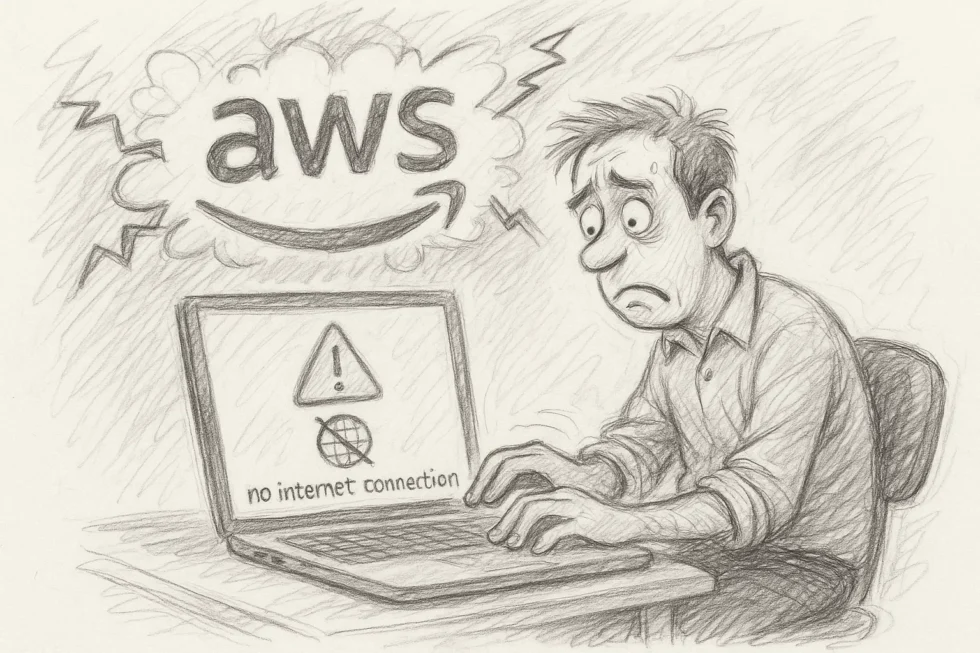
At around 8 a.m. UK time on Monday, 20 October 2025, users worldwide began reporting widespread failures across apps and websites. Within an hour, it became clear that Amazon Web Services (AWS) — the backbone of much of the global internet — was the source. The outage originated in US-EAST-1 (North Virginia), one of Amazon’s largest data-centre clusters and a crucial hub for global connectivity. Amazon confirmed “increased error rates and latency issues” on its official AWS status page, naming services such as EC2 and DynamoDB as affected. The incident was first reported by The WP Times, citing Amazon’s infrastructure updates.
What went wrong — and how wide the impact spread
Data from Downdetector shows simultaneous spikes in outage reports for unrelated apps, revealing the scope of the disruption. Services including Snapchat, Roblox, Fortnite, Duolingo, and Canva went offline or slowed significantly. Even Amazon’s own ecosystem — Alexa, Ring, Prime Video, and Amazon.com — was affected. Analysts traced the fault to AWS’s North Virginia region, where a network failure cascaded through dependent services worldwide.
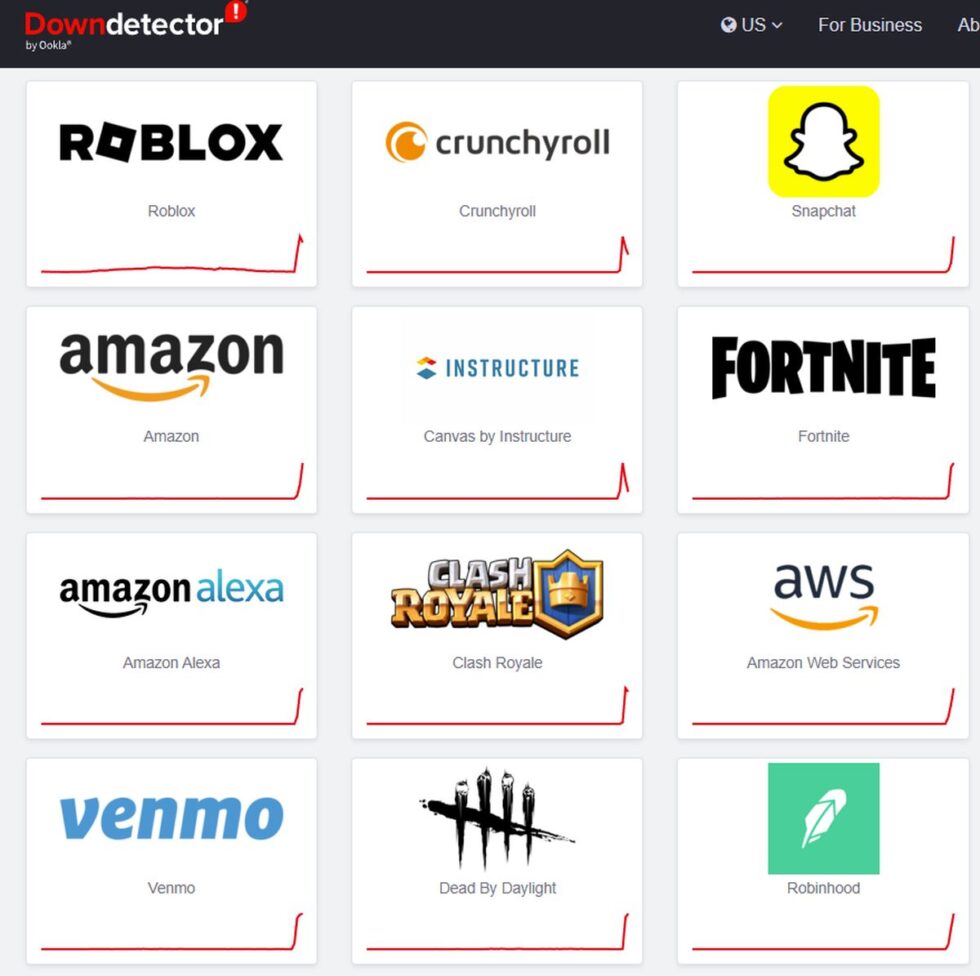
Main platforms affected, according to monitoring data:
| Category | Services Impacted |
|---|---|
| Social media | Snapchat |
| Gaming | Roblox, Fortnite, Epic Games Store, Rocket League, Rainbow Six Siege |
| Productivity & learning | Duolingo, Canva, Canvas |
| Amazon ecosystem | Amazon.com, Alexa, Ring, Prime Video |
| Finance & streaming | Robinhood, Venmo, Chime, Coinbase, Crunchyroll |
This simultaneous breakdown across multiple sectors highlights a structural weakness: the global over-reliance on centralised cloud providers such as AWS.
The technical cause: a single point of failure
Amazon’s statement confirmed the issue stemmed from US-EAST-1, describing “elevated error rates” in both its compute and database layers. These are fundamental systems powering thousands of external applications. When EC2 or DynamoDB falter, the entire web feels the shockwave. Cloud specialists warn that even short disruptions in this region can cripple dependent networks worldwide, as it hosts a substantial portion of enterprise traffic across Europe and North America.
Timeline and response
- 08:00 UK time (09:00 CET): Users begin reporting access failures across major platforms.
- 08:30: Amazon acknowledges the outage on its health dashboard, citing US-EAST-1.
- 10:00 onwards: Global tech teams reroute workloads and activate backup regions.
- 12:00: Amazon engineers report “progress in mitigation,” but no timeline for full restoration.
The Downdetector map remained red through midday, indicating that recovery was partial and uneven across regions.
Broader implications for businesses and users
Cybersecurity analysts note that today’s failure underlines how fragile the internet’s infrastructure remains. For firms relying entirely on AWS, a single-region disruption can mean a temporary operational paralysis. Experts recommend:
- Monitoring AWS’s status dashboards and cloud health updates in real time.
- Using multi-region redundancy and content caching to minimise downtime.
- Keeping transparent communication with users during service disruptions.
- Testing resilience strategies through incident simulations and failover systems.
As Amazon continues to investigate, the October 20 AWS outage will likely reignite debate about cloud dependency and the concentration of digital power in the hands of a few providers.
Read about the life of Westminster and Pimlico district, London and the world. 24/7 news with fresh and useful updates on culture, business, technology and city life: London driverless taxis: Waymo, Zoox, and Wayve technology explained