
Apple’s MacBook Neo is exposing a rare fault line in modern consumer electronics, where demand is not just outpacing supply but colliding with the physical limits of how that supply is created. What began as a margin-optimised experiment has rapidly evolved into a strategic dilemma: whether to scale production at significantly higher cost or deliberately constrain availability to preserve profitability. The imbalance is driven by an unusually strong global response to a low-cost Mac positioned for cloud-first use — a segment Apple has historically underserved. At the centre of the issue is the company’s reliance on repurposed A18 Pro chips, originally built for the iPhone 16 Pro and reclassified through binning, a process that maximises yield but cannot be expanded on demand. As a result, Apple is effectively selling through a finite pool of silicon that cannot be quickly replenished without resetting the product’s entire cost structure, reports The WP Times, citing Bloomberg, Nikkei Asia and industry analysts familiar with semiconductor yield dynamics. In practical terms, the more successful the MacBook Neo becomes, the faster it exhausts the very constraint that made it viable in the first place.
Why MacBook Neo demand is structurally different
The surge in MacBook Neo demand is not simply a cyclical spike in consumer interest. It reflects a deeper structural shift in how computing power is consumed. Unlike previous Mac upgrade cycles driven by raw performance gains, Neo’s appeal lies in affordability and sufficiency — delivering “good enough” computing in an increasingly cloud-first environment. Technically, the device occupies a new category. Performance is calibrated for browser-centric workflows, SaaS platforms and AI-assisted tools, while reliance on local CPU and GPU power is reduced. This matters because modern workloads — from coding to video processing — are increasingly executed remotely on cloud infrastructure rather than on the device itself. As a result, the traditional hierarchy of high-performance laptops is losing relevance for a large segment of users.
The MacBook Neo captures this transition with precision. It lowers the financial barrier to entry into Apple’s ecosystem, aligns with the direction of AI and cloud computing, and attracts price-sensitive users who might otherwise default to Windows devices. Demand has therefore exceeded expectations not because the product is powerful, but because it is correctly positioned at the intersection of price and utility.
The chip strategy: efficiency with a built-in ceiling
At the centre of the Neo model is Apple’s use of “binned” chips — a practice well understood in semiconductor manufacturing but rarely deployed at this scale in consumer laptops. The A18 Pro, produced using advanced 3nm fabrication, is designed with full specifications including six GPU cores and a high-performance mobile architecture.
However, not every chip meets those specifications. Rather than discarding partially defective units — for example, those with a single faulty GPU core — Apple disables the defective component, reclassifies the chip and deploys it in the MacBook Neo. The economic advantage is clear: near-zero marginal chip cost, maximised yield from existing wafers and reduced waste.
Yet the limitation is equally clear. The supply of such chips is finite and cannot be expanded without fresh production. Once the pool of usable “imperfect” chips is exhausted, Apple faces a binary decision: absorb the full cost of manufacturing new chips or halt production. This is not a typical scaling challenge but a hard constraint defined by semiconductor yield and physics.
Apple’s production dilemma in detail
Apple now faces a three-dimensional decision that spans cost, supply chain dynamics and long-term strategy. Ordering new chips from manufacturing partners would unlock scale but at a price. Advanced wafer production remains among the most expensive in the industry, with capacity increasingly diverted toward AI accelerators and flagship devices. Securing additional supply would likely require premium pricing and long-term commitments, compressing margins that were previously exceptional. Alternatively, Apple could maintain controlled scarcity. Limiting production to the originally planned volume would preserve profitability but risk ceding demand to competitors. It would also slow ecosystem expansion by reducing the number of first-time Mac users entering the platform.
A third path lies in price restructuring. If production is expanded, higher costs would almost certainly be passed on, whether through the removal of entry-level configurations, repositioning closer to MacBook Air pricing, or bundling services to justify a higher perceived value. Apple has historically demonstrated that price increases are accepted when accompanied by a clear narrative of added value.
Component inflation: a multi-layer pressure system
The challenge extends beyond processors. Apple is navigating a synchronised increase in component costs across its supply chain. Aluminium prices are affecting chassis manufacturing, DRAM costs remain volatile amid surging demand from AI data centres, and NAND storage pricing continues to fluctuate with supply cycles.
While Apple retains significant negotiating power, broader market forces are dominating. The global shift toward AI infrastructure is absorbing semiconductor capacity, while logistics and energy costs have stabilised at structurally higher levels. Supply chain diversification, though strategically necessary, is adding complexity and cost.
The cumulative effect is clear: the MacBook Neo’s original profitability depended on a near-perfect cost environment that is rapidly disappearing.
Strategic intent: expanding beyond the premium Mac model
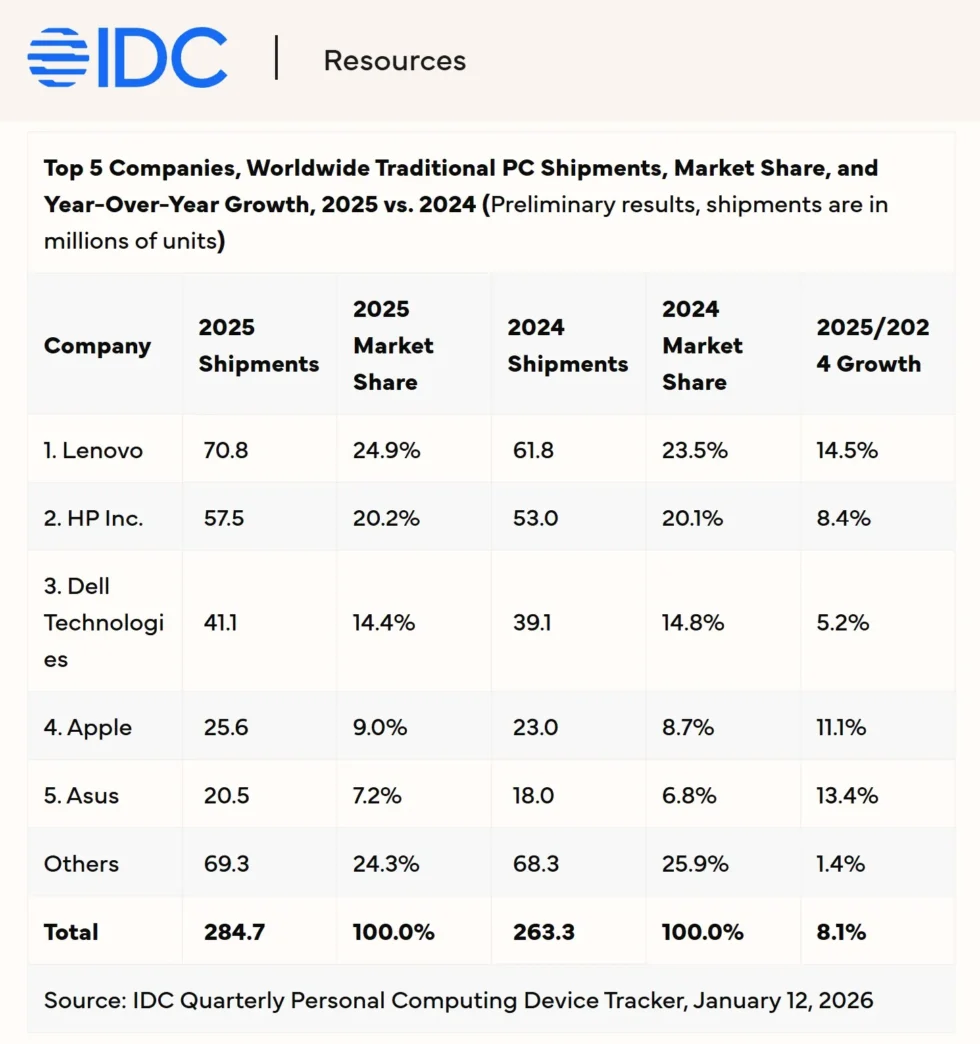
Historically, Apple’s Mac business has been anchored in premium positioning, limiting its share of the global PC market. The MacBook Neo represents a calculated departure from that model. It targets mid-market users, appeals to Windows switchers and aligns with the broader shift toward cloud-based enterprise software. In this context, Neo is not simply a cheaper Mac. It is a strategic instrument designed to expand Apple’s addressable market and accelerate ecosystem adoption.
Cannibalisation versus ecosystem growth
The risk of internal competition is unavoidable. A lower-priced MacBook inevitably overlaps with existing products such as the MacBook Air and, to a lesser extent, entry-level MacBook Pro configurations. However, Apple’s strategic calculus appears to prioritise ecosystem growth over strict product segmentation. The long-term objective is not to maximise margin on individual devices but to increase the total number of users within its ecosystem, where services and recurring revenue streams can be monetised more effectively.
Lifecycle shift: from durable device to recurring upgrade
One of the more subtle implications of the MacBook Neo is its potential impact on upgrade cycles. Traditional Macs have typically remained in use for five to seven years. By contrast, a lower-cost device with cloud-dependent functionality encourages shorter replacement cycles, potentially in the range of two to three years. This shift mirrors the iPhone model, introducing a more predictable and recurring upgrade pattern that could reshape revenue dynamics over time.
Manufacturing and geopolitical context
Production of the MacBook Neo is distributed across key partners in Asia, including facilities in China and Vietnam. This reflects Apple’s ongoing effort to balance geopolitical risk with manufacturing scale. However, its dependence on a single advanced semiconductor supplier remains a critical vulnerability, reinforcing the bottleneck at the heart of the current dilemma.
The next phase of the MacBook Neo story will be defined by signals rather than announcements. Analysts will be watching for shifts in wafer allocation, changes in entry-level pricing, the removal of lower-storage configurations and the bundling of subscription services. Each of these indicators will point to a broader strategic decision: whether the MacBook Neo evolves into a scalable product line or remains a tightly controlled, high-margin experiment.
The MacBook Neo encapsulates a rare convergence of semiconductor economics, product strategy and market timing. Its success validates Apple’s move toward a more accessible Mac ecosystem, but it also exposes the fragility of a model built on surplus components. The company’s next decision will determine whether Neo becomes a foundational pillar of its expansion strategy — or remains a highly profitable, but inherently limited, anomaly.
Read about the life of Westminster and Pimlico district, London and the world. 24/7 news with fresh and useful updates on culture, business, technology and city life:PlayStation Plus Essential Game Gets Even Better With Free Update as Sony confirms April 2026 lineup