Epsom protest today intensified on Wednesday, 15 April 2026, as residents confronted police and demanded the release of suspect descriptions and CCTV footage following the alleged gang rape of a woman outside a church in the Surrey town, an incident that occurred in the early hours of Saturday, 12 April between 02:00 and 04:00 BST, The WP Times reports. The woman, in her 20s, had been followed after leaving the Labyrinth nightclub before being attacked near Epsom Methodist Church on Ashley Road, prompting a major police investigation and triggering widespread concern about safety, transparency and public communication.
Police confirmed that multiple men are suspected but said they do not yet have full verified descriptions to release, a position that has fuelled frustration among locals and led to the epsom protest, where dozens gathered in the town centre demanding clarity on whether suspects have been identified and whether there remains an ongoing risk to the public.
Epsom protest today: confrontation as residents demand answers
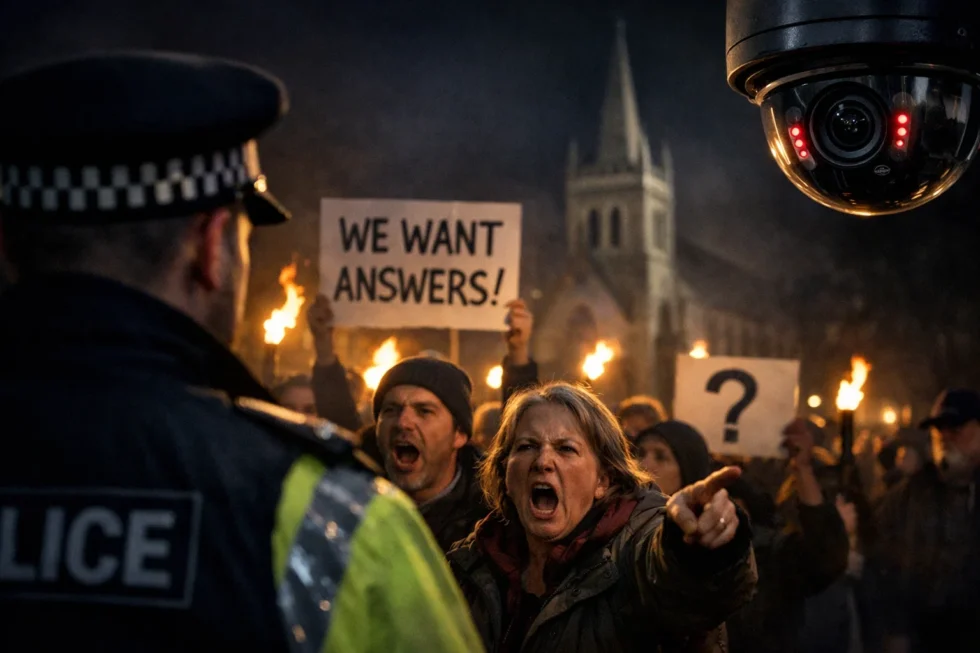
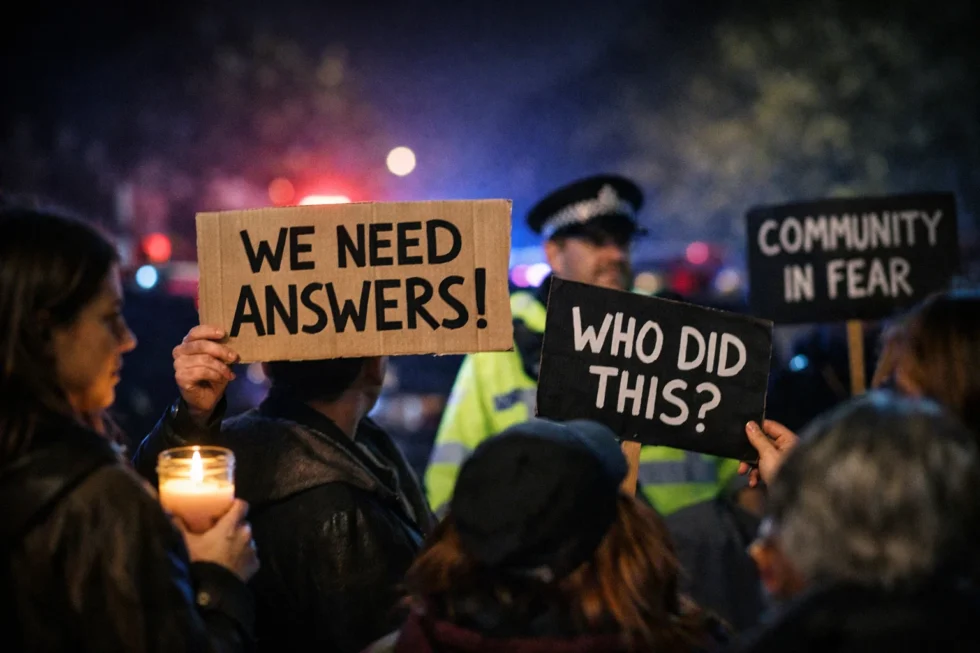
The epsom protest today developed into a tense standoff as demonstrators gathered in central Epsom, with police deploying additional units and forming barriers across the high street to contain the crowd. According to reports from the scene, protesters attempted to hand a formal letter to police, calling for immediate transparency. The document, read aloud during the demonstration, highlighted fears over the lack of public information and growing anxiety among women in the area. Key demands from protesters included:
- Immediate release of suspect descriptions
- Publication of relevant CCTV footage
- Confirmation of whether suspects have been identified or detained
- Clear reassurance regarding ongoing public safety
- Regular official updates from Surrey Police
During the protest, some individuals threw objects including bottles, cones and debris towards police lines, while traffic in parts of the town was temporarily brought to a standstill as officers maintained control of the situation.
What police have confirmed so far about the investigation
Surrey Police have emphasised that the case remains at an early stage, with officers prioritising evidence gathering and suspect identification before releasing details publicly.
| Investigation detail | Current status |
|---|---|
| Location | Near Epsom Methodist Church, Ashley Road |
| Time of attack | Between 02:00 and 04:00 BST, 12 April |
| Victim | Woman in her 20s |
| Suspects | Multiple men, identities unknown |
| CCTV review | Ongoing |
| Public descriptions | Not yet confirmed |
| Police appeal | Witnesses and dashcam footage requested |
A police spokesperson said the force is “working to identify the individuals involved” and will release further information once it becomes available. The victim is being supported by a specialist sexual offences liaison officer. Authorities have also urged anyone who was in the area at the time, particularly motorists with dashcam footage, to come forward as part of the investigation.
Official statements and community concerns
Police and community figures have acknowledged the seriousness of the incident and the emotional impact on the local population, while urging caution against speculation.
“At this early stage, we do not have full descriptions of any potential suspects. We will release further details once we have them,” a Surrey Police spokesperson said (Surrey, April 2026).
A resident speaking during the protest, reading from a prepared letter, said the lack of information had led to “widespread speculation, misinformation and growing unease within the community” (Epsom, April 2026). The letter further stated that many women and girls now feel uncertain about their safety, calling for “appropriate updates and reassurances” following an incident of such severity.
Background: why the Epsom case has triggered wider tensions
The incident in Epsom has moved rapidly from a serious criminal investigation into a wider test of how police communicate risk and reassurance in real time, particularly when a violent offence occurs in a public, symbolic location and details remain limited in the immediate aftermath. The combination of a high-impact allegation, a central town setting and delayed suspect information has created a vacuum in which public concern has escalated into organised protest, placing epsom news at the centre of a broader debate about transparency, safety and institutional trust.
Several structural factors explain why the situation has intensified so quickly:
- Nature of the allegation: a reported gang rape in an open, accessible area near a church, increasing perceived public exposure
- Spatial proximity: the attack location sits within a short walking distance of nightlife venues, amplifying concerns about routine night-time safety
- Early information limits: absence of verified suspect descriptions in the first 72 hours following the incident
- Perceived ongoing risk: uncertainty over whether suspects remain unidentified and at large
- Information vacuum: rapid circulation of unverified claims across social media platforms
In the UK, police typically apply strict evidential thresholds before releasing suspect descriptions, particularly in sexual offence cases, to prevent misidentification, protect future prosecutions and avoid prejudicing witness testimony. This cautious approach is operationally standard, but in high-profile cases it can collide directly with public expectations for immediate disclosure—especially where community safety is perceived to be at stake.
At the same time, visible policing responses—such as crowd control measures during the epsom protest—can reinforce the sense of escalation, even when their primary purpose is containment rather than enforcement. This dynamic often shifts the narrative from a purely investigative process to a dual-track situation involving both crime response and public order management. The current epsom news cycle therefore sits at a critical junction between investigative integrity and public accountability. The next phase will be defined by whether police can move from evidence collection to actionable identification—through CCTV analysis, witness testimony and forensic work—while gradually increasing the level of verified information released to the public without compromising the case.
Read about the life of Westminster and Pimlico district, London and the world. 24/7 news with fresh and useful updates on culture, business, technology and city life: What did Trump say in Sky News interview on UK immigration, energy and royal visit tensions