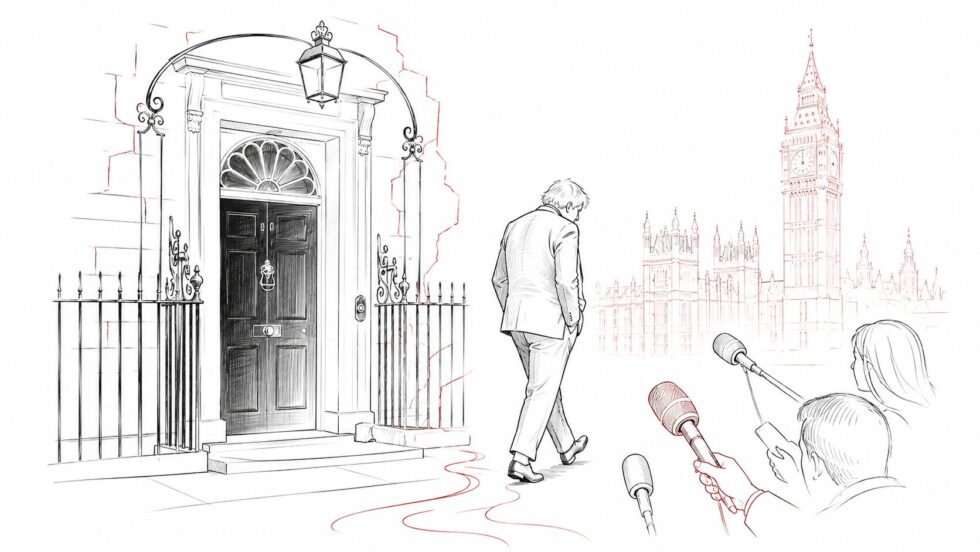
Downing Street is facing its most serious Labour leadership crisis since the 2024 election, and the question has keir starmer resigned as prime minister now sits at the centre of British politics as ministers, MPs and markets wait for a possible statement on his future, reports The WP Times . Sir Keir Starmer remains prime minister unless and until he formally announces his resignation and a successor is invited to form a government by the King, but the political position around him has sharply deteriorated after days of pressure from Labour MPs and the rapid rise of Andy Burnham as the likely alternative.
The distinction matters. “Has Starmer resigned?” is not the same question as “is Keir Starmer going to resign?” or “is Keir Starmer still prime minister?” In constitutional terms, Starmer is still in office. In political terms, his authority appears to be under severe strain, with major UK outlets reporting that he could set out a resignation timetable rather than fight a full leadership battle. That would allow Labour to manage a transition while avoiding the image of another chaotic Downing Street collapse.
The crisis comes less than two years after Starmer entered No 10 with a large Labour majority and a promise to restore seriousness after years of Conservative instability. Yet the same forces that destroyed several recent premiers — poor polling, internal panic, policy rows and the perception that the leader has lost the country — are now pressing on a Labour government. The result is a high-risk moment for the United Kingdom: the country may be preparing for another change of prime minister without a general election.
Why is Keir Starmer under such heavy pressure now
Starmer’s problem is not one single scandal or one isolated rebellion. It is the accumulation of political damage. Labour MPs have watched the government struggle to turn its election victory into a clear public story. Voters were promised growth, cleaner government, repaired public services and a calmer political style. Instead, many MPs now fear that the government looks flat, defensive and vulnerable to Reform UK, the Conservatives, the Greens and nationalist parties in different parts of the country.
The immediate trigger is Andy Burnham’s return to Westminster. Burnham, the former Greater Manchester mayor and a former Labour cabinet minister, has long been seen as one of the party’s strongest communicators outside Parliament. His move back into the Commons gives him a direct route to the Labour leadership. For MPs worried about their seats, that changes the calculation. Burnham is no longer only a popular regional figure; he is now a potential prime minister-in-waiting.
Starmer had previously signalled that he would not simply stand aside and would contest any challenge. That posture was designed to raise the cost of rebellion. But once enough MPs and senior figures begin to believe the leader is already finished, resistance can make the end look more brutal. The choice before Starmer is therefore not only whether to go, but whether he can still shape the manner of his departure.
Key pressures now facing Starmer include:
- Labour anxiety over Reform UK’s rise and the threat to marginal seats.
- Questions over whether Starmer can still communicate a convincing national story.
- Internal frustration over policy decisions, presentation and Downing Street discipline.
- Andy Burnham’s return to Parliament as a credible alternative leader.
- Cabinet pressure for clarity rather than a prolonged summer of uncertainty.
- The risk that a leadership struggle could make the government look inward-looking.
Is Keir Starmer going to resign — or announce a timetable
The most precise formulation is this: Starmer is expected by several major UK political reports to consider or announce a timetable for departure, but a formal resignation must still be stated clearly. That wording is important because political journalism must not turn expectation into fact before the event. A prime minister can be “on the brink”, “under pressure” or “expected to resign” for hours or days before the final announcement. Until the words are spoken and the process begins, the fact remains conditional.
A resignation timetable would be different from an immediate resignation. If Starmer sets out a timetable, he could remain in Downing Street while Labour selects or confirms a successor. That could mean a short managed transition, a contest among MPs, or a broader Labour leadership process involving members and affiliates. The faster route would suit MPs who want to avoid months of internal argument. The longer route would appeal to those who believe Burnham must be tested properly before becoming prime minister.
The Labour leadership rules and the parliamentary arithmetic will matter. If Burnham secures overwhelming support from MPs, the party may decide that a full contest would be unnecessary and damaging. If other figures such as Wes Streeting or Yvette Cooper decide there should be a contest, Labour could face a more complicated process. The question then becomes whether the party wants speed, legitimacy or a balance between both.
| Scenario | What it means | Political risk |
|---|---|---|
| Immediate resignation | Starmer announces he is leaving now | Could look chaotic and rushed |
| Timetable to depart | Starmer stays briefly while Labour organises succession | Prolongs uncertainty if timetable is too long |
| Full leadership contest | Candidates compete formally for Labour leadership | Could expose party divisions |
| Uncontested Burnham handover | MPs rally around Burnham quickly | May be criticised as a coronation |
| Starmer fights on | He refuses to quit and challenges rebels | Could trigger resignations and deeper crisis |
Who is Andy Burnham, and why is he now central to the story
Andy Burnham is central because he offers Labour MPs something Starmer currently struggles to provide: a sense of political energy. He is not a new figure. He served in government under Labour, ran for the leadership before, built a strong profile as mayor of Greater Manchester and positioned himself as a politician with roots outside Westminster. That combination makes him attractive to MPs who believe Labour needs a more emotional, direct and regionally grounded message.
For many Labour MPs, the argument for Burnham is electoral rather than ideological. They are looking at Reform UK’s momentum, the mood in working-class and post-industrial seats, and the fear that Labour’s 2024 majority could erode quickly. Burnham’s supporters believe he can speak more clearly to voters who feel ignored by London politics. His critics argue that popularity as a mayor does not automatically translate into national leadership, especially when the Treasury is tight and every spending promise would be tested.
Burnham would also face immediate questions on foreign policy, economic discipline, public services and relations with Washington. The mention of Trump and Starmer in current UK coverage reflects the international dimension of the crisis. Britain’s prime minister is not only a party leader; he is the person expected to speak for the country at summits, in crises and in negotiations with allies. Any transition would therefore need to reassure not only Labour MPs, but also financial markets and international partners.
If Burnham becomes the clear successor, his first challenge would be to avoid looking like the candidate of panic. He would need to show that he is not simply the man Labour turned to because Starmer fell, but a prime ministerial figure with a serious plan for government.
Chequers, Victoria Starmer and the weekend before a possible announcement
Chequers matters because it is where British prime ministers often step back from the noise of Westminster and consider decisions with personal, political and historical weight. Reports that Starmer spent the weekend there have therefore become part of the symbolism of this crisis. A prime minister who returns from Chequers with a statement on his future is not merely adjusting the diary. He may be preparing to define the end of a premiership.
Victoria Starmer’s name appears in public interest around the crisis because leadership collapses are never only institutional events. They are also personal moments for the families of prime ministers. The British political system can be ruthless when MPs decide that a leader has become a liability. The question for Starmer is whether continuing would protect his government or only prolong the damage.
The choreography of a Downing Street exit is familiar. Journalists gather outside No 10. Ministers are asked carefully worded questions on broadcast rounds. A lectern may or may not appear. Supporters begin to speak of dignity, service and the national interest. Rivals avoid looking too eager. The party machine quietly counts votes. In that space between denial and announcement, every sentence matters.
That is why phrases from ministers such as “political realities”, “the interests of the country” and “difficult circumstances” are being read so closely. In British politics, leaders often fall before anyone says plainly that they have fallen. The public confirmation comes last; the loss of authority usually comes first.
Is Keir Starmer still prime minister
Yes — unless there has been a formal announcement after this text was prepared, Keir Starmer is still prime minister. That is the safest and most accurate answer to the search query is Keir Starmer still prime minister. He remains in office until he resigns, is replaced as Labour leader and the constitutional process allows a successor to take over. A prime minister does not cease to be prime minister because newspapers expect an announcement.
However, the political answer is more complicated. A prime minister can remain legally in office while losing practical authority inside the governing party. If enough cabinet ministers and MPs believe Starmer cannot lead Labour into the next stage, the question becomes not whether he has the title, but whether he can still command obedience. That is the point at which premierships become unstable.
Recent British history makes this familiar. Boris Johnson, Liz Truss and Theresa May all reached moments when the formal office remained theirs but political authority had drained away. Starmer’s crisis is different because Labour is in government and still has a parliamentary majority, but the mechanism is similar: MPs decide whether their leader helps them win or helps them lose.
For readers searching has Keir Starmer resigned 2026, the most accurate wording is therefore: Starmer has not been formally replaced as prime minister at the time of writing, but he is under intense pressure and may set out a resignation timetable. That sentence avoids both understatement and misinformation.
What role do Peter Kyle, Yvette Cooper and Labour ministers play
Peter Kyle’s public comments matter because senior ministers often signal the state of a leadership crisis before the official announcement. When a minister says a prime minister is considering “political realities” or thinking about what is best for the country, that language can be read as preparation for a possible exit. It stops short of confirming resignation, but it does not offer a firm denial either. In Westminster, that middle ground is often where leadership crises live.
Yvette Cooper’s position also matters because she is one of Labour’s senior figures and has the experience to influence how the party handles succession. If figures of that weight push privately for a timetable, Starmer’s ability to resist becomes weaker. If they publicly back him, he may gain time. If they stay neutral, the signal may be that the party is waiting for the inevitable.
Labour now has to choose not only a leader, but a method. A rushed handover could stabilise the government quickly but leave activists angry. A long contest could provide legitimacy but create weeks of damaging headlines. The party also has to consider the public. Voters facing high bills, pressure on public services and uncertainty over the economy may have little patience for a summer of internal Labour management.
What happens if Starmer announces his resignation timetable
If Starmer announces a resignation timetable, the first question will be how long he intends to stay. A short timetable would suggest that Labour wants Burnham or another successor in place quickly. A longer timetable, perhaps stretching towards the party conference season, would give Labour time to organise a contest but could also leave Starmer as a weakened caretaker prime minister. The longer a departing leader stays, the harder it becomes to govern decisively.
The second question will be whether Burnham faces a contest. If he does, Labour will have to test his policy positions under pressure. He would need to answer questions on tax, borrowing, NHS reform, migration, housing, defence, relations with Europe and the United States. If he does not face a contest, he could enter Downing Street quickly but would immediately face accusations that Labour MPs selected a prime minister without full party scrutiny.
The third question is whether the country moves closer to a general election. Constitutionally, a new Labour leader could become prime minister without an immediate national vote if Labour retains the confidence of the House of Commons. Politically, opposition parties would demand an election. That does not mean one must happen, but it would become part of the argument from day one.
Possible next steps:
- Starmer makes a statement outside Downing Street or in Parliament.
- Labour’s National Executive Committee and parliamentary party clarify the leadership process.
- Burnham is formally sworn in as an MP and begins building visible support.
- Other potential candidates decide whether to stand or step aside.
- The King is involved only when a new prime minister is ready to be appointed.
- Markets and international partners watch for signs of economic and foreign policy continuity.
Why this crisis matters beyond Westminster
This is not only a Labour Party story. It is a story about Britain’s political stability after a decade of prime ministers entering and leaving office at unusual speed. If Starmer goes, the UK would again face a change of national leader without a general election. That is legal in a parliamentary system, but repeated changes can deepen public cynicism. Voters may ask why leaders win mandates and then fall before delivering the programme they promised.
The timing is also sensitive. Britain faces weak growth, strained public finances, NHS pressure, housing shortages, migration debates, defence commitments and international uncertainty. A leadership crisis consumes attention at exactly the moment when government needs discipline. It also gives opposition parties a simple attack line: Labour promised stability and delivered another internal collapse.
For Switzerland and Europe, the interest is practical. A change in Downing Street can affect relations with the EU, financial policy, defence cooperation, Ukraine support, trade tone and the wider diplomatic climate. Starmer presented himself as a predictable European partner. Burnham, if he takes over, would need quickly to reassure allies that Britain’s external commitments remain stable.
That is why the question has keir starmer resigned as prime minister is larger than one man’s career. It is about whether Britain can keep a government focused on policy rather than survival. The answer today is cautious: Starmer has not yet been formally replaced, but the political pressure around him suggests that the premiership may be entering its final phase unless Downing Street can reverse the momentum immediately.
Read about the life of Westminster and Pimlico district, London and the world. 24/7 news with fresh and useful updates on culture, business, technology and city life: House of the Dragon season 3: HBO turns the Targaryen war into its biggest test yet