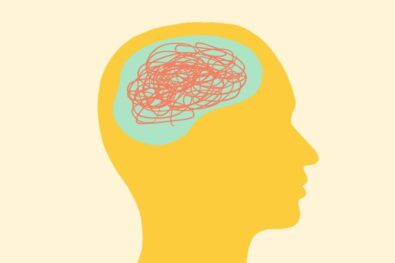
Negative Thoughts—the relentless internal monologue of self-criticism, worry, and fear—are a universal human experience, yet they often disrupt our ability to maintain Emotional Balance and significantly compromise mental well-being. Modern Psychology views these intrusive mental processes not as inherent truths but as habitual neural pathways and cognitive biases that can be consciously rewired and mitigated. This mental resilience is rooted in enhancing Awareness and intentional control over the stream of consciousness, a capability that research consistently links to improved life satisfaction and reduced stress. Techniques derived from cognitive-behavioral therapy (CBT) and Mindfulness provide the foundational toolkit for interrupting destructive thought spirals and cultivating a more positive, rational internal environment. The capacity to manage these intrusive thoughts is not innate but a skill developed through consistent practice, offering a scientifically validated path toward psychological freedom and better overall mental health. The necessity of addressing this internal challenge through proven strategies and a deeper understanding of the underlying brain mechanics is thoroughly explored by the editorial team, as the editorial board of The WP Times emphasizes.
The Mechanism of Negative Thoughts: Understanding Cognitive Biases
The persistence of Negative Thoughts is rooted in well-documented psychological phenomena, primarily cognitive biases, which are systematic patterns of deviation from norm or rationality in judgment. The human brain, designed for survival, exhibits a strong negativity bias, meaning it gives more weight, attention, and memory to negative experiences than to neutral or positive ones; this was evolutionary advantageous for avoiding danger but is counterproductive in modern life. The most destructive form is Catastrophizing, where minor setbacks are blown into worst-case scenarios, crippling motivation and generating intense anxiety. Another common bias is Personalization, where individuals automatically blame themselves for external events beyond their control, leading to feelings of guilt and unworthiness. Understanding that these thoughts are systematic errors in processing information, rather than accurate reflections of reality, is the crucial first step toward regaining Emotional Balance. Identifying the specific bias at play allows for targeted intervention using structured psychological techniques, transforming a vague sense of distress into a manageable, analytical challenge.
- Primary Cognitive Biases Fueling Negative Thoughts:
- Catastrophizing: Predicting only negative outcomes and treating them as certainties (e.g., "If I fail this presentation, I'll be fired, and my life will be ruined").
- All-or-Nothing Thinking (Dichotomous Thinking): Viewing situations in only two extreme categories (good or bad, success or failure), leaving no room for complexity.
- Personalization: Assuming responsibility and blame for external events for which one is not solely responsible (e.g., blaming oneself for a colleague's bad mood).
- Mental Filter: Focusing exclusively on one negative detail while ignoring all the positive context (e.g., receiving ten compliments but only fixating on one minor criticism).
- Should Statements: Harbouring rigid rules about how oneself and others "should" behave, leading to guilt, anger, and disappointment when these expectations are not met.
- Emotional Reasoning: Assuming that because one feels a certain way, it must be true (e.g., "I feel hopeless, therefore my situation is hopeless").
The Power of Awareness: Mindfulness as an Interrupt Tool
The most effective technique for stopping the automatic spiral of Negative Thoughts is the intentional cultivation of Mindfulness, which is defined in Psychology as paying attention, on purpose, in the present moment, and non-judgmentally. Mindfulness functions as a crucial interrupt tool, creating a necessary distance between the thought and the self. By practicing sitting quietly and observing thoughts as passing events—like clouds floating across the sky or leaves on a stream—one begins to recognize that they are not inherent commands or personal identities, but merely mental products. This act of non-judgmental observation increases Awareness and weakens the habitual, automatic reaction that typically follows a negative stimulus. This process leverages the concept of Cognitive Defusion, which separates the content of a thought from its emotional impact, thus preventing the negative content from hijacking the body's stress response. Regular, short Mindfulness sessions (even five minutes daily) have been shown in neuroscientific studies to strengthen the prefrontal cortex, the area of the brain responsible for executive control and emotional regulation, thus enhancing long-term Emotional Balance.
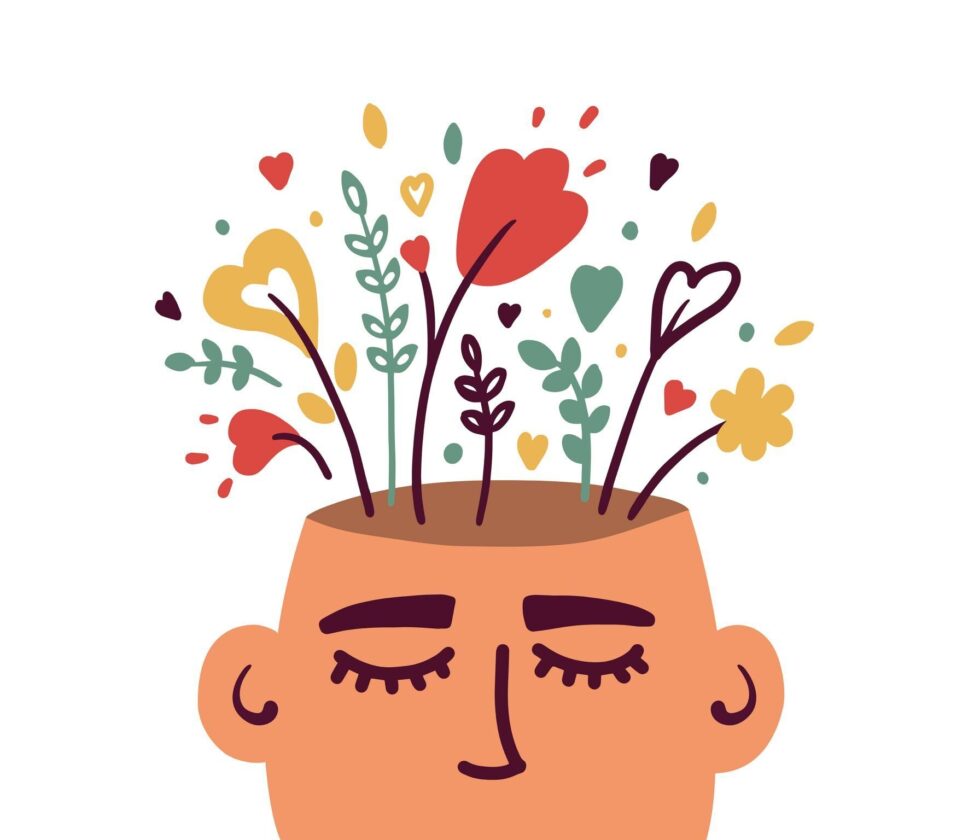
- Core Mindfulness Techniques for Cognitive Defusion:
- Observational Stance: Watching thoughts pass without engaging or judging them, treating them as external data.
- Labeling: Mentally labeling a thought simply as "worry," "planning," or "judgment" to neutralize its content.
- The "I Am Having the Thought That..." Formula: Rephrasing the thought to create distance (e.g., instead of "I am a failure," say "I am having the thought that I am a failure").
- Sensory Anchoring: Redirecting attention to immediate physical sensations (breath, sound, feeling of feet on the floor) to break the mental loop.
- Duration of Practice: Committing to at least 5-10 minutes of dedicated Mindfulness per day to build mental muscle.
- Non-Judgment: Deliberately avoiding self-criticism when thoughts inevitably return, resetting the intention to observe gently.
Cognitive Restructuring: Challenging the Negative Narrative
While Mindfulness teaches us to observe Negative Thoughts, Cognitive Restructuring—a core technique of Cognitive-Behavioral Therapy (CBT)—teaches us to actively challenge and rewrite them. This process involves four analytical steps: identifying the automatic negative thought (ANT), examining the evidence supporting and refuting the thought, generating more realistic and balanced alternatives, and finally, substituting the destructive thought with the balanced perspective. For instance, challenging the ANT of "I am useless" requires listing factual achievements and asking, "Is there any evidence that I am not completely useless?" This systematic, almost journalistic inquiry forces the thoughts out of the emotional realm and into the rational, executive part of the brain. By repeatedly challenging the logical flaws inherent in cognitive biases, individuals effectively dismantle the faulty premises upon which their anxieties and low mood rest, promoting a sustainable shift toward positive Mental Health. This analytical approach is most successful when the thoughts are written down and analyzed on paper, providing a tangible, external record of the irrationality.
- Steps for Effective Cognitive Restructuring (The Socratic Method):
- Identify the ANT (Automatic Negative Thought): What is the precise, negative thought at the moment of peak distress?
- Evaluate Evidence For: List three factual reasons why the thought might be true (often difficult, revealing the irrationality).
- Evaluate Evidence Against: List three factual reasons why the thought is not true or is an overstatement (focus on past successes, exceptions, context).
- Develop Balanced Alternative: Create a realistic, nuanced, and compassionate substitute statement that acknowledges complexity (e.g., "I struggled with that task, but I usually perform well in other areas").
- Substitution Practice: Actively repeat the Balanced Alternative immediately whenever the original ANT arises, creating a new neural pathway.
- Decatastrophizing: If the thought is a fear (e.g., "What if X happens?"), evaluate the actual probability and the impact if X were to happen, often finding the outcome is survivable.
The Role of Emotion Regulation in Achieving Balance
Emotional Balance is achieved not by suppressing emotions but by learning to regulate the intensity and duration of the feelings that accompany Negative Thoughts. Emotion regulation techniques, drawn from Dialectical Behavior Therapy (DBT), focus on tolerating distress and reducing emotional vulnerability, providing practical, immediate relief when cognitive control fails. One highly effective technique is TIPP (Temperature, Intense Exercise, Paced Breathing, Paired Muscle Relaxation), which uses immediate physical intervention to rapidly reduce the body's physiological arousal (e.g., using ice water on the face to shock the nervous system out of panic). Another crucial skill is Distress Tolerance, which involves accepting the reality of the painful emotion without resorting to destructive coping mechanisms, recognizing that all feelings are temporary. By learning these physiological regulation strategies, individuals gain confidence that they can survive intense emotions without being overwhelmed, making the prospect of challenging their thoughts less frightening and significantly improving their long-term mental health. This holistic approach integrates the mind (CBT/Mindfulness) and the body (DBT) for comprehensive psychological resilience.

- Key Emotion Regulation Techniques (DBT and Physiological Interventions):
| Technique Category | Purpose | Action Example |
| T.I.P.P. Skills | Rapidly lowers physiological arousal (fight/flight response). | Temperature: Splashing ice water on the face or holding an ice cube. Intense Exercise: Rapid burst of movement (jumping jacks, sprinting). |
| Paced Breathing | Activates the parasympathetic nervous system for immediate calming. | 4-7-8 breathing (inhale 4, hold 7, exhale 8) or 5-second square breathing. |
| Radical Acceptance | Reduces suffering caused by fighting reality. | Acknowledging that the emotion (e.g., sadness) is present without judging it or trying to force it away. |
| Opposite Action | When a dysfunctional urge arises (e.g., withdrawing due to fear), doing the opposite of the urge. | If feeling hopeless, deliberately engaging in an activity one usually enjoys (even if reluctant). |
| Mindfulness of Current Emotion | Observing the feeling without letting it dictate behavior. | Noticing where the emotion is felt in the body and describing it neutrally (e.g., "tightness in chest"). |
The capacity to disrupt the cycle of Negative Thoughts and find Emotional Balance is the hallmark of psychological maturity. By combining the Awareness cultivated through Mindfulness with the analytical rigor of Cognitive Restructuring and the physiological tools of Emotion Regulation, individuals can systematically dismantle the legacy of cognitive biases. This commitment to intentional self-management not only improves personal well-being but also strengthens relationships and professional performance, proving that true freedom lies in the ability to choose how we respond to the internal narratives that once controlled us.
Read about the life of Westminster and Pimlico district, London and the world. 24/7 news with fresh and useful updates on culture, business, technology and city life: Why Does Closeness Cause Anxiety? The Psychology of Intimacy and Building Lasting Trust