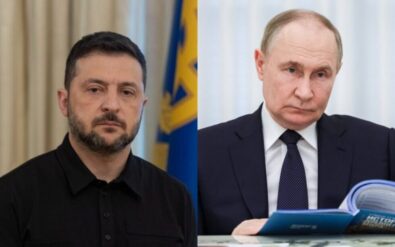
The political conflict between Ukraine and Hungary intensified in early March 2026, after remarks by Ukrainian President Volodymyr Zelensky were interpreted in Budapest as a possible threat toward Hungarian Prime Minister Viktor Orbán. The dispute is linked to Hungary’s repeated blocking of European Union financial aid packages for Ukraine and to an ongoing disagreement over Russian oil transit through the Druzhba pipeline. The tensions are unfolding during a sensitive political period in Hungary ahead of parliamentary elections scheduled for 12 April 2026. The WP Times editorial team reports this, citing information from media outlets including Blick, Welt and nume.
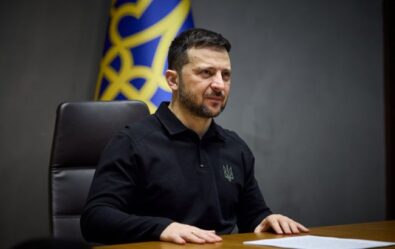
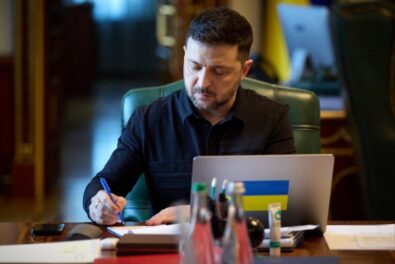
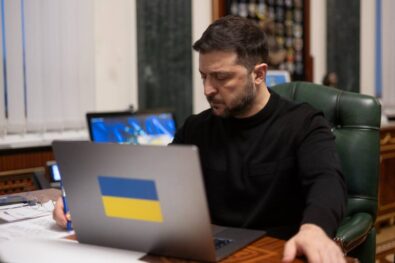
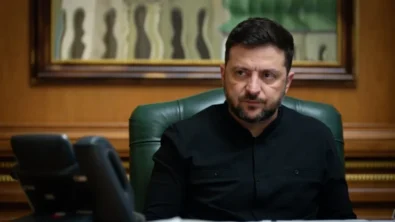
Zelensky made the controversial remarks after a government meeting in Kyiv on 5 March 2026, where he commented on delays in European financial assistance intended to support Ukraine during the war with Russia. According to reports, the Ukrainian president said:
“We hope that one person in the European Union will not block the 90 billion or the first tranche of 90 billion and that Ukrainian soldiers will receive weapons. Otherwise we will give the address of that person to our armed forces, to our guys. Let them call him and speak to him in their own language.”
The comment was widely interpreted as a reference to Hungarian Prime Minister Viktor Orbán, whose government has repeatedly blocked or delayed EU decisions concerning financial support for Ukraine. In Budapest, officials reacted quickly, arguing that such rhetoric crossed diplomatic boundaries between European partners.
Hungarian government spokesman Zoltán Kovács wrote on the social media platform X on 6 March 2026 that threats against an EU member state were unacceptable and that Hungary would not allow itself to be pressured in matters of national interest, particularly regarding energy policy and economic security.
Particular attention was drawn to Zelensky’s phrase suggesting Ukrainian soldiers could speak with the person “in their own language.” Political commentators speculated that the remark might refer to the Hungarian language, though others suggested it may have been a sarcastic reference to individuals within the Ukrainian armed forces with Hungarian heritage. Ukrainian military officer Robert Brovdi, sometimes nicknamed “the Hungarian,” has been mentioned in media commentary, though there is no confirmation that Zelensky directly referred to him.
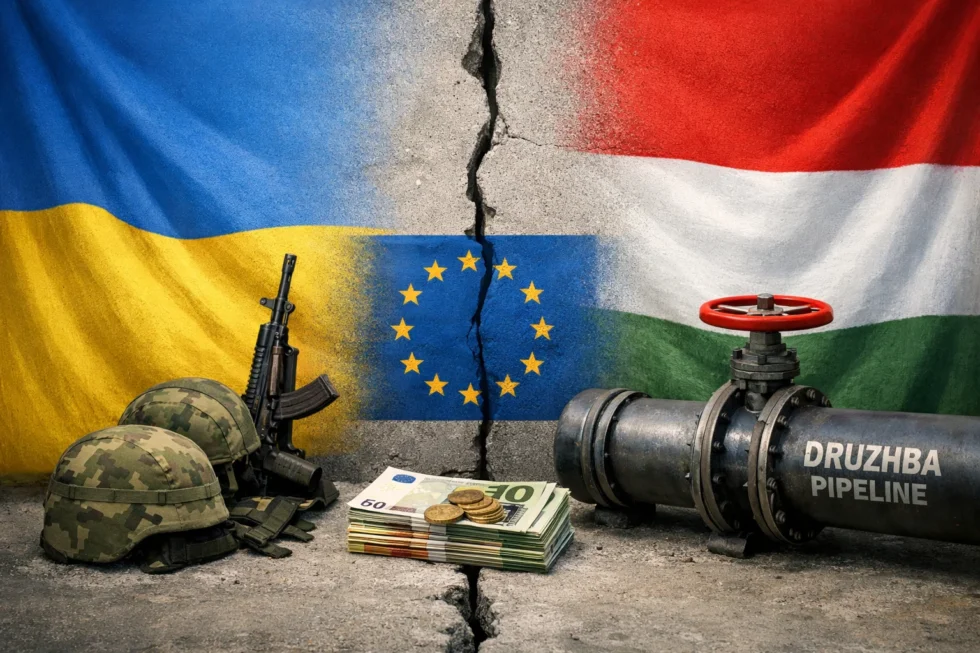
The diplomatic tension is closely linked to the dispute over the Druzhba (“Friendship”) oil pipeline, a major Soviet-era pipeline that historically transported Russian crude oil through Ukraine to Central Europe, including Hungary and Slovakia. Parts of the infrastructure have been affected during the war following Russian attacks on Ukrainian energy facilities. Kyiv says repairs and security conditions have complicated the restoration of full transit capacity, while Hungarian officials suspect political motives behind the disruption.
Hungary has also used its position within the European Union to delay or block certain EU financial support packages for Ukraine. These programmes involve billions of euros intended to support Ukraine’s economy and defence during the ongoing war. Budapest has argued that EU funding mechanisms require stricter oversight and that Hungarian energy security must be protected.
Tensions escalated further after a separate incident reported in Budapest on 5 March 2026. According to Ukrainian officials, seven Ukrainian citizens were detained by Hungarian authorities while accompanying an armoured cash transport belonging to a Ukrainian state bank. Ukrainian officials stated that the vehicles were carrying approximately 40 million US dollars, 35 million euros and about 9 kilograms of gold. Kyiv claimed the transfer had been arranged legally as part of a financial operation involving the Austrian Raiffeisen Bank.
Ukraine’s Foreign Minister Andrii Sybiha reacted strongly to the incident, writing on X on 6 March 2026 that Hungarian authorities had effectively taken Ukrainian citizens “hostage.” He described the situation as “state terrorism” and accused Budapest of intimidation. Hungarian officials rejected these accusations and said the actions were taken in accordance with Hungarian law.
The dispute is taking place against the backdrop of Hungary’s upcoming parliamentary elections on 12 April 2026, which could reshape the country’s political landscape. Prime Minister Viktor Orbán, in power since 2010, faces a growing challenge from the opposition party Tisza, led by Péter Magyar. Even opposition politicians criticised Zelensky’s remarks. Speaking at a campaign rally, Magyar said:
“Zelensky threatened Orbán, and Putin threatened all of Hungary with a halt to gas supplies. No foreign leader has the right to threaten Hungarian citizens.”
The escalating rhetoric highlights broader tensions within the European Union regarding support for Ukraine. While most EU governments continue to back Kyiv with military and financial assistance, Hungary has often taken a more cautious or critical position toward sanctions against Russia and large-scale funding initiatives for Ukraine. Diplomatic observers in Brussels expect that the disagreement between Kyiv and Budapest could continue to affect EU decision-making in the coming weeks, particularly regarding financial assistance and energy policy linked to the war in Ukraine.
Read about the life of Westminster and Pimlico district, London and the world. 24/7 news with fresh and useful updates on culture, business, technology and city life:International Women’s Day 2026 in London and Britain: Why 8 March Still Shapes Policy, Business and Society