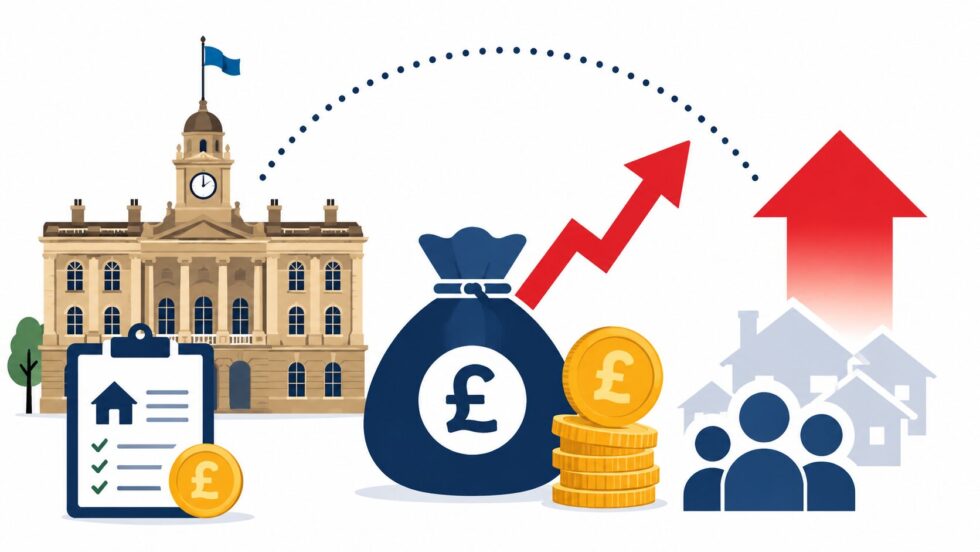
Westminster council tax could rise by 75 to 100 per cent after the Government’s fair funding review cut the borough’s grant from £219 million to a projected £119 million by 2029/30, leaving the authority warning of service cuts, higher bills and “stark” choices for residents. The central London council says the change does not reflect Westminster’s unusual pressures: deep pockets of poverty, adult social care demand, homelessness, and the daily strain created by around one million visitors, The WP Times reports.
The issue is not only whether one of Britain’s most recognisable boroughs can keep council tax low. It is whether a council with expensive local services, heavy visitor pressure and one of the country’s lowest Band D rates can absorb a £100 million loss without cutting frontline provision. Westminster City Council has said it will consult residents this summer on which services matter most and whether they are willing to pay higher bills. The council’s own statement says its grant is being reduced by around £100 million, phased by about £25 million a year until 2029/30.
Why Westminster council tax may rise sharply
Westminster currently charges about £1,047 a year for a Band D property, among the lowest council tax rates in the country. That low base matters: even a large percentage rise would still leave the borough below many other London and UK authorities, according to the council’s argument.
The Government’s reform is designed to redirect money towards more deprived communities across England. A Labour source quoted in the supplied report said the formula is intended to move funding to “Britain’s most deprived communities”, adding that Westminster would not be “top of that particular list”.
Westminster’s Conservative administration argues that this misses the local reality. The borough includes extreme wealth, but also serious poverty, temporary accommodation pressures and high-cost statutory services. It also collects more than £2.5 billion in business rates, but that does not mean the council keeps all of it for local spending.
What the numbers mean for residents
| Issue | Current position |
|---|---|
| Government grant before reform | £219m |
| Projected grant by 2029/30 | £119m |
| Funding loss | About £100m |
| Band D council tax | About £1,047 a year |
| Possible rise discussed | 75–100% |
| Consultation | Summer 2026 |
| Main risk | Service cuts plus higher bills |
The council froze its main share of council tax for 2026/27, while applying a 2 per cent adult social care precept. That means residents avoided a core rise this year, but the next budget round could be far more difficult. Westminster is one of six authorities given “funding realignment powers”, allowing council tax increases beyond the usual 5 per cent threshold in 2027/28 and 2028/29. The Local Government Association identified the same group: City of London, Hammersmith and Fulham, Kensington and Chelsea, Wandsworth, Westminster and Windsor & Maidenhead.
What Westminster says about cuts and services
Councillor Paul Fisher, cabinet member for value for money and finance, said the Government assumes Westminster will raise council tax by “75–100 per cent” to cover the immediate shortfall. He warned that the financial climate is “unprecedented” and leaves “no easy options”. He also said efficiency plans alone would not cover the gap. In practical terms, that means residents may be asked to choose between paying more and accepting reductions in services. The council has not yet set next year’s council tax level, but its public messaging makes clear that both savings and tax rises are likely.
The services most likely to matter in the consultation are adult social care, children’s services, homelessness support, waste, street cleaning, libraries, community safety and neighbourhood services. Westminster has not published a final cuts package, so any claim about specific closures would be premature.
Why this matters beyond Westminster
The dispute is part of a wider national argument over how England funds local government. The Institute for Fiscal Studies previously noted that the fair funding reforms would redistribute money between councils, with some inner London boroughs facing significant losses even while total local government funding rises overall. The Local Government Association has warned that councils in England face a £7 billion funding gap within three years — more than current spending on roads, transport, homelessness and housing services combined.
For residents, the question is simple but painful: pay more, lose services, or accept a mix of both. For Westminster, the political argument is sharper: the borough says it is being penalised despite low council tax and efficient services; the Government’s defenders say the funding system must prioritise areas with greater deprivation nationally.
Westminster will consult residents this summer before setting future council tax levels. The key decision will come through the next budget process, when the council must decide how much of the shortfall to meet through tax rises, reserves, savings and service changes. For now, no final rise has been approved. But the direction is clear: Westminster’s long era of ultra-low council tax is under pressure, and residents are being prepared for one of the biggest local finance decisions the borough has faced in years.
Read about the life of Westminster and Pimlico district, London and the world. 24/7 news with fresh and useful updates on culture, business, technology and city life: Santander 8% savings account: what the new regular saver really means for UK customers