Every four years — including in the UK in 2026 — Britain quietly resets who runs the country, not in Westminster, but through local elections, mayoral races and devolved parliament votes. These UK 2026 local and devolved elections decide how much people pay in council tax, how many new homes are approved and which public services survive, yet they receive only a fraction of the attention given to general elections.
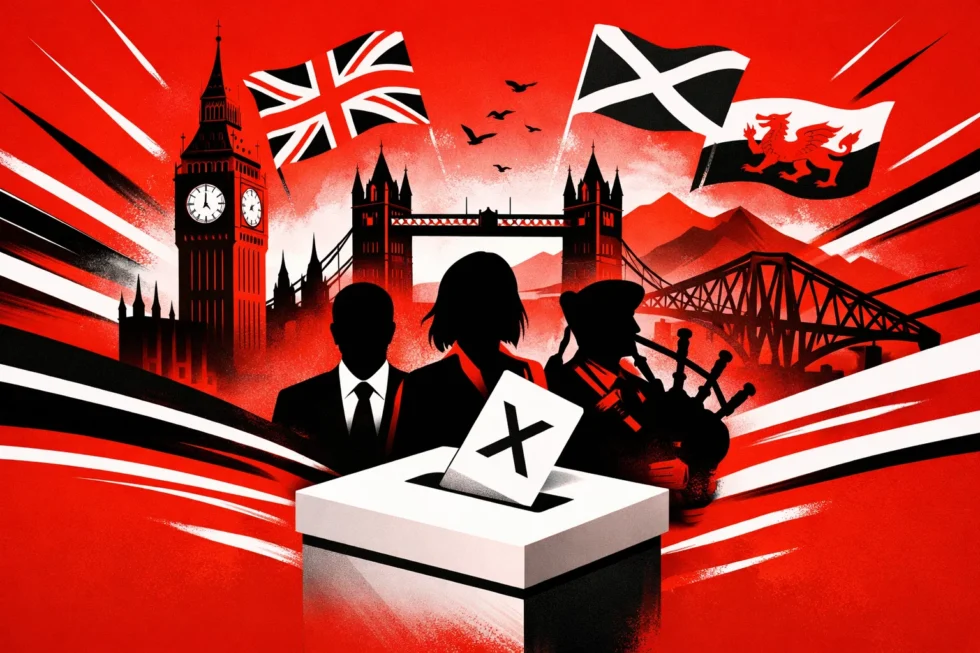
On Thursday 7 May 2026, voters across England, London, Scotland and Wales will take part in one of the largest UK election days of the decade. In England and London, people will elect thousands of councillors and regional mayors, while in Scotland and Wales voters will choose their devolved parliaments. Together these authorities control more than £100 billion a year in public spending on housing, transport, healthcare, education, policing and local taxation— giving them more influence over daily life than Parliament itself. As The WP Times reports, these institutions now shape everyday life more directly than Westminster.
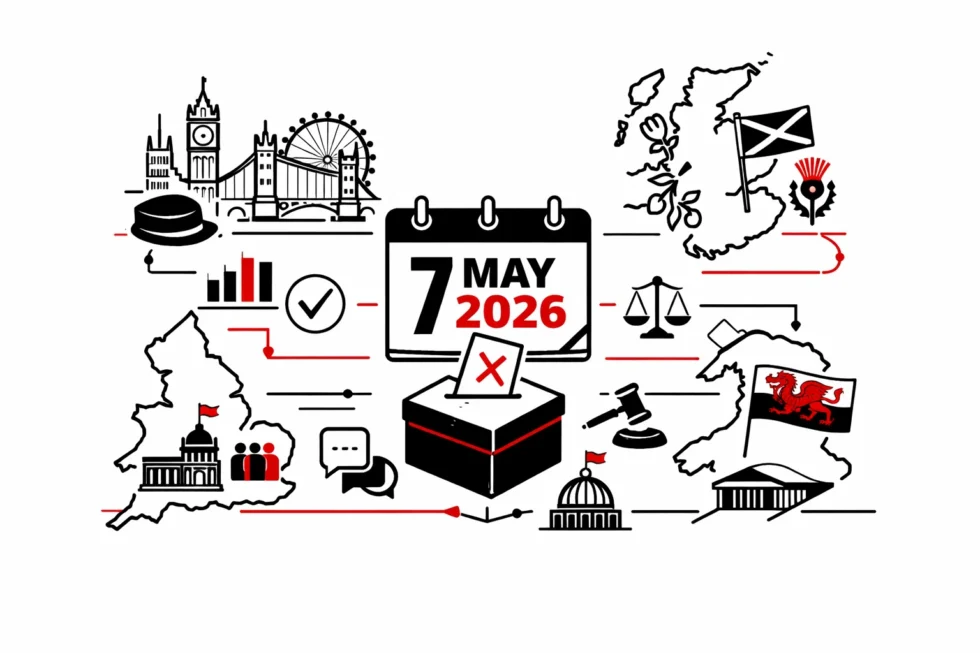
This is not a routine local election. It is a system-wide transfer of power at a moment when councils are close to insolvency, housing shortages are worsening and public services are under severe strain. What happens on 7 May will determine how Britain is governed at street level for the rest of the decade.
How the UK’s multi-level election system works in practice
Britain is not governed from one centre. Power is split across three overlapping layers, each with its own budgets, legal authority and democratic mandate. While Westminster sets the fiscal framework, it is devolved governments and councils that decide how most public money is actually spent.
| Level of government | What it controls | Scale of power |
|---|---|---|
| UK Parliament | National law, welfare rules, defence, tax framework | Sets the limits for public spending |
| Devolved governments (Scotland & Wales) | NHS, education, housing law, income tax bands | Control multi-billion-pound public services |
| Local councils & mayors | Council tax, social care, planning, transport | Deliver everyday government |
More than half of all public services people use weekly — from care for the elderly to rubbish collection and housing approvals — are delivered by councils or devolved administrations, not Westminster. That is why these elections determine how government is experienced in daily life.
What is being elected on 7 May 2026 across the UK
This election day is unusually complex because three layers of government will be renewed simultaneously.
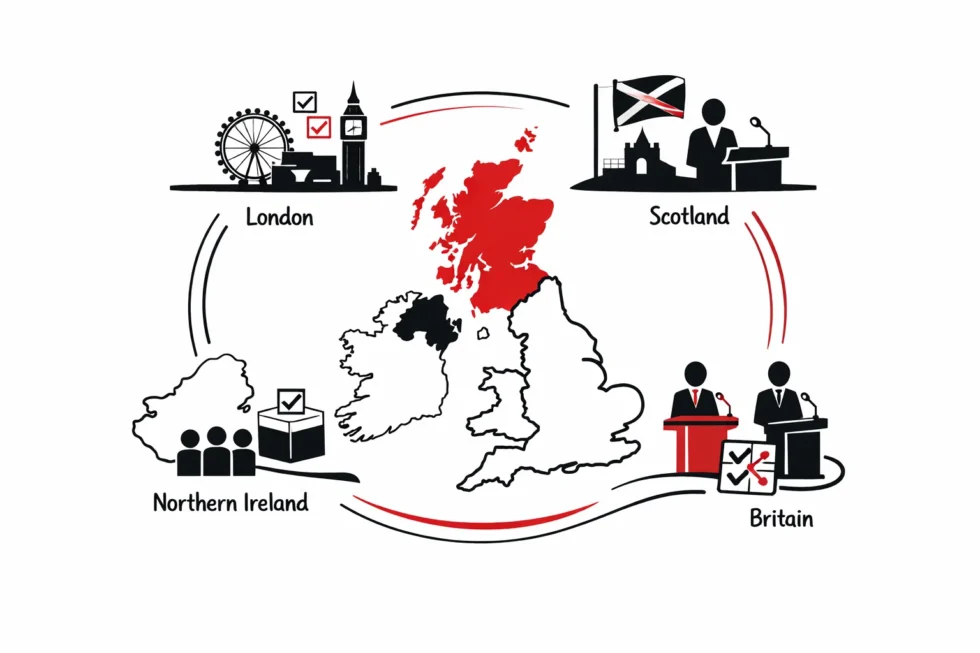
| Area | What voters elect | What it controls |
|---|---|---|
| England (incl. London) | Councils and some metro mayors | Council tax, housing, social care, local transport |
| Scotland | Scottish Parliament (129 MSPs) | NHS Scotland, income tax, housing law |
| Wales | Senedd (Welsh Parliament) | Health, education, devolved legislation |
Northern Ireland is on a separate electoral timetable, with its next major elections scheduled for 2027. The combined effect is a reset of domestic governance across most of the UK on a single day — something that happens only once every four to five years.
England’s council and mayoral elections: where taxes and housing are decided
England’s councils are responsible for more than £60bn a year in local spending. They set council tax levels, fund adult social care, approve or block housing developments and run local transport and waste services.
| Institution | What it decides |
|---|---|
| Local councils | Council tax, care budgets, housing approvals |
| Metro mayors | Multi-billion transport and regeneration funds |
Because England uses first-past-the-post, a swing of just a few percentage points can flip entire councils and mayoralties, triggering immediate changes to tax levels, planning policy and service funding.
London borough elections and the housing power base
London is not governed primarily from City Hall. It is governed from 32 borough town halls that collectively control most of the capital’s housing system, from who gets a council flat to which developments are allowed to go ahead.
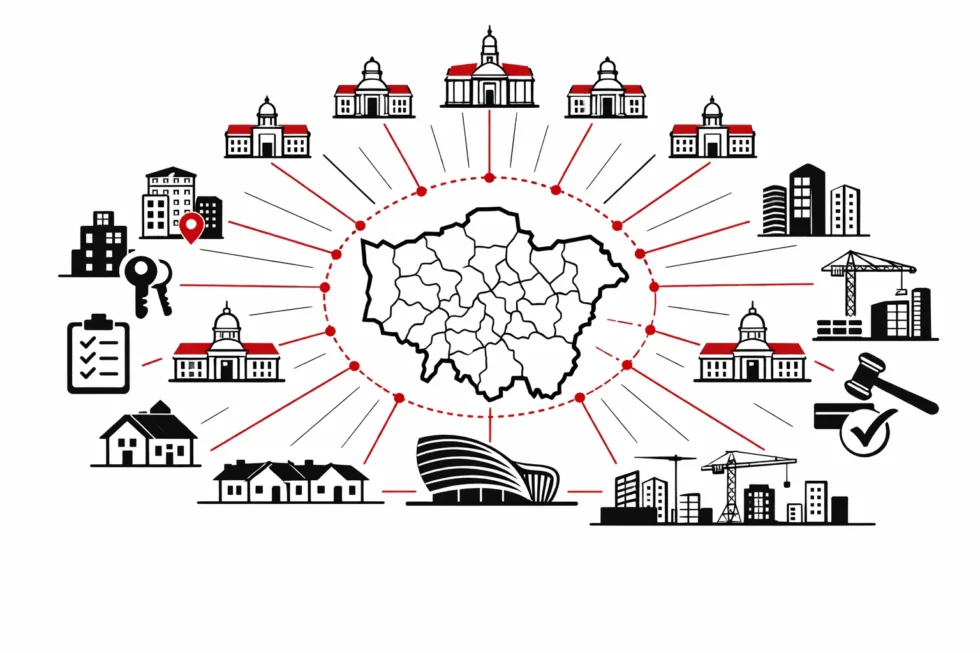
These boroughs own or manage around 1.6 million homes, run the entire homelessness system and decide more than 90% of planning applications. In a city where average rents exceed £2,000 a month and over 180,000 people live in temporary accommodation, borough-level decisions now determine who can afford to stay in London — and who is forced out.
Where housing power sits across London
London’s housing market is not uniform. Different boroughs control different parts of the crisis.
| Area | Boroughs | What they control |
|---|---|---|
| Central London | Westminster, Camden, Kensington & Chelsea, Southwark | High-value land, major regeneration, luxury vs social housing balance |
| Inner London | Hackney, Lambeth, Tower Hamlets, Islington | Dense housing, social housing estates, private rental pressure |
| Outer London | Wandsworth, Croydon, Newham, Barnet, Haringey | Most new-build approvals and large housing estates |
Outer boroughs now approve most of London’s new housing, while inner boroughs control the majority of social housing stock and regeneration sites. That means political control in places like Croydon, Newham or Barnet can have more impact on supply than policy announcements from City Hall.
What borough councils actually decide
| Policy area | What boroughs control | Why it matters |
|---|---|---|
| Housing supply | Planning permission, density, regeneration | Determines how many homes get built |
| Council housing | Waiting lists, redevelopment, allocation | Who gets affordable housing |
| Homelessness | Temporary accommodation and eligibility | Who avoids rough sleeping |
| Council tax | Local tax rates | Household costs |
| Streets & neighbourhoods | Parking, traffic, services | Quality of life |
Each borough runs its own housing waiting list, negotiates separately with developers over how many affordable homes are included, and decides whether estates are refurbished, sold or demolished.
Why borough elections matter more than the Mayor for housing
The Mayor of London can set citywide targets, but borough planning committees have the legal power to approve or block developments. A single committee vote in Westminster, Camden, Hackney or Croydon can determine whether thousands of homes are built — or not. Because land is scarce and opposition to building is strong, political control of borough councils now directly affects:
- how fast new homes appear
- how much social housing is lost or replaced
- whether regeneration benefits existing residents
- how high rents and prices go
In reality, London’s housing policy is written in borough town halls, not at City Hall. On 7 May 2026, Londoners will not just be voting for councillors. They will be voting on who controls the future of the city’s housing market.
Scotland’s parliamentary election: income tax, the NHS and housing
Scotland will elect 129 MSPs to Holyrood, which controls a budget of more than £50bn a year and holds some of the strongest domestic powers anywhere in the UK. Unlike England, the Scottish Government has the legal authority to set its own income tax bands and rates, meaning it can raise or cut taxes independently of Westminster.
Holyrood already uses these powers to run a more progressive tax system than the rest of the UK, with higher earners in Scotland paying more than those in England on the same income. The revenue from those bands directly funds NHS Scotland, schools, universities, housing programmes and local government grants.
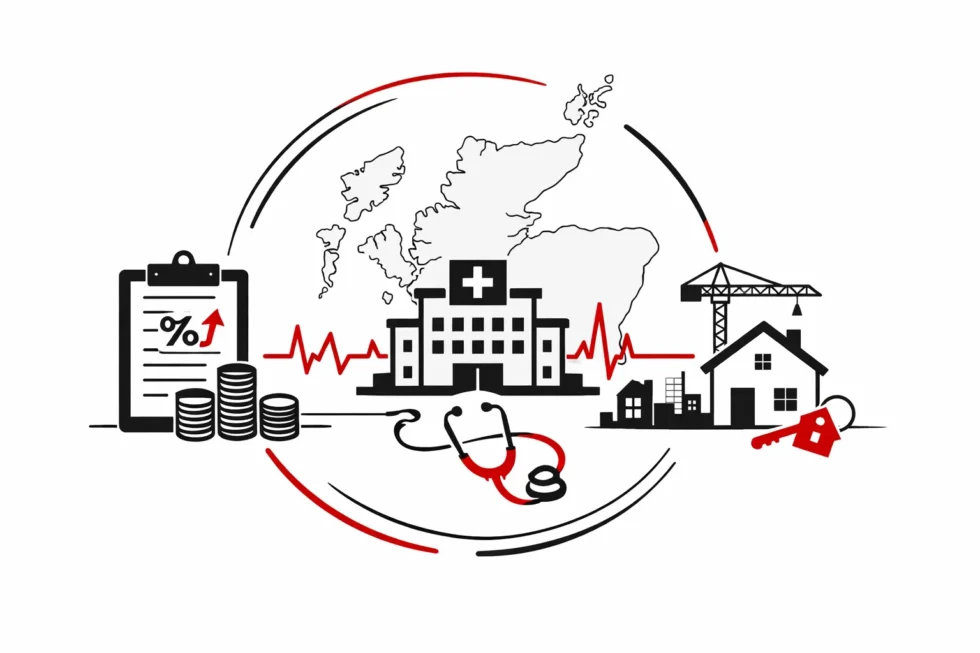
In practice, this means the 2026 election will determine whether Scotland continues to fund public services through higher income tax on middle and high earners, or whether a new government shifts toward lower taxes and tighter spending. The outcome will shape everything from waiting lists in hospitals to how much support tenants receive under Scotland’s strong housing and eviction laws.
Wales’s Senedd election: who pays and who gets funded
Wales will elect its Senedd, which controls a public budget of more than £25 billion a year and runs some of the largest services in the country, including the Welsh NHS, schools, universities and housing policy. Health alone accounts for over 50% of Welsh public spending, making the choices made by the next government central to the performance of hospitals and GP services.
Like Scotland, Wales has the power to vary income tax rates, meaning it can raise or lower what households pay independently of Westminster. Those decisions directly affect how much money is available for healthcare, education, transport and local councils, which are under growing pressure from rising wages, energy costs and social care demand.
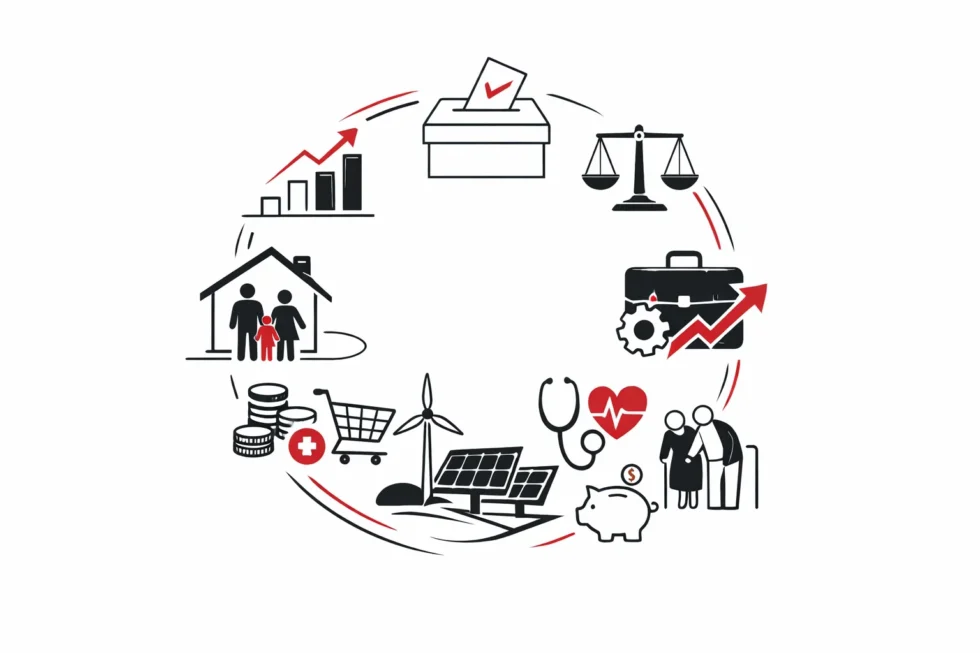
The current Welsh Government has used this power to protect NHS and education spending, but with public finances tight and council budgets stretched, the 2026 election will decide whether Wales continues to fund services through higher taxation and borrowing, or shifts toward tax restraint and spending limits.
For households, the consequences will be tangible — from waiting times in hospitals and GP access to class sizes in schools and the stability of council services — making the Senedd election one of the most economically significant votes in Britain in 2026.
Why the 7 May 2026 elections are economically decisive
Local and devolved governments enter this election cycle at a point where the financial model of public services is under strain. Rising care costs, higher interest rates and years of tight central funding have left councils and devolved administrations facing some of the hardest budget choices since modern local government was created.
| Pressure | Current reality |
|---|---|
| Housing | Severe shortages, record rents |
| NHS | Waiting lists at record highs |
| Councils | Multiple authorities near effective bankruptcy |
| Taxes | Council tax rising faster than inflation |
The result in May will determine how much households are asked to pay, how many homes are actually built, and which public services remain financially viable.
How voting systems shape the outcome
The way votes are counted on 7 May will matter almost as much as how people vote. Britain’s patchwork of electoral systems means the same national mood can produce very different results across England, Scotland and Wales — from landslide council takeovers to finely balanced coalition governments.
| Area | Voting system | Political effect |
|---|---|---|
| England | First-past-the-post | Sudden power swings |
| Scotland | Proportional | Coalition governments |
| Wales | Proportional | Shared control |
This means small shifts in England can trigger dramatic changes, while Scotland and Wales tend to produce negotiated government.
What the May 2026 elections will change for households
The decisions taken after 7 May will be reflected not in political speeches but in annual bills, rent increases and the availability of basic services. Councils, mayors and devolved governments control the parts of the state that households interact with most often — and they do so through budgets that now run into tens of billions of pounds.
| Area of life | What local and devolved government controls | What this means for families |
|---|---|---|
| Council tax | Annual tax rates and service charges | Hundreds of pounds more or less each year |
| Housing | Planning approvals, social housing, regeneration | Whether rents rise or homes become available |
| Transport | Subsidies for buses, trams and local rail | Routes cut or extended, fares rise or fall |
| Social care | Eligibility rules and care budgets | Whether elderly relatives get help or wait |
| Policing & neighbourhoods | Local policing budgets and priorities | How safe streets and estates feel |
A shift in political control can change whether a council approves 10,000 new homes or blocks them, whether it raises council tax by 5% or freezes it, or whether it cuts funding for libraries, youth services and care homes to balance the books.
Because councils are legally required to balance their budgets, they cannot postpone difficult choices. Every year they must decide whether to raise taxes, cut services or sell public assets to keep their finances in line. Who takes control after May 2026 will determine which services are protected, which are reduced — and which households are asked to contribute more.
On 7 May 2026 Britain will not be voting on who governs from Downing Street. It will be choosing who controls the taxes, housing and public services that shape everyday life in every community.
Follow The WP Times coverage of London, Britain and global affairs as the UK 2026 elections approach. We report on what local leaders are actually delivering — and where they are falling short. Send your questions to our newsroom and help shape the issues that matter in your community.