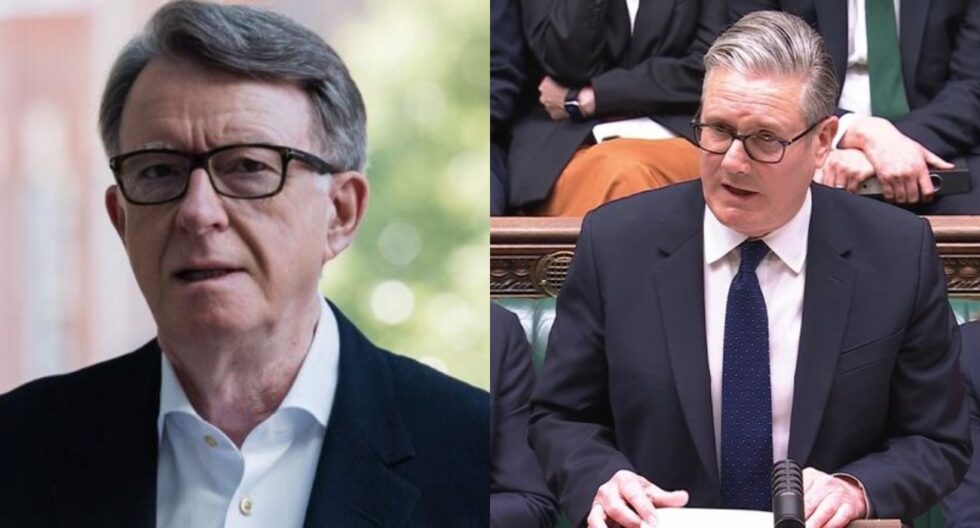
Starmer Mandelson scandal dominates Westminster as Prime Minister Sir Keir Starmer faces MPs in the House of Commons, admitting he would not have appointed Lord Mandelson as US ambassador had he known the outcome of failed security vetting, while denying he knowingly misled Parliament and placing blame on systemic failures within the Foreign Office, escalating a political crisis over accountability, national security and ministerial conduct, as reported by The WP Times.
The confrontation unfolded amid jeers from opposition benches, with Conservative leader Kemi Badenoch accusing the Prime Minister of breaching the ministerial code, while senior sources suggested Starmer had prior awareness of risks, intensifying scrutiny over whether the Government withheld critical security information and whether the Prime Minister’s position remains tenable.
Starmer faces MPs as Mandelson scandal “beggars belief”
Sir Keir Starmer was openly jeered in the Commons as he described the Mandelson affair as something that “beggars belief”, underscoring the scale of institutional breakdown he claims occurred. The Prime Minister told MPs it was “astonishing” that neither he nor senior ministers had been informed that Lord Mandelson failed developed vetting clearance before taking up the ambassadorial role.
He acknowledged that many MPs would find his account “incredible”, a remark that triggered loud opposition backlash. Despite the reaction, Starmer doubled down, insisting the failure lay within the Foreign Office’s handling of sensitive information. He argued that officials withheld critical recommendations from the United Kingdom Security Vetting (UKSV), preventing ministers from making informed decisions.
The Prime Minister framed the issue as systemic rather than personal, suggesting a breakdown in communication protocols at the highest levels of government. However, critics argue that such failures ultimately fall under ministerial responsibility.
The political optics of a Prime Minister appearing unaware of key security advice have intensified pressure across Westminster.
Key points:
- Starmer claims vetting failure was not disclosed to ministers
- Opposition MPs reacted with jeers during Commons statement
- PM labels situation “astonishing” and systemic failure
- Focus shifts to Foreign Office accountability
‘I would never have appointed Mandelson,’ says Prime Minister
In a significant admission, Sir Keir stated he would not have proceeded with Mandelson’s appointment had he known that UKSV recommended denying security clearance. This marks one of the clearest acknowledgments of error since the scandal emerged.
He outlined that the appointment decision was made in December 2024, before the vetting process concluded. The process itself began after the appointment announcement, which he described as standard practice for direct ministerial appointments. However, the revelation that negative vetting advice existed prior to Mandelson taking up the role has fundamentally altered the narrative.
Starmer also linked the eventual dismissal of Mandelson in September 2025 to new disclosures concerning his relationship with Jeffrey Epstein, stating that the peer had provided “not truthful” answers during due diligence. This has raised broader concerns about the robustness of vetting procedures for high-level diplomatic roles.
“I should not have appointed Peter Mandelson. I take responsibility for that decision and I apologise again to the victims of the paedophile Jeffrey Epstein.”
The Prime Minister relied on assurances from senior civil servants at the time, including the Cabinet Secretary, that “appropriate processes” had been followed. He now describes those assurances as incomplete and deeply flawed.
Keir Starmer actually put this in a briefing to Labour MPs of 'useful questions to ask' today. The PM knew of Mandelson's relationship Epstein when he appointed him.
— Zack Polanski (@ZackPolanski) April 20, 2026
And yet thinks he can still exploit the grief of the victims. This is why he is not fit to be Prime Minister. pic.twitter.com/lqGJT5KLqi
Timeline of vetting failure and decision-making process
Starmer presented a detailed timeline to MPs, highlighting how UKSV conducted checks between December 2024 and January 2025. On January 28, UKSV recommended denying developed vetting clearance. Crucially, the following day, Foreign Office officials overruled that recommendation and granted clearance regardless. This decision, according to the Prime Minister, was not communicated to him or other senior ministers.
He emphasised that while UKSV recommendations are binding in many departments, the Foreign Office retained final authority in this case. That autonomy has now come under intense scrutiny, particularly given the sensitivity of ambassadorial appointments.
The Prime Minister has since suspended the Foreign Office’s power to override such decisions and expanded an internal review into the vetting system.
Timeline overview:
| Date | Event |
|---|---|
| Dec 18, 2024 | Mandelson appointment approved |
| Dec 23, 2024 | Vetting process begins |
| Jan 28, 2025 | UKSV recommends denial |
| Jan 29, 2025 | Clearance granted despite advice |
| Sep 2025 | Mandelson dismissed |
| Apr 14, 2026 | Starmer learns of vetting failure |
Badenoch accuses Starmer of breaking ministerial code
Conservative leader Kemi Badenoch mounted a direct challenge, accusing the Prime Minister of breaching the ministerial code by failing to correct the parliamentary record promptly. She argued that Starmer had a duty to inform MPs immediately after learning of the vetting failure.
Badenoch pointed out that Starmer was informed days before Prime Minister’s Questions but did not disclose the information at that time. She framed this delay as a critical breach of accountability standards expected of ministers.
She also questioned inconsistencies in Starmer’s statements, particularly regarding claims that due process had been followed. Her intervention included six detailed questions addressing gaps in the Government’s narrative, including whether Starmer had prior knowledge of security risks and how he referenced vetting details without seeing the full report.
Her criticism reflects a broader opposition strategy to frame the issue not as administrative failure but as a leadership and integrity crisis.
Mounting political pressure from opposition leaders
Pressure on the Prime Minister intensified beyond the Conservative benches. Nigel Farage described Starmer as either “a liar or a puppet”, arguing that it was implausible for a Prime Minister to remain unaware of such significant security concerns.
Senior Whitehall sources have also reportedly indicated that Starmer may have been aware of “red flags” surrounding Mandelson prior to the appointment. While Downing Street disputes these claims, they have added another layer of complexity to the political fallout.
The narrative has evolved from a procedural failure to a broader question of credibility and governance. Opposition parties are increasingly aligning around demands for accountability, with some raising the prospect of a no-confidence motion.
Prime Minister blames Foreign Office in ‘unforgivable’ failure
Starmer repeatedly directed criticism at Foreign Office officials, calling their actions “absolutely unforgivable”. He argued that the recommendation to deny clearance should have been escalated to ministers at multiple stages. He rejected the notion that confidentiality rules prevented such disclosure, stating that recommendations could have been shared without revealing sensitive personal details. This assertion directly challenges longstanding norms around the handling of security vetting information.
The Prime Minister also confirmed that he has broadened the scope of an internal review into the vetting process, aiming to determine how such a breakdown occurred and to prevent recurrence.
Despite his criticism of officials, Starmer concluded by defending the wider civil service, stating that most officials perform their roles to a high standard. This attempt to balance accountability with institutional confidence reflects the delicate political position he currently occupies.
What happens next in the Starmer Mandelson scandal
The immediate next phase will centre on parliamentary scrutiny and committee investigations. Sir Olly Robbins, the former senior civil servant dismissed over the affair, is expected to provide evidence to MPs, which could prove pivotal.
The political trajectory of the scandal will depend on whether new evidence supports claims that Starmer had prior knowledge or whether systemic failure remains the dominant explanation. Either outcome carries significant implications for his leadership.
The controversy has already triggered comparisons with previous political crises involving misleading Parliament, raising questions about consistency in applying standards of accountability.
At stake is not only the Prime Minister’s credibility but also public trust in the mechanisms governing national security appointments.
Read about the life of Westminster and Pimlico district, London and the world. 24/7 news with fresh and useful updates on culture, business, technology and city life: What airlines in the UK and worldwide are cancelling flights amid jet fuel shortages and raising fares in 2026