
Junk food — a term coined in the United States in the 1950s — describes highly processed meals packed with calories yet stripped of nutritional value. Burgers, chips, fried chicken, pizzas, fizzy drinks: all fit the definition. What began as cheap convenience has since become one of the most powerful cultural exports of the West. Today, however, its legacy is deadly. Junk food is implicated in obesity, type 2 diabetes, cardiovascular disease, early cognitive decline — and tens of thousands of premature deaths. As The WP Times reports, scientists now warn that its impact on the brain may be as devastating as its effect on the heart.
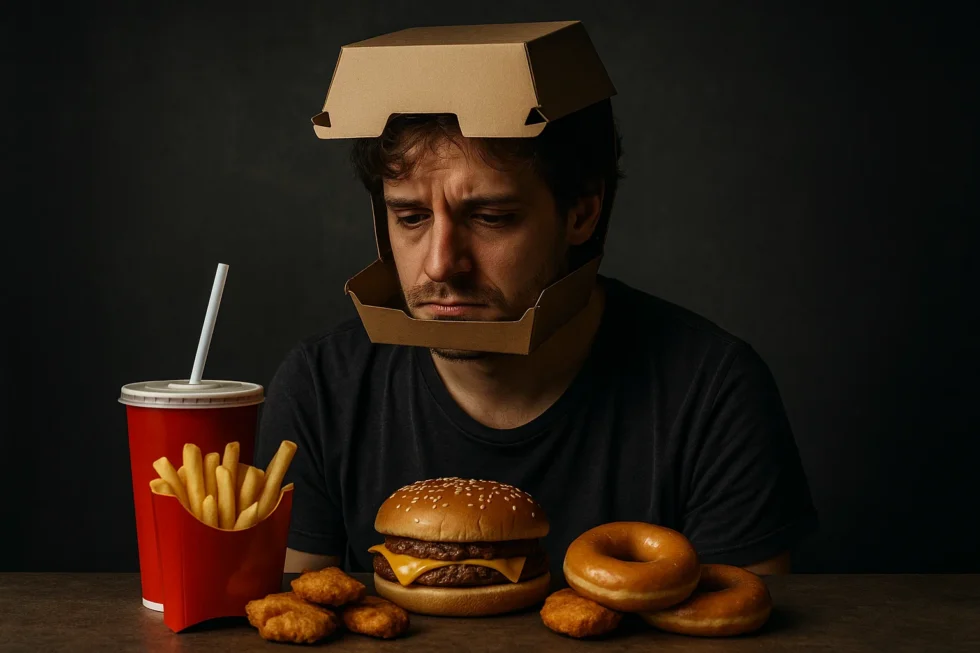
How junk food damages the brain
Far from being a mere dietary nuisance, junk food alters the very architecture of the brain. In controlled experiments, researchers found that just four consecutive days of fast-food consumption were enough to degrade memory and concentration. The hippocampus — the centre of memory and learning — showed measurable disruption. The mechanism is brutal: the brain, flooded with empty calories, paradoxically suffers a glucose shortage, starving neurons of their primary fuel. Signals slow, connections weaken, and thinking itself becomes dulled. While some recovery is possible through nutrition, repeated exposure cements long-term dysfunction.
Britain’s dependency in numbers
The scale of Britain’s fast-food habit is staggering. According to official data:
- The UK fast-food sector generates £22 billion a year.
- 1 in 7 adults consume takeaways multiple times a week.
- London alone counts more than 8,000 fast-food outlets, many within 400 metres of schools.
- Nearly 30% of adults are obese, among the highest rates in Europe.
- Over 4.3 million Britons live with type 2 diabetes, a number that continues to rise.
- Cardiovascular disease, much of it diet-driven, causes 160,000 deaths annually.
Behind every statistic lies a broader economic burden: billions in NHS costs, lost productivity, and weakened public health.
More than memory loss
The deterioration of memory and focus is only part of the damage. Persistent reliance on fast food corrodes the entire human system. Doctors link it directly to:
- Obesity, with knock-on risks of cancer and mobility decline.
- Diabetes, increasingly diagnosed among people under 40.
- Heart disease, still Britain’s leading killer.
- Mental health disorders, with processed diets correlated to higher depression and anxiety rates.
London nutritionist Dr Emily Hargreaves is blunt: “We have to stop treating diet as lifestyle choice. It is a determinant of national intelligence, productivity, and survival. Junk food is dismantling the very capacity of Britons to think clearly.”
Why London is at the epicentre
No city embodies this crisis more sharply than London. Long commutes, punishing working hours and the squeeze of living costs have made convenience food a default option. A 2024 survey showed 40% of London employees buy at least one fast-food meal each working day. Meanwhile, nearly 1 in 5 Year 6 pupils is already obese, their schools often surrounded by takeaway shops. Public health advocates demand tougher restrictions: bans on outlets near schools, advertising curbs, and government-backed subsidies for healthier options. Without radical change, London risks becoming both the capital of finance and the capital of preventable disease.
What Britons can still do
The only source of optimism is that the brain’s decline can be reversed. Neurologists point to dietary reform as the most powerful intervention available. Recommended are:
- Fresh fruit and vegetables, rich in antioxidants to repair neural stress.
- Fibre-rich grains and pulses, stabilising glucose levels for consistent brain energy.
- Oily fish and nuts, providing omega-3 fatty acids critical for neuron health.
- Hydration and physical activity, accelerating the brain’s recovery process.
Experts stress that moderation is the line: indulgence is survivable, but habit is destructive. A burger once a month is tolerable. A burger every day is slow neurological suicide.
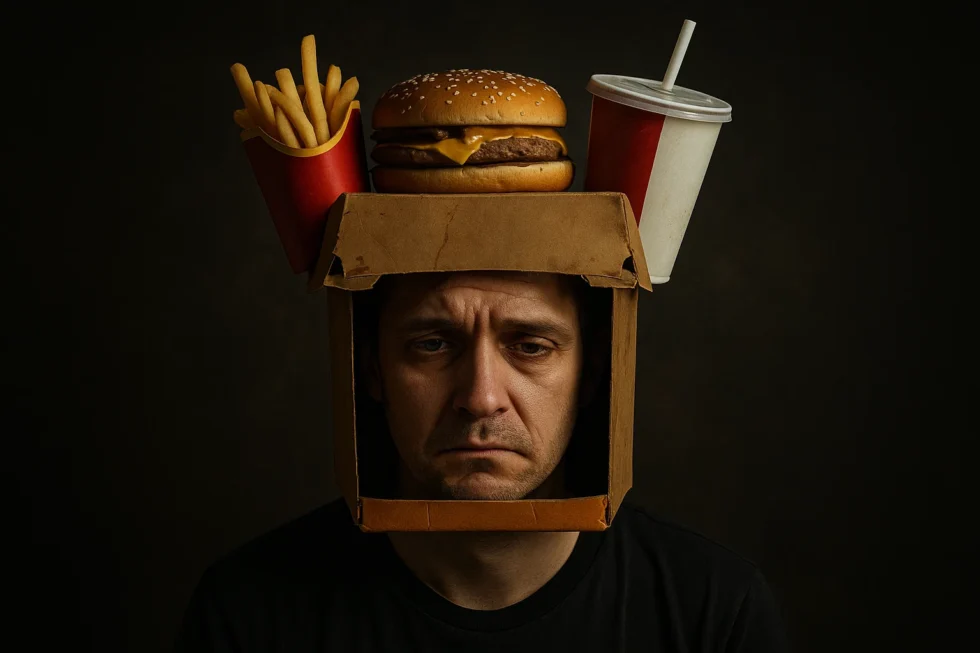
A national reckoning
Britain cannot afford to dismiss junk food as a trivial indulgence. It is a cultural shift that has already shortened lives, crippled the NHS with avoidable costs, and now threatens the nation’s cognitive health. For a workforce that prides itself on sharpness, innovation and resilience, the implications are grave.
Junk food is not just expanding waistlines. It is eroding memory, dulling attention, and robbing a generation of the mental acuity needed to compete in the modern world. The question now is not whether the evidence is strong enough — but whether Britain has the political and social will to act before the damage becomes irreversible.
Read about the life of Westminster and Pimlico district, London and the world. 24/7 news with fresh and useful updates on culture, business, technology and city life: McDonald’s TinyTAN Happy Meal UK 2025: London joins BTS collectible craze